Category
Film
Tv show
Documentary
Stand-up Comedy
Short Film
View All
Genres
Action
Adventure
Animation
Biography
Comedy
Crime
Documentary
Drama
Family
Fantasy
Film-Noir
Game-Show
History
Horror
Kids
Music
Musical
Mystery
News
Reality-TV
Political
Romance
Sci-Fi
Social
Sports
Talk-Show
Thriller
War
Western
View All
Language
Hindi
Telugu
Tamil
Malayalam
Kannada
Abkhazian
Afar
Afrikaans
Akan
Albanian
Amharic
Arabic
Aragonese
Armenian
Assamese
Avaric
Avestan
Aymara
Azerbaijani
Bambara
Bashkir
Basque
Belarusian
Bengali
Bhojpuri
Bislama
Bosnian
Breton
Bulgarian
Burmese
Cantonese
Catalan
Chamorro
Chechen
Chichewa; Nyanja
Chuvash
Cornish
Corsican
Cree
Croatian
Czech
Danish
Divehi
Dutch
Dzongkha
English
Esperanto
Estonian
Ewe
Faroese
Fijian
Finnish
French
Frisian
Fulah
Gaelic
Galician
Ganda
Georgian
German
Greek
Guarani
Gujarati
Haitian; Haitian Creole
Haryanvi
Hausa
Hebrew
Herero
Hiri Motu
Hungarian
Icelandic
Ido
Igbo
Indonesian
Interlingua
Interlingue
Inuktitut
Inupiaq
Irish
Italian
Japanese
Javanese
Kalaallisut
Kanuri
Kashmiri
Kazakh
Khmer
Kikuyu
Kinyarwanda
Kirghiz
Komi
Kongo
Korean
Kuanyama
Kurdish
Lao
Latin
Latvian
Letzeburgesch
Limburgish
Lingala
Lithuanian
Luba-Katanga
Macedonian
Malagasy
Malay
Maltese
Mandarin
Manipuri
Manx
Maori
Marathi
Marshall
Moldavian
Mongolian
Nauru
Navajo
Ndebele
Ndonga
Nepali
Northern Sami
Norwegian
Norwegian Bokmål
Norwegian Nynorsk
Occitan
Ojibwa
Oriya
Oromo
Ossetian; Ossetic
Other
Pali
Persian
Polish
Portuguese
Punjabi
Pushto
Quechua
Raeto-Romance
Rajasthani
Romanian
Rundi
Russian
Samoan
Sango
Sanskrit
Sardinian
Serbian
Serbo-Croatian
Shona
Sindhi
Sinhalese
Slavic
Slovak
Slovenian
Somali
Sotho
Spanish
Sundanese
Swahili
Swati
Swedish
Tagalog
Tahitian
Tajik
Tatar
Thai
Tibetan
Tigrinya
Tonga
Tsonga
Tswana
Turkish
Turkmen
Twi
Uighur
Ukrainian
Urdu
Uzbek
Venda
Vietnamese
Volapük
Walloon
Welsh
Wolof
Xhosa
Yi
Yiddish
Yoruba
Zhuang
Zulu
View All
Release year
2026
1900
Rating
Good
Satisfactory
Passable
Poor
Skip
Yet to Review
View All
Platform
Addatimes platform logo
ALT Balaji platform logo
Aha Video platform logo
Airtel Xstream platform logo
Amazon platform logo
Apple Tv Plus platform logo
Book My Show platform logo
Crunchyroll platform logo
Curiosity Stream platform logo
Discovery Plus platform logo
Jio Hotstar platform logo
Epic On platform logo
ErosNow platform logo
Film Rise platform logo
Firstshows platform logo
Gemplex platform logo
Google Play platform logo
GudSho platform logo
GuideDoc platform logo
Hoichoi platform logo
Hungama platform logo
Jio Cinema platform logo
KLiKK platform logo
Koode platform logo
Mubi platform logo
MX Player platform logo
Lionsgate Play platform logo
Manorama MAX platform logo
Movie Saints platform logo
Nee Stream platform logo
Netflix platform logo
Oho Gujarati platform logo
Planet Marathi OTT platform logo
Rooster Teeth platform logo
Roots Video platform logo
Saina Play platform logo
Shemaroo Me platform logo
Shreyas ET platform logo
Simply South platform logo
Sony LIV platform logo
Spark OTT platform logo
Sun NXT platform logo
TVFPlay platform logo
Tata Sky platform logo
Tubi platform logo
ULLU platform logo
Viki platform logo
Viu platform logo
Voot platform logo
Youtube platform logo
Yupp Tv platform logo
Zee Plex platform logo
Zee5 platform logo
iTunes platform logo
Other platform logo
ETV Win platform logo
Chaupal platform logo
Ultra Jhakaas platform logo
Tentkotta platform logo
Ultra Play platform logo
View All
Close icon
Search

Aleksander Ford

Total Films:
15
Born
November 24, 1908 (age 118)Kiev, Russian Empire [now Ukraine]
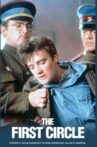
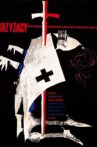
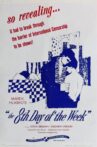
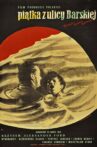
Aleksander Ford (born Mosze Lifszyc) was a Polish film director; and head of the Polish People's Army Film Crew in the Soviet Union during World War II. Ford became director of the nationalized Film Polski company following the Red Army occupation of Poland. In 1948 the new communist authorities appointed him professor of the National Film School in Łódź. Roman Polanski was among his students. Another of Ford's protégés was the Polish film director Andrzej Wajda. Ford made his first feature film, Mascot in 1930, after a year of making short silent films. He did not use sound until The Legion of the Streets (1932). When World War II began, Ford escaped to the Soviet Union and worked closely with Jerzy Bossak to establish a film unit for the Soviet-sponsored People's Army of Poland in the USSR. The unit was called Czołówka Filmowa Ludowego Wojska Polskiego (or simply Czołówka; spearhead). After the war, Ford was appointed head of the government-controlled Film Polski and held enormous sway over the country's entire film industry. In the process of accumulating power he denounced a fellow film director, Jerzy Gabryelski, to the NKVD secret police, contentiously accusing him of "reactionary" and "antisemitic" views, which resulted in Gabryelski's arrest and torture. Ford and a group of colleagues from the Polish Communist Party rebuilt most of the country's film production infrastructure. Roman Polanski wrote in his biography about them: "They included some extremely competent people, notably Aleksander Ford, a veteran party member, who was then an orthodox Stalinist. […] The real power broker during the immediate postwar period was Ford himself, who established a small film empire of his own." For the next twenty years, Ford served as professor at the state-run National Film School in Łódź. He is perhaps best remembered for directing the first postwar documentary Majdanek - cmentarzysko Europy (Majdanek – the Cemetery of Europe) and the feature film Knights of the Teutonic Order (1960), based on a novel of the same name by Polish author Henryk Sienkiewicz. Ford, a self-identified Communist, used his films to "express social messages on the screen," as in his documentaries: the award-winning Legion ulicy, (The Street Legion, 1932), Children Must Laugh (1936) and the postwar Eighth Day of the Week (1958) rejected by the communist party censors during the Polish October. Ford continued making films in Poland until the 1968 Polish political crisis. Accused of antisocialist activity and expelled from the Communist Party, Ford emigrated to Israel where he lived for the next two years. He later moved to Denmark and eventually settled in the United States. Ford made two more feature films, both of which were commercial and critical failures. In 1973, he made a film adaptation of Aleksandr Solzhenitsyn's novel The First Circle, a Danish-Swedish production that recounted the horrors of the Soviet gulag. In 1975 he made The Martyr (de), an English language, Israeli-German co-production based on the heroic story of Dr. Janusz Korczak. Blacklisted by the Polish communist government as a political defector, Ford became a non-person in contemporary discussions and analysis of Polish filmmaking. Isolated, he committed suicide in a Florida hotel on 4 April 1980. From Wikipedia, the free encyclopedia

Filmography

MOVIE
YEAR
WHERE TO WATCH