































































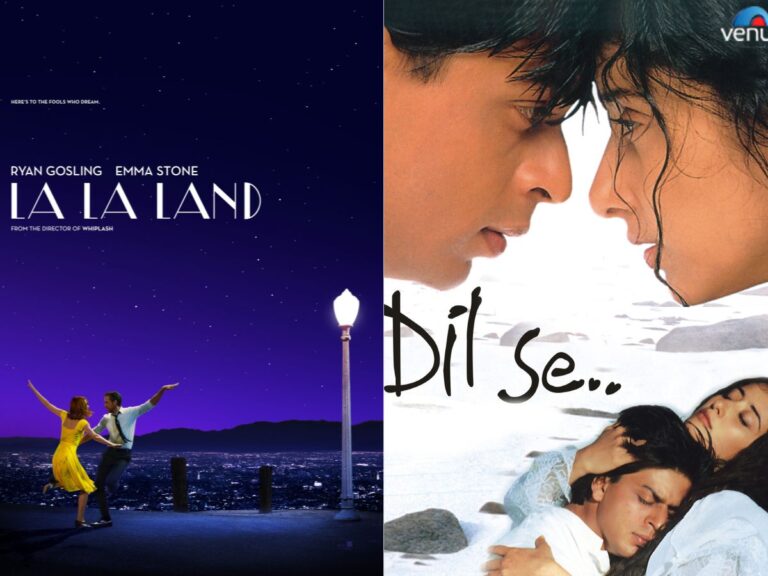
Bollywood and Hollywood approach music in their films with contrasting philosophies. Bollywood can feel like a never-ending parade of songs, while Hollywood often underplays music, prioritizing background scores over memorable melodies.
But with Bollywood leaning on its musical formula and Hollywood frequently treating music as a side element, it begs the question: is Bollywood overdoing it, while Hollywood underdoes it?
In Bollywood, music is more than just an addition to the storyline; it’s woven tightly into the fabric of the film. Bollywood films like Rockstar or Dil Se aren’t simply watched; they’re felt, largely because of their iconic soundtracks.
These songs aren’t just catchy tunes; they act as pivotal scenes and become emotional markers for audiences. Could we even imagine these films without songs like Jiya Jale or Kun Faya Kun? For years, Bollywood has relied on music to deepen the emotional resonance of its stories.
But while classic Bollywood used music thoughtfully, recent trends show a heavier reliance on songs that can sometimes feel like filler. Movies today pack in five or more songs—sometimes even remixes of past hits—leaving viewers to question if filmmakers are using music as a crutch. Just appeals to the Instagram crowd.
Recent films like Simmba and Bhool Bhulaiya 3 are loaded with remixes that feel less about advancing the story and more about capturing a sense of nostalgia or simply giving viewers something familiar. Have Bollywood filmmakers begun relying on these musical segments to the point where they weaken the story’s natural rhythm?
Films like Qala do some justice to the music, but that’s a once-in-a-blue-moon occurrence. In most cases, songs have become a habit rather than a necessity, which is definitely downgrading the quality and even their importance.
Hollywood’s relationship with music takes a different turn. Rather than embedding full-fledged songs into narratives, Hollywood largely uses music for soundscapes and background atmosphere, focusing on instrumental scores rather than vocals. Think of Hans Zimmer’s heavy, suspenseful music in Inception or the eerie tones of Interstellar.
These scores give weight to key scenes but often blend so subtly into the background that they may not stick with audiences afterward. But does Hollywood’s approach dilute the impact of its soundtracks, focusing too much on atmospheric sounds and not enough on creating memorable melodies?
And here lies the imbalance. Hollywood tends to lean on background scores that set the tone but can feel nearly invisible. For example, take the Marvel Cinematic Universe: outside of a few key themes, most of the music is designed to enhance the action without taking the spotlight. Do any of Marvel’s themes stick in the mind the way Bollywood songs do, or do they fade as the scene ends?
Hollywood has occasionally broken this mold with films like La La Land and The Greatest Showman, embracing bold and dynamic musical scores with vocal numbers at the forefront. But these films are exceptions rather than the rule. Even recent Disney animated hits like Frozen and Encanto—where music plays a significant role—are part of a smaller trend in which music becomes central.
However, once we step outside of musicals and animated features, Hollywood’s music mostly reverts to background score status. Has Hollywood perhaps underestimated the potential of vocal-driven music to elevate emotional moments, relying too heavily on atmospheric sounds alone?
At the heart of Bollywood’s musical philosophy is a certain theatricality. Songs often mirror the emotions of the characters, sometimes pausing the narrative entirely to dive into a musical sequence. This tradition goes back decades, but today, Bollywood’s relentless inclusion of music can feel excessive.
Do all these songs serve a purpose, or are they sometimes overused to fill space or attract listeners with catchy beats? The overuse of remixes of songs like Aankh Marey and Masakali suggests a shift from creating original, story-driven music to simply banking on past successes.
Meanwhile, Hollywood frequently overlooks the emotional potential of music with vocal arrangements. While there are certainly exceptions, vocal-driven songs are generally reserved for end credits or the occasional montage. Background scores, though expertly crafted, often feel like they’re there to support rather than stand out.
Does Hollywood’s music lose something by being so restrained?
The choice to underplay vocal music means that Hollywood films rarely have the kind of singable soundtracks that define Bollywood films. Isn’t there room for Hollywood to embrace the power of vocal music, even outside musicals?
Ultimately, Bollywood’s and Hollywood’s approaches reveal a certain stubbornness. Bollywood seems unwilling to let go of its tradition of song-and-dance numbers, even at the risk of story cohesion. Hollywood, on the other hand, limits its soundtracks to background atmospherics, rarely letting music step into the spotlight.
Both have much to gain by adjusting their approach. What if Bollywood trimmed down its music to enhance the story rather than overshadow it? And what if Hollywood explored the emotional depth of songs that do more than fill background silence?
In a world where Bollywood could be more selective with its songs, and Hollywood could embrace music with more boldness, both industries could redefine the role of music in cinema. While Bollywood’s excess and Hollywood’s restraint each have their place, a more balanced approach could lead to unforgettable moments for audiences worldwide. Who would hate that?
We’re hiring!
We are hiring two full-time junior to mid-level writers with the option to work remotely. You need to work a 5-hour shift and be available to write. Interested candidates should email their sample articles to [email protected]. Applications without a sample article will not be considered.
