































































In recent years, Indian cinema has evolved into a global powerhouse. With polished visuals, advanced technology, and growing international appeal, the industry now competes with the best in the world. But with this modernization comes a lingering concern—has Indian cinema sacrificed its once-bold spirit of risk-taking for the comfort of box-office success?
Consider the types of films that dominate the scene today. Movies that once challenged the status quo with innovative stories and bold themes have become rarer. Instead, we often see safe, formula-driven blockbusters that follow a predictable pattern.
Contrast this with earlier decades when filmmakers like Guru Dutt took risks with projects like Kaagaz Ke Phool, a film that dared to explore the emotional toll of stardom, even though it was a commercial failure. Similarly, Mani Ratnam’s Bombay tackled sensitive political and religious themes, a brave move in the 1990s that would be considered risky even today.
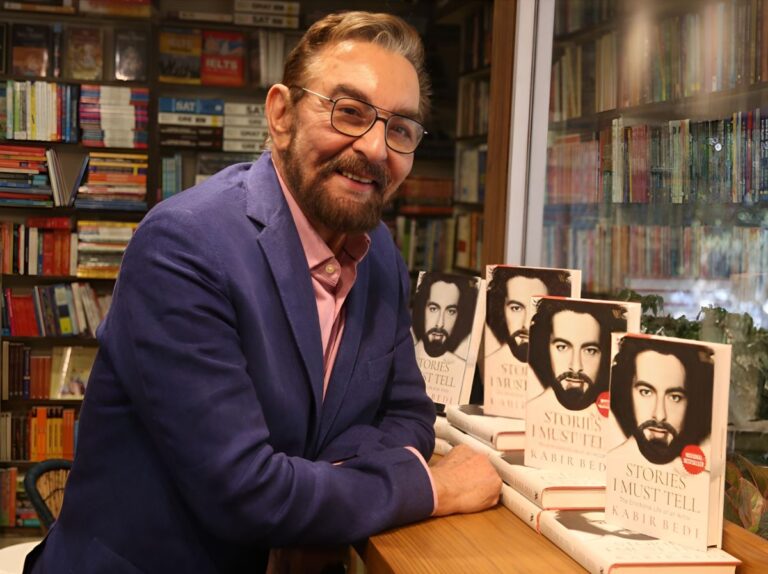
Kabir Bedi’s reflections shed light on this shift in Indian cinema. In recent interviews, he observed that the industry, while more professional and globally competitive, has become less willing to take chances.
His experience in Bollywood, South Indian cinema, and Hollywood highlights how Indian filmmakers once had the courage to tell unconventional stories, even if it meant taking financial risks. Bedi pointed out that older filmmakers were driven more by their passion for storytelling than by the fear of commercial failure.
Take Sholay, for example. Released in 1975, it was a huge gamble at the time, blending Western-inspired action with Indian melodrama and taking a chance on a relatively new format.
Yet, it became a cultural phenomenon that changed the face of Indian cinema. Fast forward to the present, and such bold ventures are few and far between. Films like Gully Boy or Tumbbad—which took risks in storytelling and visual style—are exceptions, not the rule.
Bedi’s insights also underline how today’s corporate-driven filmmaking processes play a role in stifling creativity. In Hollywood, scripts go through multiple layers of review and revisions, ensuring they align with market demands.
Bedi noted that a similar trend is creeping into Indian cinema, where scripts are scrutinized by executives concerned more with financial returns than artistic expression. This has led to an industry that churns out remakes or “franchise films” like Dabangg or Housefull, which are safer bets, but lack the daring storytelling that once defined Indian cinema.
Yet, as Bedi rightly pointed out, filmmaking is a creative process, one that thrives on innovation and experimentation. The current trend of playing it safe may guarantee box office success, but it risks diminishing the artistic legacy of Indian cinema.
Imagine if filmmakers like Anurag Kashyap, who pushed boundaries with Gangs of Wasseypur, or Rajkumar Hirani, who challenged societal norms with PK, were stifled by the same risk-averse culture that dominates today. These films wouldn’t exist in their daring form.
Indian cinema has always thrived on its ability to take risks, be it with themes, storytelling, or visual style. If it loses that edge, it may find itself churning out profitable yet forgettable films, instead of timeless classics. It’s crucial that the industry finds a balance between commercial success and creative freedom to keep pushing boundaries. Only then can Indian cinema reclaim its place as a force that not only entertains but also challenges and inspires.
We’re hiring!
We are hiring two full-time junior to mid-level writers with the option to work remotely. You need to work a 5-hour shift and be available to write. Interested candidates should email their sample articles to [email protected]. Applications without a sample article will not be considered.
