































































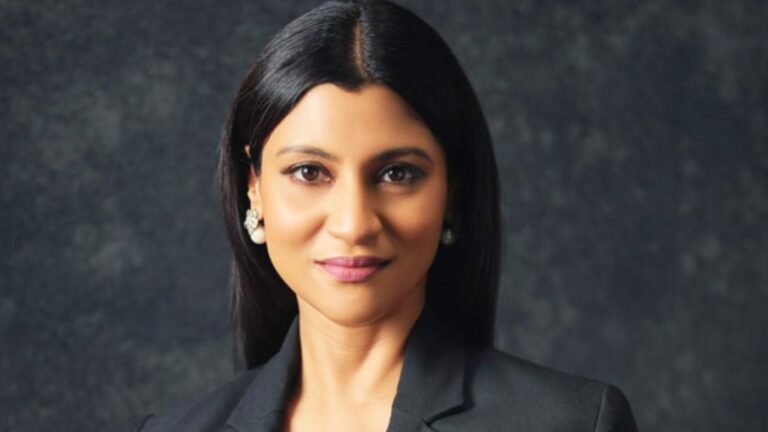
For decades, Indian cinema has viewed queer characters through two narrow lenses: they were either the punchline of a derogatory joke or the central problem of a tragic social drama. But as Konkona Sen Sharma steps into the shoes of Dr Geetika Sen in Anubhuti Kashyap’s Accused, she is signalling the end of that era.
In her recent interview with Just Too Filmy, Konkona highlighted a profound gap in our storytelling.
“We often will not have characters in films who are homosexual unless we are dealing with it as an issue,” she noted. Her portrayal of a London-based surgeon in a relationship with another woman (played by Pratibha Ranta) seeks to break this “default” setting of the straight, male protagonist.
Accused refuses to make the protagonist’s sexuality the primary source of conflict. Geetika’s world unravels not because of who she loves, but because of professional allegations and the crushing weight of public judgment.
By treating her marriage to Meera as a baseline reality rather than a plot point to be solved, the show achieves true inclusivity. It suggests that queer people, like anyone else, have complex professional lives, legal battles, and moral ambiguities that have nothing to do with their orientation.
While mainstream Bollywood often remains tethered to safe tropes to satisfy the box office, Indian OTT platforms (Netflix, Prime Video, JioHotstar) have become the laboratory for social change. OTT serves as a mirror to the actual diversity of modern India and the global Indian diaspora, where queer professionals are present in every field.
But… there’s always a but…
But the main pushback Accused is already facing comes from a growing crowd of Indian viewers who feel like Netflix is shoving a Western agenda down their throats.
Nowadays, we often see critics calling this “forced diversity” or “woke propaganda,” arguing that these platforms are more interested in social engineering than actually telling a good story.
Plus, a lot of the heat comes from people wanting to protect traditional or cultural values, seeing this move to normalise queer love as a threat to Indian culture. There’s a deep-seated suspicion that tech giants are just checking boxes for global diversity quotas rather than being creative.
Ultimately, Accused stands at the centre of a growing divide in the Indian digital space. While it represents a leap forward for those advocating for nuanced, authentic representation, it simultaneously acts as a flashpoint for those wary of shifting cultural narratives.
As the industry moves forward, the success of such titles will likely depend on their ability to balance these progressive themes with storytelling that resonates across India’s diverse and often polarised audience. Stay tuned for more updates.
We’re hiring!
We are hiring two full-time junior to mid-level writers with the option to work remotely. You need to work a 5-hour shift and be available to write. Interested candidates should email their sample articles to [email protected]. Applications without a sample article will not be considered.
