































































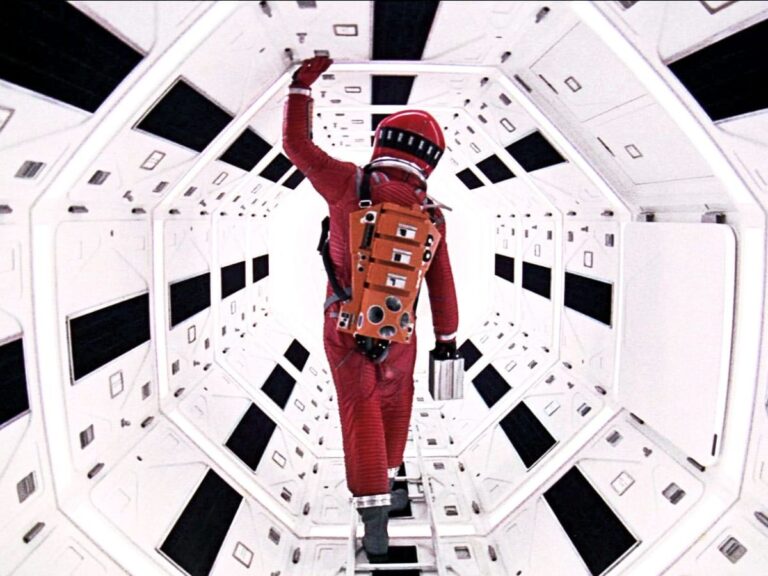
Stanley Kubrick’s 2001: A Space Odyssey is a cinematic masterpiece, revered for its philosophical depth, visual grandeur, and craftsmanship. Released in 1968, it still stands as a timeless exploration of humanity, technology, and the unknown. In an era where science fiction films tend to focus on spectacle and fast-paced action, 2001: A Space Odyssey feels like an outlier. It’s not just because of its innovative use of visual effects or its enigmatic storyline. The fundamental difference lies in the approach to storytelling, the patience it requires from its audience, and the ambition it represents—qualities Hollywood seems less inclined to embrace today.
One of the key reasons 2001: A Space Odyssey remains so unique is its pace. Kubrick was in no rush to tell his story. The film unfolds slowly, deliberately, giving the audience time to absorb its vast scope and ponder its deeper meanings. Scenes like the docking sequence set to “The Blue Danube” or the extended monolith scenes are slow, methodical, and hypnotic.
There’s a silence, a stillness that allows viewers to reflect on the grandeur of space and the fragility of humanity. This kind of pacing is nearly extinct in modern Hollywood, where the pressure to keep audiences constantly engaged leads to rapid cuts, non-stop action, and minimal breathing room.
Today’s blockbuster films are designed for immediate impact. The storytelling is more straightforward, the characters more accessible, and the themes more obvious. Audiences are accustomed to high-energy sequences that deliver immediate thrills. The space for ambiguity, silence, and contemplation has shrunk.
Kubrick’s film was not afraid to challenge the viewer to sit with uncertainty, to grapple with existential questions, and to interpret the film’s meaning on their own. This approach is rare in the modern film industry, where movies are typically tested and refined to ensure maximum accessibility and understanding.
2001: A Space Odyssey is also notable for its focus on the relationship between humanity and technology, a theme that’s become increasingly relevant as our world becomes more dependent on machines. But unlike modern films that often explore these themes through the lens of conflict or dystopia, 2001: A Space Odyssey takes a more philosophical approach. HAL 9000, the film’s AI antagonist, is not a simple villain. His malfunction is as much a tragedy as it is a threat, raising questions about the nature of intelligence, trust, and control.
Kubrick doesn’t offer clear answers; he simply presents a scenario and lets the audience decide what to make of it. Hollywood today tends to shy away from such ambiguity, preferring to provide audiences with clear heroes, villains, and resolutions.
Another factor that makes Space Odyssey such a singular experience is its lack of traditional character development. The human characters are secondary to the film’s larger themes and visual splendor. They are not there to drive the plot in the way modern audiences have come to expect. This detachment might seem cold, but it serves a purpose.
The film is more concerned with humanity as a whole rather than individual stories. Hollywood films today are often driven by character arcs and emotional journeys, catering to an audience that seeks personal connection with the protagonists. Kubrick, however, was more interested in exploring humanity’s place in the cosmos than in telling a personal story.
Visual storytelling in Space Odyssey is unparalleled, and despite the advances in CGI and visual effects, there is a tactile, grounded quality to the film that modern blockbusters rarely achieve. Kubrick’s obsessive attention to detail, the use of practical effects, and the innovative cinematography created a world that feels eerily real, despite its futuristic setting.
Today’s Hollywood films, while visually stunning, often rely heavily on CGI, which can sometimes lack the tangible, weighty feel of practical effects. Kubrick’s insistence on realism, even in the realm of science fiction, gave Space Odyssey a sense of authenticity that is hard to replicate.
Another element that sets 2001: A Space Odyssey apart from modern Hollywood films is its willingness to embrace mystery. The monoliths, the film’s central enigma, are never fully explained. Their presence, purpose, and meaning remain open to interpretation, inviting viewers to draw their own conclusions. In contrast, today’s films tend to explain every plot point, tie up loose ends, and ensure that the audience leaves with a clear understanding of what just happened. The idea that a film could end with more questions than answers, as Space Odyssey does, feels almost radical in today’s cinematic landscape.
Space Odyssey is also a product of its time—a time when filmmakers were given more creative freedom, and studios were willing to take risks on ambitious, experimental projects. Kubrick had the support of MGM, who allowed him to make the film he wanted without interference. In today’s Hollywood, the financial stakes are higher, and studios are more risk-averse.
Big-budget films are often shaped by focus groups, marketing departments, and franchise considerations. The desire to appeal to the broadest possible audience can dilute the vision of even the most talented directors. It’s hard to imagine a film like Space Odyssey, with its slow pace, abstract narrative, and ambiguous ending, getting the green light from a major studio today.
We’re hiring!
We are hiring two full-time junior to mid-level writers with the option to work remotely. You need to work a 5-hour shift and be available to write. Interested candidates should email their sample articles to [email protected]. Applications without a sample article will not be considered.
