































































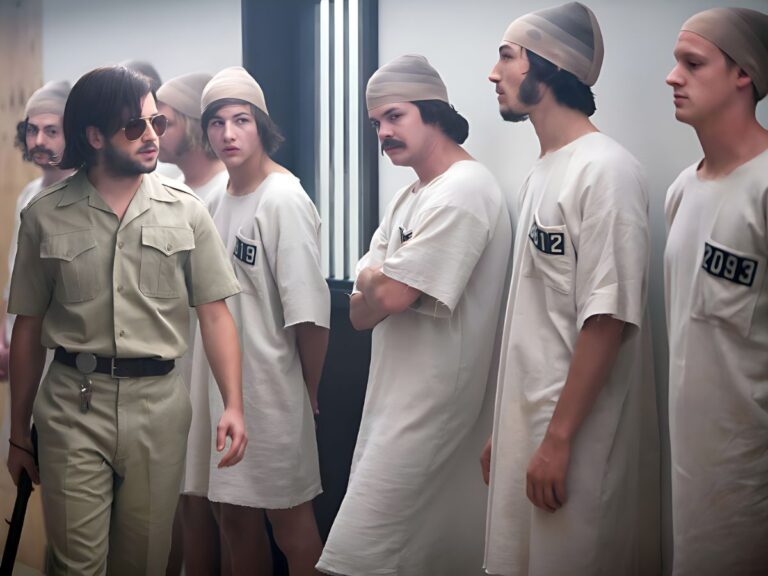
If you’re intrigued by psychological dramas that make you question the nature of human behavior, The Stanford Prison Experiment should be on your watchlist. This film takes a deep dive into one of the most controversial experiments in history, where the boundaries between morality and authority blur in unsettling ways.
The film, based on real events from 1971, recreates the infamous psychology study conducted by Dr. Philip Zimbardo. Twenty-four college students were randomly assigned roles as either guards or prisoners in a simulated prison environment. What starts as a harmless experiment quickly spirals into a disturbing psychological breakdown, as the “guards” begin abusing their power, and the “prisoners” find themselves trapped in a terrifying reality. The tension builds, and soon, the line between reality and role-play vanishes.
The performances, especially by Billy Crudup as Zimbardo, capture the chilling transformation of these students as they adapt to their roles in ways that will shock you. It’s not just about the experiment itself but the way it reveals the darker side of human nature when authority is given unchecked. The actors convincingly portray the unraveling of their characters, making it hard to look away as things spiral out of control.
This isn’t an easy watch—it’s the kind of film that sticks with you long after it’s over. It forces you to reflect on how easily ordinary people can be pushed into doing things they wouldn’t normally consider, given the right circumstances. It’s a haunting reminder of how fragile the moral compass can be when power dynamics shift.
For those ready to witness a chilling study of power, control, and human psychology, The Stanford Prison Experiment is now available on Prime Video. You can stream it for ₹99.
We’re hiring!
We are hiring two full-time junior to mid-level writers with the option to work remotely. You need to work a 5-hour shift and be available to write. Interested candidates should email their sample articles to [email protected]. Applications without a sample article will not be considered.
