































































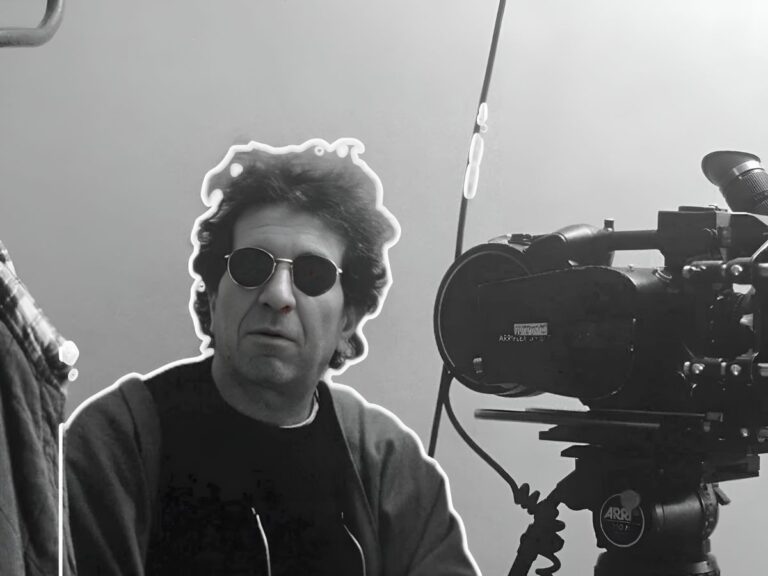
Dariush Mehrjui, a pioneering figure in Iranian cinema, has left an indelible mark on both Iranian film culture and global cinema. His work, characterized by a deep exploration of existential themes, social commentary, and a dedication to neorealism, helped lay the foundation for the Iranian New Wave. Mehrjui’s nuanced approach to storytelling, often filled with symbolic elements and moral ambiguity, has influenced generations of filmmakers in Iran and beyond.
Mehrjui emerged as a filmmaker in the late 1960s, a time when Iranian cinema was dominated by commercial and melodramatic films with little artistic merit.
However, his education in philosophy and film in the United States introduced him to a different world of filmmaking—European art cinema, American independent cinema, and the works of directors like Michelangelo Antonioni and Robert Bresson, which greatly influenced his vision.
His first major work, The Cow, was a groundbreaking film that not only established Mehrjui as a serious filmmaker but also marked the birth of the Iranian New Wave.
The film tells the story of a poor villager who spirals into madness after his beloved cow dies. It is often cited as a metaphor for the psychological and societal struggles faced by Iran at the time. The film’s focus on rural life, poverty, and individual despair was a sharp departure from the mainstream escapist cinema that dominated the market.
Mehrjui’s use of non-professional actors, his minimalist style, and his focus on social realism in The Cow would become hallmarks of Iranian cinema in the decades to follow.
The film was so influential that it reportedly caught the attention of Mohammad Reza Shah Pahlavi, who initially banned it but later allowed its screening due to international acclaim. The Cow became a powerful voice in Iranian cultural conversations, representing the existential struggles of Iranian society.
One of the most striking aspects of Mehrjui’s work is his philosophical approach to cinema. His films often delve into existential and moral dilemmas faced by individuals in a rapidly changing society.
Whether it’s the rural isolation in The Cow or the urban alienation in The Cycle, Mehrjui’s characters grapple with identity, societal expectations, and personal freedom.
The Cycle, for instance, tackles the ethical complexities of healthcare and poverty. The film portrays the life of a young man who, in desperation, sells his blood to support his family. It questions the ethics of exploitation and human dignity, drawing on themes of corruption and inequality that are deeply philosophical in nature.
These moral questions, framed within a realistic setting, showcase Mehrjui’s ability to combine the personal with the political—a trait that became central to Iranian New Wave cinema.
Mehrjui’s background in Western philosophy and literature also profoundly influenced his films. Many of his works were adaptations of Western novels, reinterpreted within the Iranian cultural and social context. For example, The Postman is an adaptation of Albert Camus’ The Stranger, and Hamoun draws heavily on existential philosophy and spiritual crisis.
Hamoun is a complex film about a man undergoing a midlife crisis, questioning his marriage, career, and purpose in life. The film borrows heavily from the works of authors like Franz Kafka and Fyodor Dostoevsky, making it both a psychological and metaphysical exploration.
Mehrjui’s adaptation of Miss Julie in Sara is another example of how he merged Iranian culture with Western literary tradition. Based on August Strindberg’s play, Sara revolves around a woman who sacrifices her dignity and financial security to help her husband, only to face betrayal and disappointment.
In this film, Mehrjui sheds light on the gender dynamics and patriarchal structures in Iranian society while retaining the essence of Strindberg’s original work. By transposing Western stories into Iranian settings, Mehrjui enriched Iranian cinema with layers of philosophical thought and universal themes.
Another significant aspect of Mehrjui’s cinema is his focus on the role of women in society. Films like Leila and Sara highlight the struggles of women who must navigate their desires, duties, and identities within the constraints of traditional Iranian values. In Leila, Mehrjui presents the internal conflict of a woman pressured by her in-laws to allow her husband to take a second wife due to her infertility. This poignant portrayal of Leila’s emotional turmoil sheds light on the societal expectations placed upon women, while also critiquing the inherent patriarchy of the time.
Mehrjui’s portrayal of women was revolutionary for Iranian cinema. He gave his female characters depth and agency, making them central to the narrative rather than relegating them to the background.
His films invited conversations about gender inequality, family dynamics, and the psychological toll of societal norms on women. In doing so, Mehrjui contributed to the larger feminist discourse within Iranian art and culture.
Mehrjui’s contribution to Iranian cinema extends beyond his own filmography. As one of the forerunners of the Iranian New Wave, his work influenced future directors such as Abbas Kiarostami, Jafar Panahi, and Asghar Farhadi. These filmmakers carried forward the legacy of realism, symbolism, and social critique that Mehrjui had pioneered.
Abbas Kiarostami, for instance, borrowed elements of Mehrjui’s minimalism and focus on everyday life, while Farhadi’s complex character-driven narratives bear the imprint of Mehrjui’s philosophical and psychological depth.
The success of these filmmakers on the international stage is, in part, a testament to the foundation Mehrjui helped build. His influence stretched beyond Iran, contributing to global discussions about neorealism and existential cinema.
In addition to influencing individual filmmakers, Mehrjui’s films pushed Iranian cinema toward a more thoughtful, introspective, and globally recognized form. By blending Iranian culture with universal themes, his work helped put Iranian cinema on the map, making it an important part of global art cinema.
Dariush Mehrjui is not just a filmmaker; he is a philosopher of cinema. His films transcend entertainment, engaging audiences in deep existential questions, social critique, and personal reflection. By combining realism with symbolic depth, his work opened new doors for Iranian cinema and challenged the norms of traditional filmmaking.
Mehrjui’s exploration of the human condition, his ability to merge Western philosophical ideas with Iranian cultural settings, and his pioneering role in the Iranian New Wave ensure that his legacy will endure. His films continue to inspire filmmakers and viewers alike, reminding us that cinema, at its best, is a tool for understanding the complexities of life and society. Through his craft, Mehrjui gave voice to the silent, shed light on the overlooked, and brought Iranian cinema into the global conversation.
We’re hiring!
We are hiring two full-time junior to mid-level writers with the option to work remotely. You need to work a 5-hour shift and be available to write. Interested candidates should email their sample articles to [email protected]. Applications without a sample article will not be considered.
