































































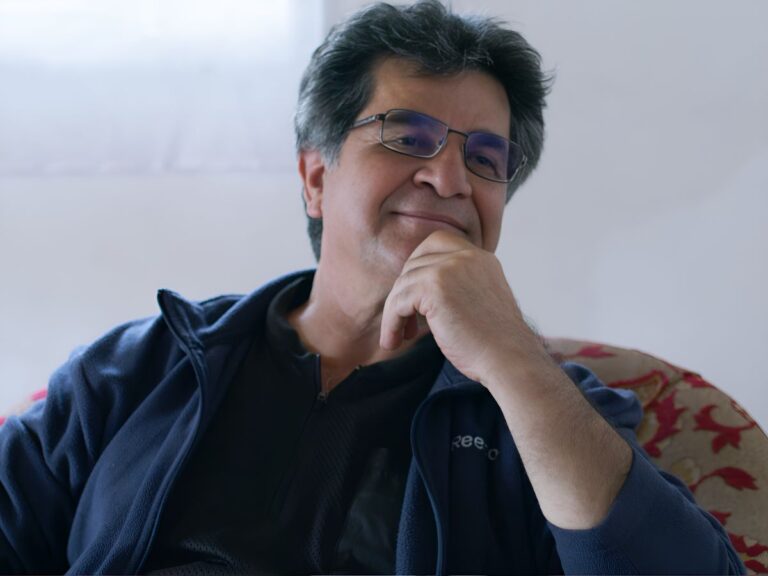
Jafar Panahi’s rise to the top of Iranian cinema is nothing short of remarkable. Over the years, he’s become a filmmaker who pushes boundaries, questions norms, and tells stories that deeply resonate with audiences.
What sets him apart is his ability to blend powerful social commentary with simple, everyday narratives—something that’s not easy to pull off, especially in a country like Iran, where censorship looms large over creative expression.
Take The Mirror, for example. It starts off as a straightforward story about a young girl trying to find her way home. But halfway through, Panahi does something bold. The girl suddenly stops acting, looks into the camera, and breaks character. It’s unexpected, almost shocking, and turns the whole film on its head.
What you thought was a simple narrative becomes something else entirely—a reflection on the very process of filmmaking itself. That’s Panahi’s magic. He takes what seems ordinary and adds layers that make you think.
A major theme in Panahi’s work is his focus on marginalized voices, especially women. In The Circle, Panahi follows the stories of several women in Tehran, each dealing with their own struggles.
What makes the film powerful isn’t just the depiction of their hardships, but how Panahi portrays them—strong, resilient, and determined despite a system that’s clearly against them. It’s not heavy-handed. It’s real. You feel the weight of their struggles, but you also see their strength. Similarly, Offside tackles gender discrimination in a way that’s both humorous and heartbreaking.
The film follows a group of women who try to sneak into a football match, which is illegal for them in Iran. What’s great about Offside is that it’s not just a critique of the system—it’s also fun to watch. Panahi uses humor to drive home the absurdity of these restrictions.
One of Panahi’s standout qualities is his subtlety. He doesn’t need to shout his message from the rooftops. Instead, he lets his characters and their everyday lives do the talking. In Taxi, Panahi himself plays a taxi driver, picking up passengers around Tehran.
At first glance, it seems like a random series of conversations, but each one is loaded with meaning. It’s through these casual exchanges that Panahi comments on censorship, repression, and the reality of living in a society where even making a film can be an act of rebellion. And that’s the beauty of it—there’s no preachiness. You’re drawn into these conversations, and before you know it, you’re thinking about the larger implications of every word.
What makes Panahi’s story even more compelling is his refusal to stop creating, even after being banned from filmmaking. Despite being placed under house arrest, he found ways to work around the restrictions. In This Is Not a Film, Panahi films himself inside his home, talking about the frustration of not being able to make movies.
The film was famously smuggled out of Iran on a USB hidden in a cake. It’s raw, unpolished, and a powerful statement on how deeply he’s committed to his craft. Even in the face of such oppressive conditions, Panahi’s creativity shines through.
His films might be rooted in Iranian society, but the themes he explores—freedom, injustice, identity—are universal. That’s why his work has been celebrated internationally. Crimson Gold, for instance, tackles the mental toll of living in an unjust society. It’s dark, it’s heavy, but it’s also incredibly human. And that’s what Panahi does best—he tells human stories that anyone, anywhere, can connect with.
Panahi’s genius lies in how he uses the everyday to tell stories that matter. His films are personal, intimate even, but the impact they leave behind is massive. He’s faced enormous challenges—both professionally and personally—but nothing has stopped him from making films that speak to truth and justice.
We’re hiring!
We are hiring two full-time junior to mid-level writers with the option to work remotely. You need to work a 5-hour shift and be available to write. Interested candidates should email their sample articles to [email protected]. Applications without a sample article will not be considered.
