































































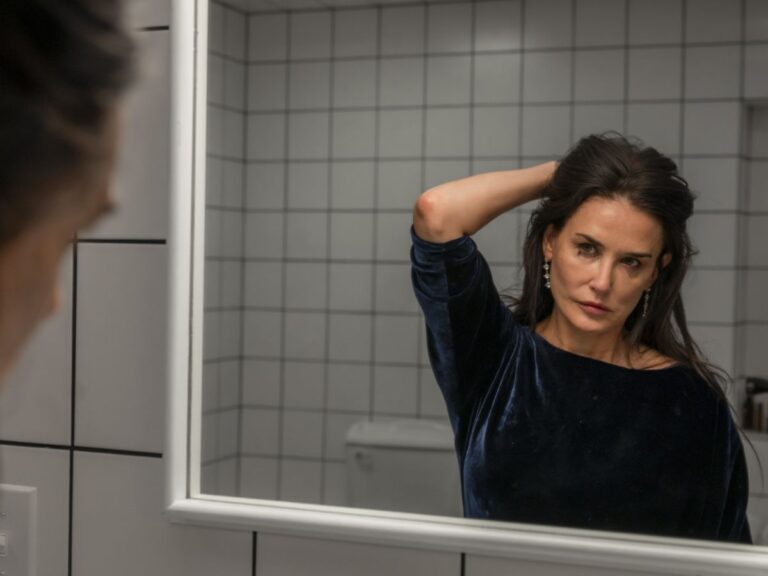
For a very long time in cinema, women have been the most influential marketing trick of films across industries.
From item numbers in Bollywood to sensual love interests in Hollywood, women’s portrayal has often been about drawing attention, leading to a long history of sexualizing and objectifying them.
A recent example is the movie The Substance.
While the film tackles deeper themes and uses nudity as a crucial part of its storytelling, much of the online buzz has focused on sexualizing the female lead, Sue. Many promotional tweets and discussions highlight scenes that show her exposed body, overshadowing the movie’s meaningful message.
It’s true that the sensual portrayal of Sue ties closely to the story—her character’s journey and quest for stardom. But the film’s marketing has leaned heavily on these visuals, ignoring its more profound themes about self-discovery and greed.
Fans online have pointed this out, reminding others that the movie is about much more than just female bodies. It has layered storytelling that deserves attention beyond the characters’ appearances.
This trend isn’t new—it’s been around for decades. The real question is: when will we stop using women’s bodies as a way to promote films? It’s the 21st century, and it’s time to move on from this outdated approach.
and it keeps going... the way this movie has a lot of good shots but they'll always come w the same type of pics and we know why pic.twitter.com/cI3wzoMzwc
— ً (@alley9p) November 26, 2024
The Substance (2024) pic.twitter.com/goR4R6Mpju
— Marianne 🎃🔪 (@ScreamQueen514) November 24, 2024
The Substance (2024) pic.twitter.com/Zm3kxCDILi
— cinesthetic. (@TheCinesthetic) November 25, 2024
Margaret Qualley in "The Substance" pic.twitter.com/x30zpE5nad
— 𝗗𝗶𝘆𝗮 (@diyadarling_) November 25, 2024
We’re hiring!
We are hiring two full-time junior to mid-level writers with the option to work remotely. You need to work a 5-hour shift and be available to write. Interested candidates should email their sample articles to [email protected]. Applications without a sample article will not be considered.
