































































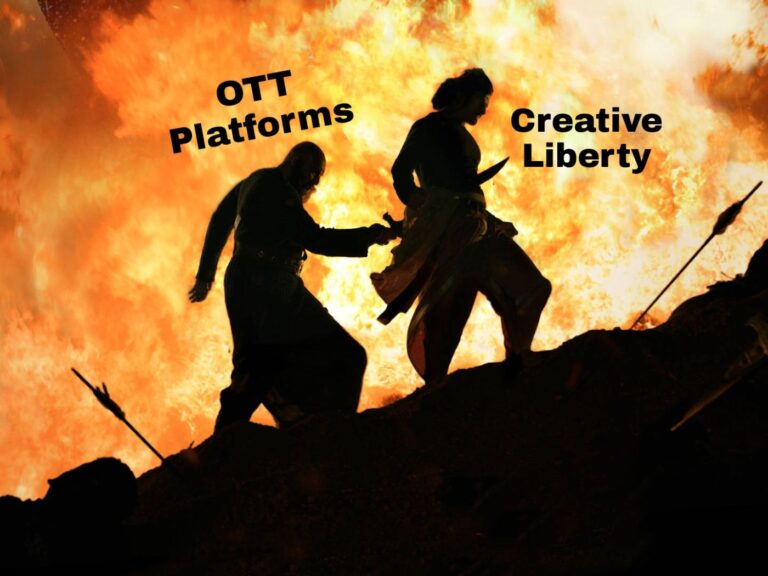
Imagine pouring your heart into a film, crafting every frame, every silence, every intense moment, only to find out years later that your work has been edited without your consent. That’s exactly what happened to Shekhar Kapur, whose Bandit Queen, a brutal, unflinching film about Phoolan Devi, was altered beyond recognition on an OTT platform. His frustration is not just about one film; it’s about a growing fear among filmmakers. Are OTT platforms, once seen as a haven for creative expression, now becoming the very force that stifles it?
For years, streaming platforms were hailed as the antidote to censorship, places where artists could tell bold, uncompromising stories without interference. But recent incidents suggest otherwise. Films are being re-edited, scenes removed, narratives reshaped—often without the filmmaker’s knowledge. And it’s not just about content being toned down; it’s about who gets to tell what kind of stories.
Would an Indian filmmaker today be allowed to make Bandit Queen the way it was made in 1994? Shekhar Kapur isn’t so sure. Neither are directors like Hansal Mehta and Sudhir Mishra, who have long expressed concerns that India’s storytelling space is shrinking. The kind of risk-taking that made Bandit Queen or Black Friday or Parzania possible is increasingly rare. Stories are expected to fit into neat formulas, fast-paced, digestible, and, most importantly, safe.
And this isn’t just about India. The question Kapur raised—“Would they dare to edit a Christopher Nolan film without his permission?”, hits at a deeper issue. The difference in how Western and Indian filmmakers are treated is stark. While international directors are given the freedom to experiment, Indian storytellers are often met with resistance. Their work is not just edited; their vision is compromised.
What’s worse, this quiet interference often goes unnoticed. Unlike theatrical censorship, where cuts are publicly debated, OTT edits happen behind the scenes. There are no disclaimers, no warnings—just an altered version of the film, stripped of the nuances that made it powerful in the first place.
If this trend continues, where does that leave Indian cinema? Will directors be forced to choose between creative integrity and distribution? Will we only see the kinds of stories that fit into safe, advertiser-friendly molds?
For an industry that prides itself on storytelling, this is a dangerous crossroads. Filmmakers should not have to fight for the right to have their own work shown as they intended. And if OTT platforms truly want to be champions of creativity, they must stop treating films as mere content to be edited and reassembled at will. Otherwise, they risk becoming just another gatekeeper—one that decides not just what stories get told, but how they get told.
We’re hiring!
We are hiring two full-time junior to mid-level writers with the option to work remotely. You need to work a 5-hour shift and be available to write. Interested candidates should email their sample articles to [email protected]. Applications without a sample article will not be considered.
