































































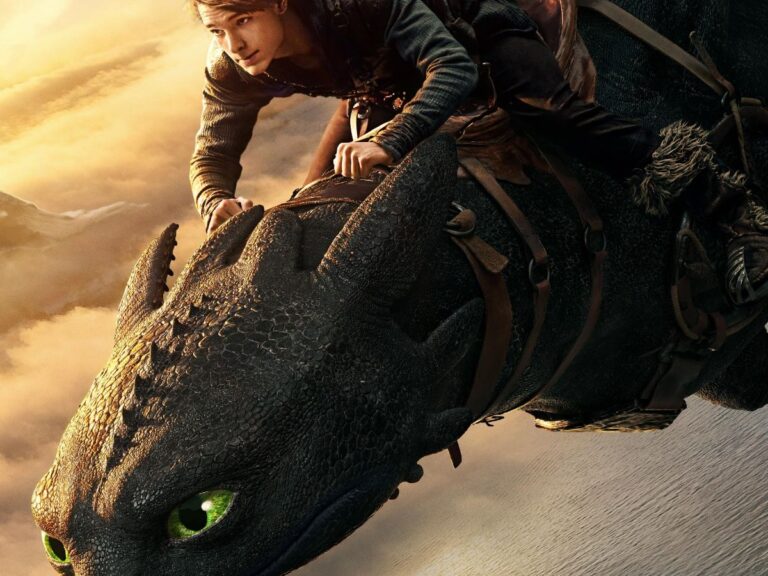
Since 2016, we have witnessed a heavy influx of live-action remakes of animated classics. It’s not that such remakes didn’t exist before, but after the release of The Jungle Book (2016), and its unexpectedly spectacular box-office performance and surprising critical acclaim, Disney’s confidence in live-action remakes was significantly bolstered. This success also inspired other studios, such as DreamWorks, to follow a similar path. Nine years later, we have How to Train Your Dragon (2025), an official live-action remake of the beloved 2010 original.
The first movie, which launched the original animated trilogy, tells the story of Hiccup, a young Viking outsider. He defies his father and the rest of his dragon-hating village by forming an unlikely friendship with a dragon who appears terrifying but is actually quite gentle, and whom he names Toothless.
However, there’s no denying that live-action remakes of animated classics have also gained a notorious reputation for failing to live up to the standards of their source material. The Jungle Book (2016) remains one of the few remakes that managed to outperform the original, both commercially and critically.
So, where does the new How to Train Your Dragon remake stand? By all early accounts, it has performed quite brilliantly.
The latest directorial effort from Dean DeBlois (helmer of the original animated trilogy) has not only delivered a live-action remake that pleases fans of the original film, but has also set a new standard for how remakes should be approached—with care and love.
The first reviews for How to Train Your Dragon (2025) are highly positive. On Rotten Tomatoes, the film has earned an impressive 83% ‘fresh’ critic score based on over 40 certified reviews. On IMDb, it holds a rating of 8 out of 10. These ratings are especially promising, considering how live-action remakes often struggle to meet audience expectations.
According to initial reviews, the remake runs about 30 minutes longer than the animated version and occasionally drags. However, the additional runtime is used effectively to deepen secondary characters like Astrid and Snotlout. Notably, a conversation with Astrid, now portrayed by a person of colour, powerfully conveys her frustration with Hiccup’s privilege. The film also subtly explores Snotlout’s experience with parental neglect, culminating in a surprisingly moving resolution.
Moreover, the 2025 remake has been praised for its CGI, dragon designs, John Powell’s score, and standout performances, particularly those of Gerard Butler (Stoick the Vast), Mason Thames (Hiccup), and Nico Parker (Astrid). Stay tuned for more updates.
We’re hiring!
We are hiring two full-time junior to mid-level writers with the option to work remotely. You need to work a 5-hour shift and be available to write. Interested candidates should email their sample articles to [email protected]. Applications without a sample article will not be considered.
