































































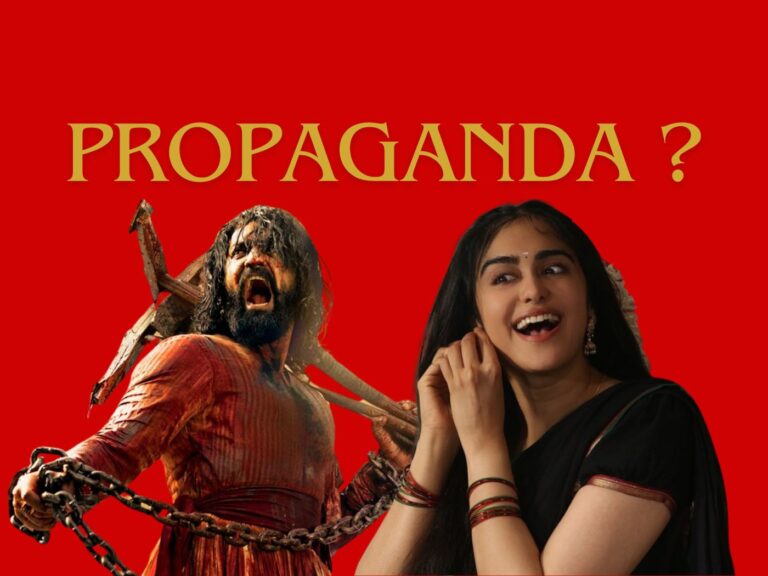
Let’s face it, “propaganda” has become the new buzzword for anything we don’t personally agree with. The second a film showcases an idea that doesn’t fit within our carefully built political echo chamber, we’re quick to dismiss it. Not as art. Not as a perspective. But as propaganda.
This isn’t a new phenomenon. But it’s certainly louder now.
The Kashmir Files was either a long-overdue truth or blatant propaganda, depending on who you asked. Article 15 was praised for its progressive stance by some, and slammed by others as a calculated liberal narrative.
Even The Accidental Prime Minister and Tandav weren’t spared. Every political leaning, every ideological position, has a film that’s either been hero-worshipped or torn to shreds under the “propaganda” lens.
But here’s the thing: all films carry a point of view. All directors, consciously or unconsciously, inject their beliefs into the frame. Art, by nature, is political.
So, when did we stop engaging with films critically and start labelling them so carelessly?
It’s a lazy lens. One that makes us avoid conversations. Because the minute we call something propaganda, we don’t have to engage with its message anymore. We’ve already invalidated it.
Now, are all films free of this charge? Definitely not. Some films are made with the sole intention of polishing one’s image. Whether it’s state-funded biopics or thinly veiled PR exercises, there are films that exist less as storytelling and more as brand-building. You can sense the agenda.
The script bends over backwards to glorify, whitewash, or conveniently omit inconvenient truths. In such cases, the word “propaganda” isn’t misplaced. But here’s the nuance—we’ve stretched that label so thin that even films with a perspective, but no clear political motive, get lumped in with the worst offenders.
And now, Chhaava is in the line of fire. A historical epic about Chhatrapati Sambhaji Maharaj—already written off as a propaganda film by many, without even watching it. Why? Because it dares to step into a space people already have strong feelings about.
We’ve become so tribal in our ideologies that we don’t want to hear the other side. Not even through the cinema. And that says more about us than the films we critique.
We’re hiring!
We are hiring two full-time junior to mid-level writers with the option to work remotely. You need to work a 5-hour shift and be available to write. Interested candidates should email their sample articles to [email protected]. Applications without a sample article will not be considered.
