































































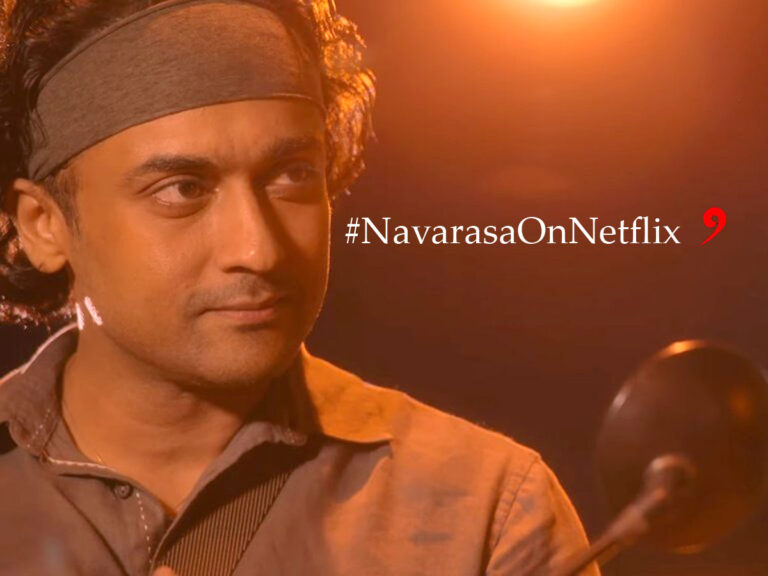
Yesterday, the much-anticipated Netflix anthology unveiled an intriguing trailer. Besides, a ‘Navarasa’ Twitter Emoji was also launched. However, this is not the first time a Twitter emoji has been deployed as a marketing strategy in order to promote a film or a web series. Let us delve deeper into the brief history of Twitter emojis by Indian filmmakers and how it benefits them.
The inception of customized Twitter emojis in India goes way back in the year 2015 when India’s first-ever #MakeInIndia emoji was introduced. The innovative concept was driven forward by the institution of the first-ever Indian language emojis that was activated by writing the words ‘Diwali’ in either Hindi or English languages.
The bigshots of the Indian entertainment industry too did not miss the opportunity to join the lucrative bandwagon as ‘Befikre’ became the first Indian movie to get an emoji in the year 2016. Aditya Chopra’s directorial debut blockbuster film ‘Dilwale Dulhania Le Jayenge’ was the first film to receive a customized emoji on its silver jubilee.
Similarly, the first TV show to get an emoji was the tenth season of ‘Bigg Boss’ which was hosted by superstar Salman Khan. The trend continued when Salman Khan became the first Hindi film celebrity to get an exclusive emoji for his film ‘Tubelight’. Other Bollywood movies like ‘Mission Mangal’, ‘Bharat’, ‘Zero’, ‘URI’, and ‘Gold’ were also the recipients of various emojis that were related to their film’s respective themes or principal characters.
The strategy of creating customized Twitter emojis was successfully replicated by the South film industry as well with films such as Vijay’s ‘Mersal’, Rajinikanth’s ‘Kaala’, Atlee Kumar’s directorial ‘Bigil’, Suriya starrer ‘NGK’, and Prabhas’s ‘Saaho’. The more recent films include Suriya’s acclaimed drama ‘Soorarai Pottru’ and ‘Master’.
Moreover, Samantha Akkineni’s character from Raj & DK’s spy series ‘The Family Man’ Season 2 also got a famous emoji that was a rage on the internet. Another recent Indian film to receive an emoji was Farhan Akhtar starrer boxing drama ‘Toofaan’.
And there is a good reason as to why many filmmakers resorted to the strategy of creating their own customized emojis. A simple answer is to enhance user engagement and attention from prospective audiences on the platform. Because Twitter is amongst the best places to find information and updates about the Indian entertainment industry. Emojis have become yet another creative, new-age marketing tool in the hands of Indian filmmakers to create a multi-dimensional awareness campaign for their forthcoming projects.
Twitter posts are invariably replete with innumerable words and familiar emojis. So, when a different and unfamiliar emoji is seen by a user, the chances of it attracting instant attention with the target viewer become quite high. This aspect gives a distinctive competence to the movie industry folks to market their content in an efficient manner. And it’s just a matter of time when more filmmakers might follow suit.
However, the precise costing and period of validity of emojis might depend on the film company’s marketing collaboration with Twitter. For instance, when Kaala’s emoji was launched on May 28, 2018, it was also made aware that the emoji will only be active until June 10, 2018. After that period, the hashtag-induced emoji formula won’t work for any movie.
Another interesting observation is that in all the above-mentioned films (plus Bigg Boss), these were either blessed with the presence of a big star like Salman Khan, Shah Rukh Khan, or Rajinikanth, or they were produced under a prominent production banner. So, it seems that the cost of acquiring these customized movie emojis might involve a substantial amount, which may be justified by premium names. Therefore, for deploying the new-age emoji marketing strategy, the return on investment might depend on the film’s overall cost-benefit analysis and star presence. The inception of customized Twitter emojis in India goes way back in the year 2015 when India’s first-ever #MakeInIndia emoji was introduced. The innovative concept was driven forward by the institution of the first-ever Indian language emojis that was activated by writing the words ‘Diwali’ in either Hindi or English languages.
The bigshots of the Indian entertainment industry too did not miss the opportunity to join the lucrative bandwagon as ‘Befikre’ became the first Indian movie to get an emoji in the year 2016. Aditya Chopra’s directorial debut blockbuster film ‘Dilwale Dulhania Le Jayenge’ was the first film to receive a customized emoji on its silver jubilee.
Similarly, the first TV show to get an emoji was the tenth season of ‘Bigg Boss’ which was hosted by superstar Salman Khan. The trend continued when Salman Khan became the first Hindi film celebrity to get an exclusive emoji for his film ‘Tubelight’. Other Bollywood movies like ‘Mission Mangal’, ‘Bharat’, ‘Zero’, ‘URI’, and ‘Gold’ were also the recipients of various emojis that were related to their film’s respective themes or principal characters.
The strategy of creating customized Twitter emojis was successfully replicated by the South film industry as well with films such as Vijay’s ‘Mersal’, Rajinikanth’s ‘Kaala’, Atlee Kumar’s directorial ‘Bigil’, Suriya starrer ‘NGK’, and Prabhas’s ‘Saaho’. The more recent films include Suriya’s acclaimed drama ‘Soorarai Pottru’ and ‘Master’.
Moreover, Samantha Akkineni’s character from Raj & DK’s spy series ‘The Family Man’ Season 2 also got a famous emoji that was a rage on the internet. Another recent Indian film to receive an emoji was Farhan Akhtar starrer boxing drama ‘Toofaan’.
And there is a good reason as to why many filmmakers resorted to the strategy of creating their own customized emojis. A simple answer is to enhance user engagement and attention from prospective audiences on the platform. Because Twitter is amongst the best places to find information and updates about the Indian entertainment industry. Emojis have become yet another creative, new-age marketing tool in the hands of Indian filmmakers to create a multi-dimensional awareness campaign for their forthcoming projects.
Twitter posts are invariably replete with innumerable words and familiar emojis. So, when a different and unfamiliar emoji is seen by a user, the chances of it attracting instant attention with the target viewer become quite high. This aspect gives a distinctive competence to the movie industry folks to market their content in an efficient manner. And it’s just a matter of time when more filmmakers might follow suit.
However, the precise costing and period of validity of emojis might depend on the film company’s precise marketing collaboration with Twitter. For instance, when Kaala’s emoji was launched on May 28, 2018, it was also made aware that the emoji will only be active until June 10, 2018. After that period, the hashtag-induced emoji formula won’t work for any movie.
Another interesting observation is that in all the above-mentioned films (plus Bigg Boss), these were either blessed with the presence of a big star like Salman Khan, Shah Rukh Khan, or Rajinikanth, or they were produced under a prominent production banner. So, it seems that the cost of acquiring these customized movie emojis might involve a substantial amount, which can be justified by premium names. Therefore, for deploying the new-age and premium emoji marketing strategy, the return on investment would depend on the film’s overall cost-benefit analysis and equally importantly, star presence.
We’re hiring!
We are hiring two full-time junior to mid-level writers with the option to work remotely. You need to work a 5-hour shift and be available to write. Interested candidates should email their sample articles to [email protected]. Applications without a sample article will not be considered.
