































































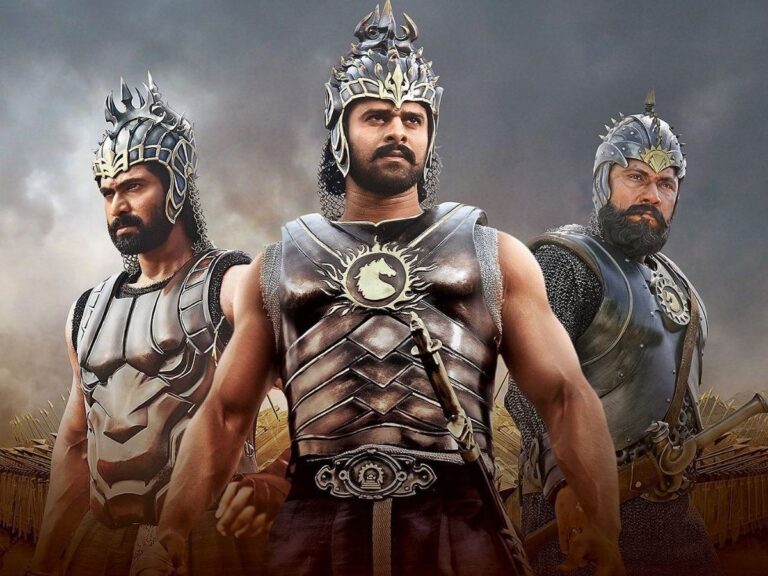
S. Rajamouli’s Baahubali: The Beginning not only changed how people viewed South Indian cinema but also paved the way for ambitious and grand films emerging from Southern India, allowing them to make an impact across the globe. The first part was released in 2015, forever transforming Indian cinema. Now, Baahubali: The Beginning is available to stream on Netflix in a Spanish-dubbed version—nearly 10 years after its theatrical release. But why now?
Baahubali: The Beginning featured a star-studded cast, including talents such as Prabhas, Rana Daggubati, Sudeepa, Tamannaah Bhatia, Anushka Shetty, Sathyaraj, Ramya Krishnan, Nassar, and more. This project effectively made these actors household names in India—especially Prabhas, who has continued to enjoy massive box office openings in films that followed The Beginning.
But it’s been nearly a decade since the first Baahubali movie hit theatres. After all this time, Netflix has suddenly decided to release a Spanish-dubbed version. Why?
One possible reason is to expand the reach of South Indian cinema in the European market. Netflix is one of the most accessible OTT platforms for European audiences. And what better way to kick off this initiative than with Baahubali: The Beginning? The epic blockbuster redefined Indian cinema, grossing over INR 650 crores during its theatrical run.
This move could also inspire Netflix to release both Baahubali films—including The Conclusion—not only in Spanish but also in other European languages in the near future.
However, the Spanish-dubbed version of Baahubali: The Beginning has a runtime of just 2 hours and 17 minutes, compared to the original 2 hours and 38 minutes for the Hindi and Telugu versions, and 2 hours and 39 minutes for the Tamil version. This suggests that a significant portion of the film has been cut in the Spanish release. Stay tuned for more updates.
We’re hiring!
We are hiring two full-time junior to mid-level writers with the option to work remotely. You need to work a 5-hour shift and be available to write. Interested candidates should email their sample articles to [email protected]. Applications without a sample article will not be considered.
