































































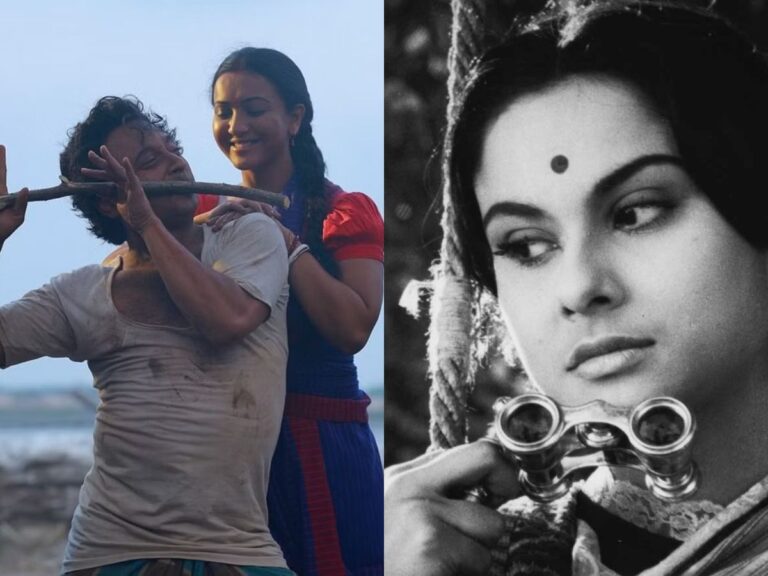
The Bangla film industry, once a beacon of artistic brilliance, now seems to be grappling with an identity crisis. Can we even talk about Bengali cinema without invoking names like Satyajit Ray, Ritwik Ghatak, and Mrinal Sen?
Their films weren’t just narratives; they were windows to the human soul. You think of Charulata’s lingering gaze or Subarnarekha’s haunting melancholy, and it’s impossible not to feel the weight of their genius. But that era feels like a distant memory now, doesn’t it?
Somewhere along the way, the industry lost its rhythm, its balance. It’s not that Bengal forgot how to make great films—it’s that it couldn’t quite decide what kind of films it wanted to make. Was the goal to create art that touches hearts, or blockbusters that fill seats?
In the golden age, the two coexisted effortlessly. But over time, they drifted apart. How many directors have struggled to find that sweet spot between art and commerce? And how many of them have succeeded?
Rituparno Ghosh tried. With Chokher Bali, he brought a cinematic grandeur that still felt intimate and authentic. Srijit Mukherji’s Baishe Srabon showed glimpses of that lost balance, and Kaushik Ganguly’s Nagarkirtan dared to push boundaries. But for every one of these successes, there have been countless films that missed the mark—either too niche to reach the masses or too formulaic to mean anything.
The audience has changed too. Can we blame them? Bollywood, South Indian cinema, and even Korean dramas are just a click away. Streaming platforms have made the world a lot smaller, and Bengal’s films now compete on a global stage. Does the industry have what it takes to stand out? And more importantly, does it still know who it’s making films for?
Perhaps the real tragedy isn’t that Bengali cinema is failing, but that it’s struggling to define itself in this new era. It’s not about choosing between art and commercial success—it’s about finding a way to weave them together again. That’s what made Ray’s films timeless. It wasn’t just the story; it was the way they spoke to everyone, regardless of their background.
Will the Bangla industry ever reclaim its past glory? The potential is there. The talent is there. But the real question is—do today’s filmmakers have the vision to bridge the gap? And if they do, will the audience still be willing to listen?
Perhaps the recent success of Bohurupi offers a glimmer of hope. Grossing 15 crores, it stands as the biggest Bengali film in recent years—a rare example of a film that managed to draw audiences to the theaters while staying rooted in strong storytelling. If more films can follow its example, finding the elusive harmony between art and commerce might not be as impossible as it seems.
We’re hiring!
We are hiring two full-time junior to mid-level writers with the option to work remotely. You need to work a 5-hour shift and be available to write. Interested candidates should email their sample articles to [email protected]. Applications without a sample article will not be considered.
