































































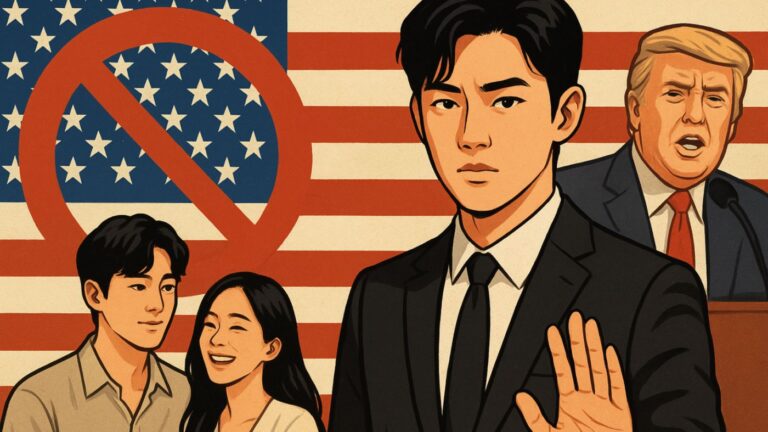
The global takeover of K-dramas has been nothing short of extraordinary.
From Squid Game to Lovely Runner, South Korean stories have consistently broken language and cultural barriers, drawing millions of fans worldwide. But two recent developments, one from Netflix, another from the White House, have raised eyebrows.
Could these moves mark the beginning of a deliberate slowdown in the Korean wave? Or, it can raise some bigger concerns?
On September 12, reports from OSEN revealed that Netflix is lowering its appearance fees for actors, bringing the new cap down to around ₩300 million KRW ($216,000 USD) per project.
This comes after salaries in mega-productions skyrocketed, with some actors like Lee Jung-Jae reportedly earning $1 million per episode in Squid Game Season 2.
For rising stars like Byeon Woo-Seok, who recently broke out with Lovely Runner and is set to headline Netflix’s live-action adaptation of Solo Leveling, this cap could mean a significant pay cut. Despite his soaring popularity, insiders confirm that Netflix’s new rules will likely prevent him from commanding the paycheck his fame now justifies.
On the surface, Netflix frames this as a practical step, managing ballooning production costs and ensuring long-term sustainability.
But critics say it looks suspiciously like a quiet clampdown on K-drama talent, especially since Korean actors have become some of the most bankable stars on the platform, often outperforming Hollywood names in global charts.
Adding fuel to the fire, U.S. President Donald Trump announced a 100% tariff on movies produced outside the U.S. on May 4, 2025. The justification? According to Trump, Hollywood is dying a “very fast death” because foreign governments are luring productions abroad with tax credits and rebates.
“This is a concerted effort by other Nations and, therefore, a National Security threat,” Trump declared on Truth Social. Commerce Secretary Howard Lutnick echoed the sentiment, promising swift implementation.
The details remain murky, will it apply only to Korean productions? Or also to Netflix shows filmed abroad, even by American studios?
Either way, it spells potential trouble for foreign content in the U.S. market. A 100% tariff could make licensing Korean dramas prohibitively expensive, pushing platforms like Netflix to scale back or pass costs onto viewers.
Viewed together, these two developments look less like coincidences and more like a coordinated attempt to regain cultural control.
With Korean shows dominating charts and Netflix profits increasingly tied to K-content, Western powers may be pushing back in subtle and not-so-subtle ways.
Hollywood’s decline is real, production in Los Angeles has fallen by nearly 40% in the last decade, according to FilmLA. Meanwhile, Korea has transformed itself into a global storytelling powerhouse, with governments investing heavily in soft power through cinema and television. For Washington and even Netflix, the Korean wave may be less an opportunity and more a threat.
Probably not.
While these measures may slow the flow of K-dramas into the U.S., fans have proven remarkably resilient. VPNs, fan-subbed uploads, and global streaming partnerships mean the appetite for K-content will find an outlet.
In fact, these moves may backfire.
By limiting access and suppressing talent pay, Netflix risks alienating the very stars and audiences that made its Korean slate successful. And if Trump’s tariffs provoke retaliation from Seoul, Hollywood films could face barriers abroad, hurting the very industry the tariffs were meant to protect.
At its heart, this isn’t about money. K-dramas are winning because they tell stories Hollywood has stopped telling, intimate, emotional, universal. No cap, no tariff, no trade war can stop that.
The Hallyu wave may face turbulence, but its momentum is too strong to be contained.
We’re hiring!
We are hiring two full-time junior to mid-level writers with the option to work remotely. You need to work a 5-hour shift and be available to write. Interested candidates should email their sample articles to [email protected]. Applications without a sample article will not be considered.
