































































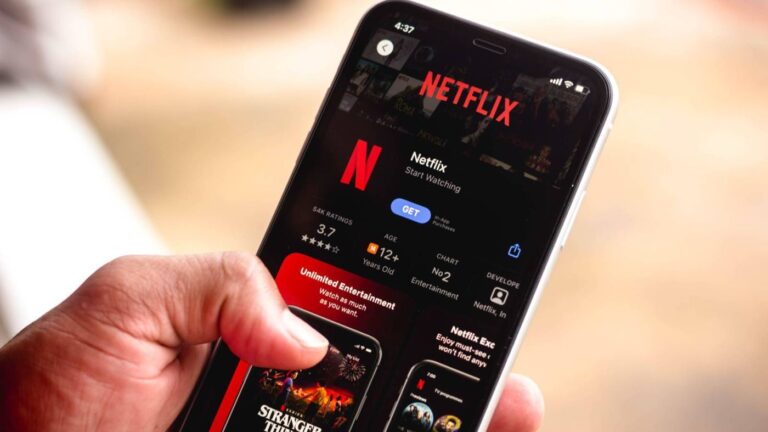
For years, Netflix positioned itself as the sanctuary of long-form storytelling, the home of prestige dramas, global cinema, and narratives crafted with patience. But the company’s latest pivot suggests a very different future: a feed of endless, snack-sized vertical videos.
Netflix CTO Elizabeth Stone recently revealed that the streamer is testing a vertical video experience, tailored for mobile users and inspired by China’s wildly profitable “Duanju” microdramas, stories condensed into one-to-three-minute bursts. Stone insists this is not an attempt to chase TikTok or short-form app competitors. It’s simply about meeting viewers where they are.
But the real question is, should Netflix meet viewers there?
Because where we are now is a place defined by shrinking attention spans, compulsive scrolling, and the algorithm’s relentless manipulation of our time. Cinema, and even high-quality streaming, was one of the last refuges from the hyper-fragmented digital world. Now, Netflix appears ready to tear down that final wall.
The rise of vertical microdramas is not a creative revolution, it’s a commercial one. ReelShort and similar apps earned nearly $700 million in a single quarter. Netflix sees a revenue model flourishing and wants a share. But at what artistic cost?
Netflix once prided itself on giving space to risk-taking directors, international storytellers, and narratives that wouldn’t survive inside traditional studios. Now, it is leaning toward content built for speed, addiction, and micro-transactions.
This shift speaks to something deeper: a platform once driven by storytelling is now driven by metrics.
In the same breath, Netflix announced “living room party games”, Boggle, Pictionary, LEGO Party. It’s an ecosystem strategy, yes, but also a deeper identity crisis. What is Netflix anymore? A cinema? A game arcade? A TikTok-style feed?
If everything becomes content, compressed, gamified, superficial, what happens to art?
The danger isn’t innovation. Innovation is vital. The danger is losing sight of what made Netflix irreplaceable in the first place: its belief that stories matter enough to be given time.
Short-form videos will thrive, with or without Netflix. But long-form storytelling is fragile. Without platforms committed to its survival, it risks being sidelined as a relic, too slow for modern eyes, too demanding for distracted minds.
So yes, vertical videos may “meet consumers where they are.” But sometimes, leadership means pulling culture upward, not rushing downward to the lowest common denominator.
Netflix once convinced the world that films and shows deserved our undivided attention. The fear now is simple:
It may be preparing to abandon the very soul it helped shape.
We’re hiring!
We are hiring two full-time junior to mid-level writers with the option to work remotely. You need to work a 5-hour shift and be available to write. Interested candidates should email their sample articles to [email protected]. Applications without a sample article will not be considered.
