Category
Film
Tv show
Documentary
Stand-up Comedy
Short Film
View All
Genres
Action
Adventure
Animation
Biography
Comedy
Crime
Documentary
Drama
Family
Fantasy
Film-Noir
Game-Show
History
Horror
Kids
Music
Musical
Mystery
News
Reality-TV
Political
Romance
Sci-Fi
Social
Sports
Talk-Show
Thriller
War
Western
View All
Language
Hindi
Telugu
Tamil
Malayalam
Kannada
Abkhazian
Afar
Afrikaans
Akan
Albanian
Amharic
Arabic
Aragonese
Armenian
Assamese
Avaric
Avestan
Aymara
Azerbaijani
Bambara
Bashkir
Basque
Belarusian
Bengali
Bhojpuri
Bislama
Bosnian
Breton
Bulgarian
Burmese
Cantonese
Catalan
Chamorro
Chechen
Chichewa; Nyanja
Chuvash
Cornish
Corsican
Cree
Croatian
Czech
Danish
Divehi
Dutch
Dzongkha
English
Esperanto
Estonian
Ewe
Faroese
Fijian
Finnish
French
Frisian
Fulah
Gaelic
Galician
Ganda
Georgian
German
Greek
Guarani
Gujarati
Haitian; Haitian Creole
Haryanvi
Hausa
Hebrew
Herero
Hiri Motu
Hungarian
Icelandic
Ido
Igbo
Indonesian
Interlingua
Interlingue
Inuktitut
Inupiaq
Irish
Italian
Japanese
Javanese
Kalaallisut
Kanuri
Kashmiri
Kazakh
Khmer
Kikuyu
Kinyarwanda
Kirghiz
Komi
Kongo
Korean
Kuanyama
Kurdish
Lao
Latin
Latvian
Letzeburgesch
Limburgish
Lingala
Lithuanian
Luba-Katanga
Macedonian
Malagasy
Malay
Maltese
Mandarin
Manipuri
Manx
Maori
Marathi
Marshall
Moldavian
Mongolian
Nauru
Navajo
Ndebele
Ndonga
Nepali
Northern Sami
Norwegian
Norwegian Bokmål
Norwegian Nynorsk
Occitan
Ojibwa
Oriya
Oromo
Ossetian; Ossetic
Other
Pali
Persian
Polish
Portuguese
Punjabi
Pushto
Quechua
Raeto-Romance
Rajasthani
Romanian
Rundi
Russian
Samoan
Sango
Sanskrit
Sardinian
Serbian
Serbo-Croatian
Shona
Sindhi
Sinhalese
Slavic
Slovak
Slovenian
Somali
Sotho
Spanish
Sundanese
Swahili
Swati
Swedish
Tagalog
Tahitian
Tajik
Tatar
Thai
Tibetan
Tigrinya
Tonga
Tsonga
Tswana
Turkish
Turkmen
Twi
Uighur
Ukrainian
Urdu
Uzbek
Venda
Vietnamese
Volapük
Walloon
Welsh
Wolof
Xhosa
Yi
Yiddish
Yoruba
Zhuang
Zulu
View All
Release year
2026
1900
Rating
Good
Satisfactory
Passable
Poor
Skip
Yet to Review
View All
Platform
Addatimes platform logo
ALT Balaji platform logo
Aha Video platform logo
Airtel Xstream platform logo
Amazon platform logo
Apple Tv Plus platform logo
Book My Show platform logo
Crunchyroll platform logo
Curiosity Stream platform logo
Discovery Plus platform logo
Jio Hotstar platform logo
Epic On platform logo
ErosNow platform logo
Film Rise platform logo
Firstshows platform logo
Gemplex platform logo
Google Play platform logo
GudSho platform logo
GuideDoc platform logo
Hoichoi platform logo
Hungama platform logo
Jio Cinema platform logo
KLiKK platform logo
Koode platform logo
Mubi platform logo
MX Player platform logo
Lionsgate Play platform logo
Manorama MAX platform logo
Movie Saints platform logo
Nee Stream platform logo
Netflix platform logo
Oho Gujarati platform logo
Planet Marathi OTT platform logo
Rooster Teeth platform logo
Roots Video platform logo
Saina Play platform logo
Shemaroo Me platform logo
Shreyas ET platform logo
Simply South platform logo
Sony LIV platform logo
Spark OTT platform logo
Sun NXT platform logo
TVFPlay platform logo
Tata Sky platform logo
Tubi platform logo
ULLU platform logo
Viki platform logo
Viu platform logo
Voot platform logo
Youtube platform logo
Yupp Tv platform logo
Zee Plex platform logo
Zee5 platform logo
iTunes platform logo
Other platform logo
ETV Win platform logo
Chaupal platform logo
Ultra Jhakaas platform logo
Tentkotta platform logo
Ultra Play platform logo
View All
Close icon
Search

Helvio Soto

Total Films:
11
Born
February 21, 1930 (age 96)Santiago de Chile, Chile
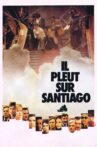
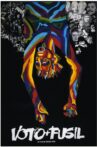
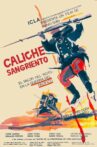
Helvio Soto Soto was born in Santiago on February 21, 1930. He was a Chilean filmmaker, considered one of the most important filmmakers of the mid-1960s and 1970s. He went to law school, a career he never practiced. At a very young age, and hearing the call of communications, he emigrated from Chile, achieving some positions as assistant in films shot in Argentina and working in radio in Ecuador. He wrote some books such as Semana a semana, which had regular critical success. By the time it returns to Chile, the cinema begins to present a boom never seen before: the entry of 16 mm cameras plus the socio-political conceptions give a renovating air to the cinema made not only in this part, but also in Latin America. His first film, influenced by neo-realism and its social conception, was entitled Yo tenía un camarada (I had a comrade) and was made thanks to the support of Experimental Cinema of the Universidad de Chile in 1964. In those years, Experimental Cinema brought together young directors who, in an avant-garde and carefree attitude, began to film reality as it had never appeared on a screen before. Pedro Chaskel in editing, Héctor Ríos in photography and Gustavo Becerra in music would end up being the backbone of a group of key filmmakers of the period, and from where the first films of Raúl Ruiz, Miguel Littín, Álvaro Ramírez, Carlos Flores del Pino, Leonardo Céspedes and a wide range of documentary filmmakers would go down in history as the forgers of the New Chilean Cinema. After his first short films, he shoots what would become his most remembered and controversial film, Caliche Sangriento. Censored by the government of Eduardo Frei Montalva due to the pressure of the military, it could see the light after an agreement that compromised the elimination of some posters that hurt the suceptibility of those years. The film was widely distributed for this reason, but once it was shown, little and nothing was said in the press. Assumed Salvador Allende in 1970, Helvio Soto is called to take charge of administrative tasks in the National Television of Chile, where he exercised parallel to his work as director of some television series. It was not until 1971 that he was able to make his next feature film Voto + fusil, a critical look at Chile's history that was received irregularly. Later, he filmed a feature film that mixed fiction and documentary and that would never be shown in Chile since a coup d'état abruptly cut off the democratic processes developed until then. His first "European" film is perhaps the greatest success of his career. Llueve sobre Santiago portrays the days of the coup d'état, torture, kidnappings and disappearances. It was acclaimed in Europe, Asia and North America, but banned by the military regime. Helvio Soto suffers exile in distant lands and does not return to Chile until the 1990s, where he devotes all his energies to training new generations of filmmakers.

Filmography

MOVIE
YEAR
WHERE TO WATCH