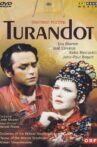




























































Josep Maria Carreras Coll (Catalan: [ʒuˈzɛb məˈɾi.ə kəˈreɾəs ˈkɔʎ]; born 5 December 1946), better known as José Carreras (/kəˈrɛərəs/, Spanish: [xoˈse kaˈreɾas]), is a Spanish operatic tenor who is particularly known for his performances in the operas of Donizetti, Verdi and Puccini.
Born in Barcelona, he made his debut on the operatic stage at 11 as Trujamán in Manuel de Falla’s El retablo de Maese Pedro, and went on to a career that encompassed over 60 roles, performing in the world’s leading opera houses and on numerous recordings. He gained fame with a wider audience as one of the Three Tenors, with Plácido Domingo and Luciano Pavarotti, in a series of large concerts from 1990 to 2003. He is also known for his humanitarian work as president of the José Carreras International Leukaemia Foundation (La Fundació Internacional Josep Carreras per a la Lluita contra la Leucèmia), which he established following his own recovery from the disease in 1988.
Carreras was born in Sants, a working-class district in Barcelona. He was the youngest of Antònia Coll i Saigi and Josep Carreras i Soler’s three children. In 1951, his family emigrated to Argentina in search of a better life. However, this move abroad proved unsuccessful, and within a year they had returned to Sants where Carreras was to spend the rest of his childhood and teenage years.
He showed an early talent for music and particularly singing, which intensified at the age of six when he saw Mario Lanza in The Great Caruso. The story recounted in his autobiography and numerous interviews is that after seeing the film, Carreras sang the arias incessantly to his family, especially “La donna è mobile”, often locking himself in the family’s bathroom when they became exasperated with his impromptu concerts. At that point, his parents, with the encouragement of his grandfather Salvador Coll, an amateur baritone, found the money for music lessons for him. At first he studied piano and voice with Magda Prunera, the mother of one of his childhood friends, and at the age of eight, he also started taking music lessons at Barcelona’s Municipal Conservatory.
At just eight years old, he also gave his first public performance, singing “La donna è mobile”, accompanied by Magda Prunera on the piano, on Spanish National Radio. A recording of this still exists and can be heard on the video biography, José Carreras – A Life Story. On 3 January 1958, at the age of eleven, he made his debut in Barcelona’s great opera house, the Gran Teatre del Liceu, singing the boy soprano role of Trujamán in Manuel de Falla’s El retablo de Maese Pedro. A few months later, he sang for the last time as a boy soprano at the Liceu in the second act of La Bohème.
Throughout his teenage years, he continued to study music, moving on to the Conservatori Superior de Música del Liceu and taking private voice lessons, first with Francisco Puig and later with Juan Ruax, whom Carreras has described as his “artistic father”. Following the advice of his father and brother, who felt that he needed a “backup” career, he also entered the University of Barcelona to study chemistry, but after two years he left the university to concentrate on singing. …
Source: Article “José Carreras” from Wikipedia in English, licensed under CC-BY-SA 3.0.
Hey,
Tell us if something is not working for you at Binged or suggest an improvement or new feature.