Category
Film
Tv show
Documentary
Stand-up Comedy
Short Film
View All
Genres
Action
Adventure
Animation
Biography
Comedy
Crime
Documentary
Drama
Family
Fantasy
Film-Noir
Game-Show
History
Horror
Kids
Music
Musical
Mystery
News
Reality-TV
Political
Romance
Sci-Fi
Social
Sports
Talk-Show
Thriller
War
Western
View All
Language
Hindi
Telugu
Tamil
Malayalam
Kannada
Abkhazian
Afar
Afrikaans
Akan
Albanian
Amharic
Arabic
Aragonese
Armenian
Assamese
Avaric
Avestan
Aymara
Azerbaijani
Bambara
Bashkir
Basque
Belarusian
Bengali
Bhojpuri
Bislama
Bosnian
Breton
Bulgarian
Burmese
Cantonese
Catalan
Chamorro
Chechen
Chichewa; Nyanja
Chuvash
Cornish
Corsican
Cree
Croatian
Czech
Danish
Divehi
Dutch
Dzongkha
English
Esperanto
Estonian
Ewe
Faroese
Fijian
Finnish
French
Frisian
Fulah
Gaelic
Galician
Ganda
Georgian
German
Greek
Guarani
Gujarati
Haitian; Haitian Creole
Haryanvi
Hausa
Hebrew
Herero
Hiri Motu
Hungarian
Icelandic
Ido
Igbo
Indonesian
Interlingua
Interlingue
Inuktitut
Inupiaq
Irish
Italian
Japanese
Javanese
Kalaallisut
Kanuri
Kashmiri
Kazakh
Khmer
Kikuyu
Kinyarwanda
Kirghiz
Komi
Kongo
Korean
Kuanyama
Kurdish
Lao
Latin
Latvian
Letzeburgesch
Limburgish
Lingala
Lithuanian
Luba-Katanga
Macedonian
Malagasy
Malay
Maltese
Mandarin
Manipuri
Manx
Maori
Marathi
Marshall
Moldavian
Mongolian
Nauru
Navajo
Ndebele
Ndonga
Nepali
Northern Sami
Norwegian
Norwegian Bokmål
Norwegian Nynorsk
Occitan
Ojibwa
Oriya
Oromo
Ossetian; Ossetic
Other
Pali
Persian
Polish
Portuguese
Punjabi
Pushto
Quechua
Raeto-Romance
Rajasthani
Romanian
Rundi
Russian
Samoan
Sango
Sanskrit
Sardinian
Serbian
Serbo-Croatian
Shona
Sindhi
Sinhalese
Slavic
Slovak
Slovenian
Somali
Sotho
Spanish
Sundanese
Swahili
Swati
Swedish
Tagalog
Tahitian
Tajik
Tatar
Thai
Tibetan
Tigrinya
Tonga
Tsonga
Tswana
Turkish
Turkmen
Twi
Uighur
Ukrainian
Urdu
Uzbek
Venda
Vietnamese
Volapük
Walloon
Welsh
Wolof
Xhosa
Yi
Yiddish
Yoruba
Zhuang
Zulu
View All
Release year
2025
1900
Rating
Good
Satisfactory
Passable
Poor
Skip
Yet to Review
View All
Platform
Addatimes platform logo
ALT Balaji platform logo
Aha Video platform logo
Airtel Xstream platform logo
Amazon platform logo
Apple Tv Plus platform logo
Book My Show platform logo
Crunchyroll platform logo
Curiosity Stream platform logo
Discovery Plus platform logo
Jio Hotstar platform logo
Epic On platform logo
ErosNow platform logo
Film Rise platform logo
Firstshows platform logo
Gemplex platform logo
Google Play platform logo
GudSho platform logo
GuideDoc platform logo
Hoichoi platform logo
Hungama platform logo
Jio Cinema platform logo
KLiKK platform logo
Koode platform logo
Mubi platform logo
MX Player platform logo
Lionsgate Play platform logo
Manorama MAX platform logo
Movie Saints platform logo
Nee Stream platform logo
Netflix platform logo
Oho Gujarati platform logo
Planet Marathi OTT platform logo
Rooster Teeth platform logo
Roots Video platform logo
Saina Play platform logo
Shemaroo Me platform logo
Shreyas ET platform logo
Simply South platform logo
Sony LIV platform logo
Spark OTT platform logo
Sun NXT platform logo
TVFPlay platform logo
Tata Sky platform logo
Tubi platform logo
ULLU platform logo
Viki platform logo
Viu platform logo
Voot platform logo
Youtube platform logo
Yupp Tv platform logo
Zee Plex platform logo
Zee5 platform logo
iTunes platform logo
Other platform logo
ETV Win platform logo
Chaupal platform logo
Ultra Jhakaas platform logo
Tentkotta platform logo
Ultra Play platform logo
View All
Close icon
Search

Lamberto Bava

Total Films:
42
Born
April 3, 1944 (age 81)Roma, Lazio, Italia
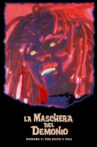
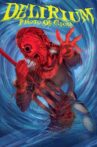
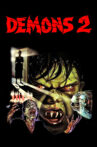
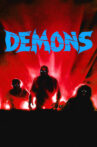
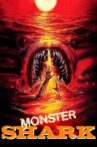
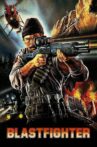
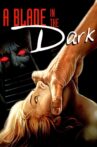
Lamberto Bava was born in Rome, Italy, and was the first of a third generation of Italian filmmakers. His grandfather, Eugenio Bava (1886-1966), was a cameraman and optics effects artist during the early days of Italian silent cinema. His father, Mario Bava (1914-1980), was a legendary cinematographer, special effects designer and director. Lamberto entered the cinema as his father's personal assistant, starting with Planet of the Vampires (1965). Bit by bit he gained experience from his father, who made him the assistant director for most of the rest of his films. He even co-wrote the screenplay for Shock (1977) ("Shock"), Mario's last theatrical film where. In poor health during the shoot, Mario often feigned illness so Lamberto could direct a few scenes, uncredited, to gain further experience. Both Lamberto and Mario directed the made-for-TV drama I giochi del diavolo: La Venere d'Ille (1979). Both worked on the Dario Argento horror flick Inferno (1980), for which Mario designed some of the color set pieces, including the underwater ballroom, and created all the visual special effects, while Lamberto worked as Argento's assistant director. Late in 1979 Lamberto made his solo directorial debut with Macabre (1980), a tense drama-horror flick loosely based on a 1977 incident in New Orleans about a woman who keeps her lover's severed head in her freezer. According to Lamberto, the project started by chance when producer Pupi Avati approached him to direct as well as write the screenplay, which took just six weeks to write and direct. "Macabro" was released in Italy in February 1980 to mixed reviews, but won him recognition by his father Mario. Just two months later Mario Bava died, and an era in Italian film making came to a close. 'Macabro" was not the box-office hit and, as a result, Lamberto went back to assistant directing. He worked with Dario Argento again in 1982 with Tenebrae (1982). In 1983 Lamberto was offered to direct another film, titled A Blade in the Dark (1983), which was a violent mystery thriller shot in only three weeks on a tight budget and filmed almost entirely in a producer friend's house. Next he directed the action-flick Blastfighter (1984), which was filmed in the state of Georgia, and immediately afterwards directed the Jaws (1975)-like thriller Devil Fish (1984), which was shot in Florida. On both films Lamberto was purely a director for hire and had nothing to do with the script or production end. He used the pseudonym of "John Old Jr." for this film, which was a tribute to his father Mario, who often used the pseudonym "John M. Old". He enjoyed his best commercial success to date with Demons (1985) ("Demons"), produced by Dario Argento, co-written by Dardano Sacchetti and filmed in West Berlin, Germany. This films international success allowed him to co-write, produce and direct a sequel, Demons 2 (1986). Lamberto returned to "giallo" thrillers with Delirium (1987). In the late 1980s the Italian cinema turned moribund. Lamberto, like most of his colleagues, turned to making films for Italian television. He also directed a remake of his father's Black Sunday (1960), which was titled La maschera del demonio (1990). Nowadays Lamberto Bava continues to divide his time between TV work and a few movies, acknowledging his inspiration from his late father, Mario.

Filmography

MOVIE
YEAR
WHERE TO WATCH