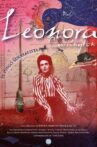




























































Mary Leonora Carrington OBE was a British-born Mexican artist, surrealist painter, and novelist. She lived most of her adult life in Mexico City and was one of the last surviving participants in the surrealist movement of the 1930s. Carrington was also a founding member of the women’s liberation movement in Mexico during the 1970s.
In 1936 Carrington saw the work of the German surrealist Max Ernst at the International Surrealist Exhibition in London and was attracted to the Surrealist artist before she even met him. In 1937 Carrington met Ernst at a party held in London. The artists bonded and returned together to Paris, where Ernst promptly separated from his wife. With the outbreak of World War II Ernst, who was German, was arrested by the French authorities for being a “hostile alien”. With the intercession of Paul Éluard, and other friends, including the American journalist Varian Fry, he was discharged a few weeks later. Soon after the Nazis invaded France, Ernst was arrested again, this time by the Gestapo, because his art was considered by the Nazis to be “degenerate”. He managed to escape and, leaving Carrington behind, fled to the United States with the help of Peggy Guggenheim, who was a sponsor of the arts.
After Ernst’s arrest Carrington was devastated and agreed to go to Spain with a friend, Catherine Yarrow. She stayed with family friends in Madrid until her paralyzing anxiety and delusions led to a psychotic break and she was admitted into an asylum. She was given electroconvulsive therapy and was treated with the drugs Cardiazol (a powerful convulsant), and Luminal (a barbiturate). She was released from the asylum into the care of a keeper, and was told that her parents had decided to send her to a sanatorium in South Africa. En route to South Africa, she stopped in Portugal, where she made her escape. She went to the Mexican Embassy to find Renato Leduc, a poet and Mexican Ambassador. Leduc was a friend of Pablo Picasso (they knew each other from bull fights) and agreed to a marriage of convenience with Carrington so that she would be accorded the immunity given to a diplomat’s wife. The pair divorced in 1943. Meanwhile, Ernst had married Peggy Guggenheim in New York in 1941. That marriage ended a few years later. Ernst and Carrington never resumed their relationship. After spending a year in New York, Leduc and Carrington went to Mexico, which she grew to love and where she lived, on and off, for the rest of her life. Events from this period continued to influence her work.
After spending part of the 1960s in New York City, Carrington lived and worked in Mexico once again. While in Mexico she was asked, in 1963, to create a mural which she named El Mundo Magico de los Mayas, and which was influenced by folk stories from the region. The mural is now located in the Museo Nacional de Antropología in Mexico City.
In 1973 Carrington designed Mujeres conciencia, a poster for the Women’s Liberation movement in Mexico, depicting a ‘new Eve’. In the 1970s women artists of previous waves and generations responded to the more liberal climate and movement of the array of feminist waves. Many pushed the issues of women’s liberation and consciousness within their work while others spoke out on issues instead of making art.
Hey,
Tell us if something is not working for you at Binged or suggest an improvement or new feature.