































































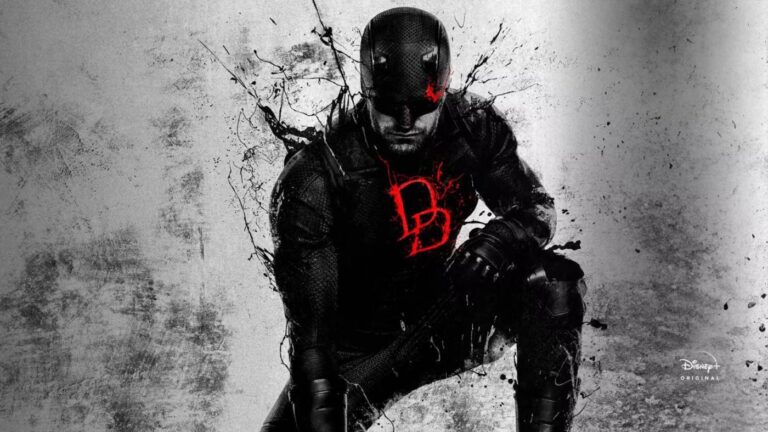

What Is the Story About?
SPOILER ALERT!!!!
The finale of Daredevil: Born Again Season 2 takes the explosive, NYC-shattering battle between Matt Murdock and Wilson Fisk to a definitive turning point. As secrets about Kingpin’s political and criminal schemes start unravelling, Matt is left with no choice but to make some hard decisions to protect his loved ones and the entire city of New York.
And yes, we get a brutal showdown (both ideological and physical) between Daredevil and Kingpin, forcing both men to confront the consequences of their actions and double lives. By the credits, the status quo of Hell’s Kitchen is permanently shattered, leaving Matt in an unprecedented position and the city’s power dynamic forever changed.
Performances?
Since the good old Netflix days, the rivalry between Matt Murdock, aka Daredevil (Charlie Cox), and Wilson Fisk, aka Kingpin (Vincent D’Onofrio), has emerged as one of the best TV rivalries of all time, period. But the Season 2 finale of Daredevil: Born Again takes this conflict in a whole new, and interesting, direction.
It’s not just about the punches anymore. It’s about two actors who inhabit these characters so deeply that you can see the history in every flinch and furrowed brow.
First, let’s talk about the man of the hour: Charlie Cox! He continues to prove why he is the best Daredevil we have right now. From staying hidden from Fisk’s eyes and forces to revealing himself as the co-counsel in Karen Page’s case to protect her, we have come a long way. In this journey, we have witnessed Cox portray the most emotionally troubled, internally conflicted, utterly exhausted, and yet the most resilient version of Daredevil.
It feels great to see him return to the courtroom to ensure the prevalence of justice, even if it meant sacrificing his double identity and accepting the consequences that came with the actions of his superhero persona.
When the mask finally comes off, not just literally but emotionally, Cox portrays Matt with a raw, shaky resolve. He isn’t playing a man who is unafraid. He’s playing a man who is terrified but does the right thing anyway. It’s that human friction that makes his Daredevil so relatable. Well done, Cox!
On the other side of the aisle, we have Vincent D’Onofrio, playing the menacing yet emotionally shattered Wilson Fisk, aka Kingpin. All the pain and rage he carried in the finale (particularly after Vanessa’s death) explodes during the final moments, when he loses both his mind and his control over the city.
As he starts wreaking havoc inside the courthouse, painting its walls with his protestors’ blood, we see him fracturing his very soul with every blow he lands on them.
D’Onofrio has always played Wilson Fisk as a volcano (quiet, simmering, and prone to violent eruptions), but here, he shows us the ash. He brings a terrifying physical presence to his performance in the final episode. He moves like a wounded animal: heavy and unpredictable.
Yet, in his final confrontation with Matt, D’Onofrio finds a way to make you feel a flicker of pity for the monster. He uses his voice, that low, gravelly rasp, to portray a man who has finally realised that all the power in the world can’t fill the hole in his soul.
Analysis
Daredevil: Born Again Season 2 finale (helmed by Iain B. MacDonald) is far from being called just “another” episode of television. It emerges as a collision course that’s been years in the making. It is messy, poetic, bold, brutal, bloody, and it falls only to soar again, with some minor stumbles, of course.
For fans who have followed Matt and Fisk since 2015, this finale won’t disappoint.
The narrative engine of the finale is fuelled by consequence. For years, Matt Murdock has danced on the edge of “having it all”, the law by day, the vigilante by night. The writers finally stopped letting him off the hook. The choice to have Matt prioritise the legal destruction of Fisk over his own anonymity was a masterstroke. It felt earned.
However, the plot occasionally suffers from a problem that has plagued plenty of finales in recent years: fast pacing. At times, the episode feels like a sprint.
We spent so much time on the build-up that the resolution of secondary subplots, like the fallout within the DA’s office and the dissolution of the AVTF, felt a bit rushed. It’s a classic case of wanting ten more minutes of breathing room in an hour-long heart-stopper.
The character development here is top-tier. Matt Murdock finally stops being a martyr and starts being a leader, even if it costs him his freedom.
For years, we have seen him operate as a “lone wolf”, but finally, after all this time, he gathers the courage to trust his allies more and reveal his true identity. He takes the fall but allows justice to prevail, and that, ladies and gents, was a beautiful and emotional evolution of the character. On the other hand, we witness Kingpin stripped of his cool and composure, which was fascinating to see.
What makes the finale truly sing is the chemistry between the two actors. After years of working together, they react to each other’s tiniest cues. When they finally face off, it’s not just a stunt sequence; it’s a dialogue.
It’s rare to see two actors in a superhero project deliver performances this lived-in and prestigious. They didn’t just show up for a finale. They delivered a Shakespearean tragedy wrapped in red leather and expensive suits. It’s a haunting reminder that while the costumes are cool, the human drama is what keeps us coming back.
However, the amount of attention these two iconic characters receive is also a bit problematic, as it takes the spotlight away from the rest of the cast, particularly Arty Froushan (Buck) and Wilson Bethel (Bullseye).
The direction in the finale was visceral. The episode remains rooted in the shadowy, noir-inspired world of Hell’s Kitchen. The use of long takes during the final confrontation added a layer of claustrophobia that made every hit feel heavier. The lighting in the courtroom scenes was brilliant, with half-shadows across Matt’s face symbolising his dual identity.
One of the most underrated elements of Born Again is how it stays away from typical “MCU quips” and leans more towards heavy, hard-hitting philosophical and ideological discussions, which made the original Netflix series such a hit. The final exchange between Matt and Fisk wasn’t about who was stronger, but about whose philosophy would survive the night.
Overall, the Daredevil: Born Again Season 2 finale is a hard-hitting, Shakespearean conclusion to the Matt-Fisk rivalry. Charlie Cox and Vincent D’Onofrio deliver powerhouse, lived-in performances, highlighting Matt’s ultimate sacrifice and Fisk’s tragic unravelling.
Technically, the episode shines with noir cinematography and a percussive score. While the breakneck pacing unfortunately sidelines members of the supporting cast, including Buck and Bullseye, the “Female Muse” tease and Jessica Jones’ return provide an electrifying bridge to the future. A gritty, emotional triumph.
Music and Other Departments?
The score, composed by The Newton Brothers, is perhaps the finale’s most effective emotional tool. Unlike the sweeping orchestral themes of the broader MCU, the music here is percussive, synth-heavy, and deeply rhythmic.
Plus, when Fisk warns Matt about exposing his real identity in the courtroom and during Matt’s courtroom revelation, the music drops almost entirely, replaced by a low-frequency pulse that mimics a racing heartbeat. It places the audience directly into Matt’s sensory experience. As Fisk’s world crumbles, his theme becomes increasingly discordant and chaotic, perfectly reflecting his mental state.
Jeffrey Waldron does a brilliant job with the cinematography. He adds a dark, shadowy vibe to the screen.
The finale also features a “oner” (a long, single-take shot), which has become a franchise tradition. We witness a gut-wrenching and hard-hitting single-take sequence of Kingpin brawling with and bashing the heads of his protestors inside the courtroom.
Moreover, the episode continues to prioritise practical stunts over CGI. While there is some digital enhancement for the more extreme acrobatics, the impact of bodies hitting the ground feels visceral and grounded.
The production design looked top-tier. Even the way the courtroom is laid out feels like an arena, emphasising that this was a battle for the soul of the city, not just a legal trial.
Other Artists?
While the leading duo of Charlie Cox and Vincent D’Onofrio does its job brilliantly, the rest of the cast in the Daredevil: Born Again Season 2 finale feels a bit sidelined.
Arty Froushan’s Buck emerged as one of the most intriguing characters in Born Again. With his cold, menacing, and calculating persona, he immediately became a fan-favourite character. But the manner in which he gets sidelined after being shot might not sit well with many fans. He almost disappears in the second half of the finale, and we don’t find out what happens to him.
As for Bullseye, we see him only in parts and, in the end, with Mr Charles (Matthew Lillard). This ensures that he will appear in Season 3. But with Bullseye in the frame, things could have become even more interesting and layered.
Deborah Ann Woll as Karen Page looks great in whatever screen time she gets. It was her trial, and the scrutiny was on her. But the finale wastes no time in confining her to reaction shots alone. Instead of being an active participant in the legal or emotional strategy, she feels like just another spectator to Matt’s grand sacrifice. Although her final moments with Matt were heartwarming to watch.
The problem is that, with this much build-up, characters like Karen, Bullseye, and Buck deserved a more proper resolution.
Also, the season spent a significant amount of time introducing new legal associates and street-level allies, many of whom brought fresh perspectives to the Hell’s Kitchen power struggle. However, in the rush to conclude the Fisk/Murdock rivalry, these characters were largely ghosted.
Plotlines involving the inner workings of the DA’s office, corrupt city officials, the brutality of the AVTF, and the struggles of local communities were condensed into quick montages or brief dialogue exchanges, leaving their individual arcs feeling unfinished.
Unexpectedly, Margarita Levieva’s Heather Glenn emerges as another standout character in the finale. Her unresolved mental and emotional conflicts clearly push her to the edge, leading her to adopt the deranged “Female Muse” persona. This adds a fascinating psychological layer to the story. She isn’t just a love interest anymore, but a mirror reflecting Matt’s darker impulses.
While she was technically sidelined from the main fistfight, her presence felt like a simmering fuse. That final tease suggests she’ll be the one to bridge the gap between high-society elegance and the grit of Hell’s Kitchen, making her the most intriguing wildcard for next season.
Also, it was great to see Krysten Ritter as Jessica Jones. Since her Netflix days, she has grown a lot but hasn’t lost her badassery and quirkiness, and we see that in the finale. As she stitches up a wounded Matt Murdock, her performance perfectly balances a “been there, done that” exhaustion with fierce loyalty. And her reunion with “ahem!!!”, well, how about you watch the finale and find out for yourself!
Highlights?
Powerhouse performances by Cox and D’Onofrio
High narrative stakes
Shakespearean chemistry between the leads
Technical excellence
Thematically mature
Compelling teases for the future
Drawbacks?
Sidelined supporting cast
Rushed pacing
Unfinished subplots
Did I Enjoy It?
Yes. Despite the breakneck pacing, the emotional weight of Matt’s sacrifice and the Shakespearean tragedy between him and Fisk made it a deeply satisfying finale.
Will You Recommend It?
Absolutely. The finale delivers the prestigious acting and philosophical depth we’ve missed, while setting up an electrifying future for the street-level MCU.
Daredevil: Born Again Season 2 Finale Review by Binged Bureau
We’re hiring!
We are hiring two full-time junior to mid-level writers with the option to work remotely. You need to work a 5-hour shift and be available to write. Interested candidates should email their sample articles to [email protected]. Applications without a sample article will not be considered.
