
































































What Is the Story About?
Edgar, the 9-year-old son of Vincent, New York’s leading puppeteer and the brain behind the television show – Good Day Sunshine – goes missing on his way to school. In the hunt for their missing child, Vincent, his wife Cassie and a gay black cop Michael Ledroit need to confront their inner demons and uncover uncomfortable truths. Is there a happy ending in store?
Performances?
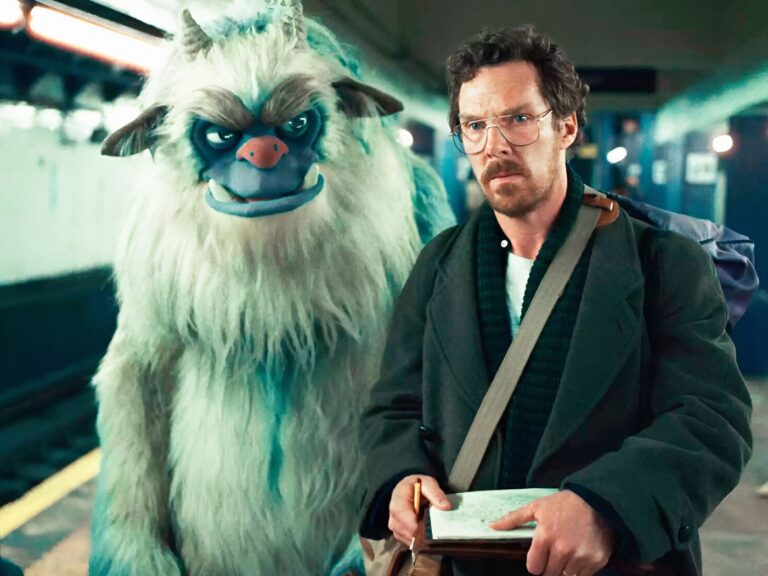
Fresh after his memorable performances in Wes Anderson’s acclaimed shorts, Benedict Cumberbatch couldn’t have asked for a better follow-up title than Eric. Vincent’s complicated character trajectory extracts one of the finest performances from the experienced hand. It’s a portrayal so impactful that it makes us treat a largely unlikeable role with a sense of empathy.
McKinley Belcher III gives his heart, sweat and soul to a superbly written cop role, who struggles to balance his personal and work lives. As the victim in a loveless marriage and a mother with boundless love for her son, Gaby Hoffman brings her vulnerable side to the fore with terrific poise. Child artiste Ivan Howe’s on-screen maturity belies his age, as he embodies the purity and innocence of childhood through his performance.
Bamar Kane, Clarke Peters, Dan Fogler, Mark Gillis, Adepero Oduye and Wade Allain-Marcus are among others who make their presence felt in brief, well-etched supporting characters.
Analysis
No story is merely a product that’s let out into the market. Besides letting the viewer find solace in fiction and entertain him/her, greater works of art serve as an opportunity to uncover the larger truth of the world and heal the dark corners of your soul in the most unexpected ways. Eric, camouflaged as a thriller, isn’t just another missing child story, but a searing, rewarding character study.
Set in 1980s New York, the story is told through Vincent – a gifted and an equally complex puppeteer protagonist, who’s in the middle of an unhappy marriage, yet to heal from the wounds of his difficult, indifferent younger years. The meta-ish backdrop provides a solid excuse for the director to create a character born out of his alter ego – Eric, after whom the show is named.
In addition to Vincent and Cassie’s crumbling marriage and their missing child, Eric is a plea for inclusivity, exposing the inherent racism and rot within the system. As the investigation takes off, Ledriot uses the high-profile case to confront the privilege of the whites, discrimination of the blacks and the absence of morality in a homophobic society.
As if Vincent didn’t have it enough with his missing child, he also has to deal with professional downfall and the betrayal of a friend. Owing to his problematic equation with parents and his wife, Vincent has nowhere to go and rediscovers his purpose again in the hunt for his son. At another level, Eric is a story of two sons with ‘daddy’ issues and they seek refuge in art.
Meanwhile, detective Ledriot, who’s yet to come out as gay, guards his relationship with an older man from the world and doesn’t know how to channel his angst at work. For both Vincent and Ledriot, the case is a blessing in disguise to redeem themselves. Even as she’s sandwiched among the men, Cassie’s trauma is also explored with aching sensitivity. T
he captor-captive equation between Edgar and Yusuf adds another interesting dimension to the story. The writer and the director integrate real incidents and pop-culture references from the 1980s into the narrative to provide more context. Negotiating the various layers in the script, the storytelling is seamless, diving deep into the characters’ conflicts and offering them closure.
Besides the incredibly well-crafted pivotal parts, many smaller roles too make their presence felt – from the friendly superintendent George Lovett to the supportive captor Yuusuf to an opportunistic Lennie and Ali Gator, who comes out clean after a jail term. The nostalgia of a thriller set in the 1980s, when CCTV footage is viewed through VHS cassettes, contributes to its appeal.
Writer Abi Morgan’s vast experience across theatre, films and television is used to tell an important story in the polarised times we live in. She couldn’t have asked for a better director than Lucy Forbes to retain the soul of the narrative in translation. As a character rightly points out in the finale, Eric tells us to ‘do better’ to make the world a better place.
Music and Other Departments?
Despite its eerie, dark ambience, Keefus Ciancia’s soundtrack infuses a lot of colour and flavour to the storytelling, incorporating the 80s musical influences with great taste. The cinematographer (Benedict Spence) and the production designer (Alex Holmes) deserve a huge chunk of credit for creating a lively, authentic ambience, enriching the appeal of an already dense story. Although the five-and-a-half hour length is exhausting initially, the series uses the long format responsibly for a significant part.
Highlights?
Terrific writing
Fabulous performances by Benedict Cumberbatch and McKinley Belcher III
Incisive social commentary backed by technical finesse in the storytelling
Drawbacks?
Slow to take off
A few convenient conflict resolutions
Did I Enjoy It?
Yes, absolutely
Will You Recommend It?
Yes
Eric Series Review by Binged Bureau
We’re hiring!
We are hiring two full-time junior to mid-level writers with the option to work remotely. You need to work a 5-hour shift and be available to write. Interested candidates should email their sample articles to [email protected]. Applications without a sample article will not be considered.
