
































































What Is the Story About?
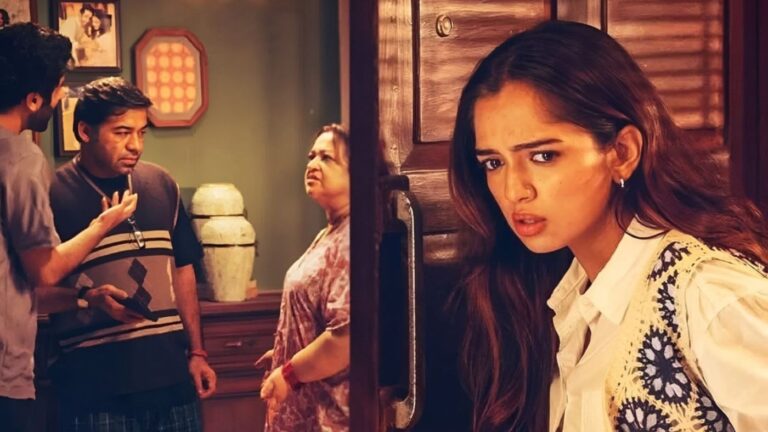
Greater Kalesh, Netflix’s Diwali special in collaboration with Terribly Tiny Talkies, is a ‘true’ story about the chaos that often hides beneath festive lights. The film follows Twinkle Handa, or Tinku, who returns home to Delhi from Bangalore to surprise her family for Diwali. What she expects to be a dreamy Diwali reunion soon turns into an emotional storm when she finds her family entangled in arguments, secrets, and the threat of losing their home.
As the festivities begin, old wounds reopen, from her brother’s hidden relationship to her father’s mysterious past. The familiar laughter of Diwali turns into a series of chaos, forcing everyone to confront uncomfortable truths, truths that they want to avoid. Yet, amid all the shouting, love quietly lingers. In the end, Greater Kalesh becomes a reminder that family, despite all its imperfections, remains our most chaotic but comforting home.
Performances?
Ahsaas Channa carries Greater Kalesh with a performance that feels effortlessly real. As Twinkle Handa, she captures that bittersweet mix of joy and unease that comes with returning home after years away. There’s something deeply human in the way she pauses mid-conversation, or how her eyes wander across familiar corners of the house, as if searching for traces of a past she’s outgrown. Even in silence, she says plenty. Twinkle feels less like a character and more like someone you’ve known, or maybe someone you once were.
Supriya Raina Shukla, as the Handa family’s matriarch, brings a warmth that feels unmistakably Indian, fussing over her children, worrying about every little thing, and scolding with love that never quite hides. It’s a performance rooted in truth, one that holds the story steady even when emotions run high.
Analysis
Greater Kalesh works because it takes its time. It doesn’t rush to the happy ending or wrap conflict in bright paper. Instead, it pauses to observe the small storms that build up before every celebration and reminds us that love often speaks through noise rather than silence. Director Aditya Chandiok, along with Terribly Tiny Talkies and Netflix, brings together a story that feels unmistakably familiar. This isn’t the polished Diwali of television ads but the real one, full of last-minute cleaning, old arguments, and quiet moments of care.
The writing feels deeply rooted in experience. The dialogues flow easily, sometimes sharp, sometimes tender, but always real. Every argument in the Handa home feels like something you might have overheard in your own living room. The emotions aren’t staged; they come from years of shared memories and unspoken expectations. What’s striking is how the film handles truth. When secrets surface, no one delivers grand speeches. There’s only acceptance, calm, tired, but honest. Greater Kalesh isn’t about mending what’s broken; it’s about learning to live with the pieces.
Diwali, in the film, becomes more than a backdrop. It turns into a reflection of the inner world, the lights, the cleaning, the decorations all mirroring the effort to clear old clutter from the heart. Tinku’s return home isn’t just a visit; it’s a quiet journey of rediscovery, a reminder of how family changes and yet somehow stays the same.
The camera treats the Handa home as more than a setting. Each room feels alive, holding echoes of old laughter and conversations that were never finished. Chandiok keeps emotions contained, never pushing too far. The tension simmers gently, like the way real families argue, without theatrics but with feeling.
In a time when family dramas often shout to be heard, Greater Kalesh finds its voice in softness. It’s messy and tender, full of truths that feel lived rather than written. The film understands that chaos isn’t the opposite of love; it’s often its proof. And that’s why Greater Kalesh lingers, because it feels like home, in all its imperfect, familiar beauty.
Music and Other Departments?
In Greater Kalesh, the music and technical elements quietly weave the film together, giving it the warmth and authenticity of a real home. The background score never tries to take the spotlight; it stays in the background, adding depth to both the noisy confrontations and the gentle pauses. During tense exchanges, the silence between notes says more than any swelling melody could, while the softer pieces during moments of nostalgia make the feeling of returning home sink in even deeper.
The cinematography captures Greater Kailash in a way that feels both cinematic and deeply familiar. The golden glow of Diwali lights, the slightly cluttered rooms, the narrow streets, everything looks lived-in, not staged. The camera follows Tinku through her childhood home with a kind of quiet curiosity, often staying close enough to catch every flicker of emotion on her face. Those close-ups pull the viewer in, turning family tension into something intimate and recognisable.
Production design and costumes add to this sense of honesty. The Handa house looks like it has seen years of laughter, fights, and hurried breakfasts, every shelf and wall carries memory. The festive touches, from fairy lights to rangolis, feel organic, never overdesigned. Costumes do what they should: reflect who these people are without calling attention to themselves.
Editing keeps the story lean across its 52 minutes. Scenes move with natural rhythm, letting humour, irritation, and affection flow into one another just like they do in real life. Nothing lingers too long, yet nothing feels rushed either.
What makes Greater Kalesh stand out is how all these elements, the sound, the visuals, the textures, work in quiet harmony. They never compete with the story or the actors. Instead, they hold everything together, creating a film that feels festive without being flashy, emotional without being heavy, and real enough to remind you of your own Diwali back home.
Other Artists?
Poojan Chhabra, as Twinkle’s brother, brings a quiet intensity to his role. His moments of rebellion and hesitation reveal someone torn between duty and desire, giving the family conflict a personal weight. The rest of the ensemble, Happy Ranajit, Akshaya Naik, and others, blend seamlessly into the Handa household, making it feel lived-in and familiar.
What makes Greater Kalesh special isn’t big emotional breakdowns or dramatic speeches. It’s the small gestures, a glance across the table, a half-smile after an argument, that make the story glow long after the credits roll.
Highlights?
A relatable family dynamic.
Ahsaas Channa’s performance.
Captures the Diwali atmosphere well.
Drawbacks?
The story is very predictable.
The runtime is too short.
Did I Enjoy It?
Let’s not judge it as a regular film…let’s see it through a Diwali film. Then yes, I enjoyed it.
Will You Recommend It?
Again, same Diwali lens. It’s a good family watch, especially where the film shows the real Diwali.
Greater Kalesh Movie Review by Binged Bureau
We’re hiring!
We are hiring two full-time junior to mid-level writers with the option to work remotely. You need to work a 5-hour shift and be available to write. Interested candidates should email their sample articles to [email protected]. Applications without a sample article will not be considered.
