
































































What Is the Story About?
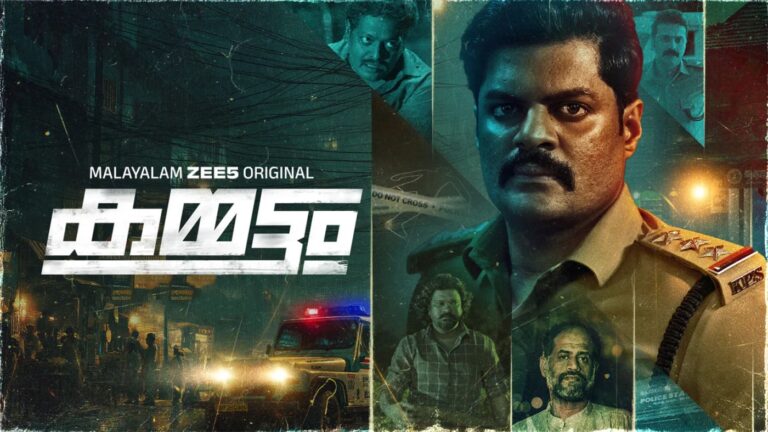
Kammattam, ZEE5’s first Malayalam original series, is a six-episode police procedural inspired by real-life events in Thrissur. The story begins with the death of Samuel Oommen, a businessman who is struck by a vehicle in what looks like a road accident. SHO Antonio George, played by Sudev Nair, quickly senses foul play. His instincts lead him to dig deeper, and soon he realises that Samuel’s death is not random. It is the first thread in a much larger web of deceit tied to a cooperative bank scam.
Antonio begins investigating Samuel’s personal and professional life. He discovers connections to shady deals, financial fraud, and bitter family ties. Samuel’s son Ebin is not above suspicion, and neither are his business partners or associates. Along the way, names like Francis, Shaji, and corrupt bank employees enter the radar. Each suspect comes with motive, and the challenge for Antonio is to connect the dots between the murder and the scam without losing sight of the truth.
The series slowly peels back layers of corruption, showing how greed drives ordinary people into crime. The police team pieces together the mystery through evidence, interrogations, and a string of confessions that expose the rot in the system. The co-operative bank, which should have been a symbol of community trust, turns out to be the hub of manipulation, scams, and betrayal.
At its heart, Kammattam is about how money twists relationships and power structures. It is also about a police officer’s persistence to uncover the truth even when the case seems buried under lies. While the central murder mystery is the hook, the series also tries to highlight the human cost of unchecked greed and the lengths people go to protect their stake in it.
Performances?
The success of a procedural drama often depends on how convincing the lead investigator is, and in Kammattam, Sudev Nair shoulders that responsibility as SHO Antonio George. He certainly looks the part of a determined cop, and his physical presence works in his favour. However, his performance lacks depth. While he gets the stern expressions right, there is little nuance in his delivery. That said, his role here is a step forward compared to some of his past outings, and he manages to carry the show without completely letting it collapse.
In the end, the performances in Kammattam mirror the writing. They are functional, they keep the story moving, but very few feel memorable. The cast does not let the show sink, but they also do not elevate it to the level it could have reached with stronger, more layered portrayals.
Analysis
Kammattam is positioned as a police procedural that also exposes the darker side of greed and corruption in cooperative banking. On paper, this sounds like an engaging mix. Real-life crime, a murder investigation, and the financial rot beneath everyday society should have made for a layered, thought-provoking series. Unfortunately, the show struggles to rise above its own limitations, both in writing and execution.
The biggest drawback is the storytelling style. Instead of letting the mystery unfold naturally, the series rushes from one revelation to another. Every time a suspect is caught, they spill information easily. There is no clever police work, no nail-biting suspense. The sense of discovery is replaced by spoon-feeding, with characters blurting out motives and secrets far too easily. It feels less like an investigation and more like actors reading out plot points from the script. As a result, the audience never feels challenged to think or guess. The tension that should drive a thriller is largely absent.
The writing also fails to give depth to the characters. Antonio George, the protagonist, is written as a straightforward police officer with no personal layer, no flaws, no quirks that might make him memorable. He functions as a machine of justice, and that leaves Sudev Nair with very little to explore. The other characters are similarly flat. They exist only to serve the plot, to either provide information or act as suspects. Even the victim, Samuel Oommen, who could have been an entry point into the emotional core of the story, is barely fleshed out beyond his shady dealings.
Pacing is another issue. The series is stretched across six episodes with a combined runtime of 115 minutes, but it feels both rushed and bloated. Important details are delivered hurriedly through dialogue, while unnecessary slow-motion shots drag scenes out. It is clear this was originally designed as a film, later chopped into episodes. The structure does not allow the audience to breathe with the story. There are cliffhangers, but they lack weight because the buildup to them is shallow.
There are also glimpses of a better show hidden within. The cooperative bank scam, for instance, is a fascinating subject. The conversations around fraud and the desperation of people to cling to power feel real and could have formed the backbone of a more gripping narrative. Sadly, the series chooses to treat them as exposition dumps rather than exploring them with patience or detail. The result is a missed opportunity.
Ultimately, Kammattam is a reminder of how important craft and perspective are in adapting such stories. A crime story, no matter how small or familiar, can shine if told with freshness. But here, the makers stick to a predictable template. The show becomes a product of convenience: quick to shoot, quick to edit, and easy to package. It entertains in parts, but it never truly engages. For a debut Malayalam original on a major platform, it is serviceable but underwhelming.
Music and Other Departments?
The background score of Kammattam, composed by 4 Musics, is serviceable but not memorable. It does help build atmosphere in some key moments, yet it lacks a distinct theme that lingers after the episodes end. This is again a missed opportunity, especially for a thriller where music can heighten suspense and give scenes more punch. At times, the score feels like filler rather than a creative layer.
The cinematography by Prakash Velayudhan is easily one of the stronger aspects of the show. His use of shadows and muted tones captures the mood of secrecy and deceit quite well. A few frames, particularly those featuring Antonio in dimly lit interiors, stand out for their cinematic touch. However, the visual strength is slightly undermined by the overuse of slow-motion, which dilutes tension rather than building it.
Editing is mostly sharp, keeping episodes under twenty minutes each. This gives the series a sense of momentum, but it also exposes the weakness of the script. The short runtime could have been an advantage if the writing had been tighter.
In the end, the technical team does its job reasonably well, but the lack of creative boldness in writing overshadows their contributions.
Other Artists?
Among the supporting cast, Arun Sol makes the strongest impression. He gets more scope to perform than most others and uses it to his advantage. His character feels alive because he is allowed to showcase moments of anger, frustration, and vulnerability. Ajay Vasudev, Akhil Kavalayoor, and Jordy Poonjar fill the slots of suspects and villains, but they rarely rise above one-note writing. They do their job, but nothing lingers after the scenes end.
Jeo Baby, though present only for a short time as Samuel Oommen, leaves a mark with his grounded screen presence. Jins Bhaskar also does well in the role of a fellow officer, giving the investigation team some much-needed credibility. Sadly, the women in the series are given no real space to shine. Their appearances are brief and add little to the overall narrative.
Highlights?
Cinematography
Sudev Nair
Premise
Drawbacks?
Pacing
Storytelling
Screenplay
Did I Enjoy It?
In parts.
Will You Recommend It?
If you don’t have anything else to watch.
Kammattam Zee5 Series by Binged Bureau
We’re hiring!
We are hiring two full-time junior to mid-level writers with the option to work remotely. You need to work a 5-hour shift and be available to write. Interested candidates should email their sample articles to [email protected]. Applications without a sample article will not be considered.
