































































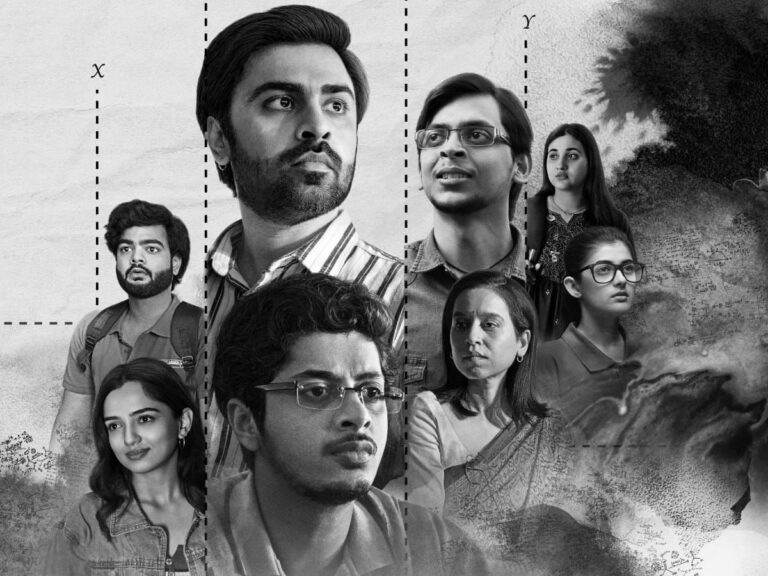

What Is the Story About?
Vaibhav, Uday and Meena are within striking distance of acing the country’s most challenging exam that has taken centre-stage in their lives. Channeling their anxiety in their last leg of preparation, the trio along with Shivangi, Vartika and Meenal leave no stone unturned to give their best shot. Meanwhile, Jeetu Bhaiya, on the verge of a mental breakdown, is looking beyond Kota.
Performances?
After watching two seasons, one’s quite aware of what to expect from the show’s pivotal characters, the performances and Kota Factory’s primary cast doesn’t disappoint. The character graph of Mayur More’s Vaibhav is more compelling this time and the youngster deals with the complex, problematic traits of his role with ease.
Alam Khan brings his live-wire energy to the proceedings again and there’s no disputing the underdog charm that Ranjan Raj exudes in his portrayal of Balmukund Meena. Jitendra Kumar is as effective as he can get as the ‘brotherly’ figure Jeetu Bhaiya, but what stays with you more is Tillotama Shome’s warm screen presence in the shoes of Pooja. Ahsaas Channa, Revathi Pillai and Urvi Singh leave a strong impact in their roles.
Analysis
There’s something bittersweet about closures and endings, even if it is within a fictional terrain. Kota Factory’s third instalment is here and it’s the business end of a crucial phase in the lives of its protagonists in Kota. Beyond its focus on the plight of the nervous students, the show adopts an idealistic outlook towards teaching and the role it plays in shaping a better tomorrow.
The third instalment is specifically tailored for crowds well-versed with the franchise; at least, one could savour it better that way. While Vaibhav lets his nervous breakdowns get the better of him, Uday takes his freedom for granted and Meena, in a bid to unburden his parents, forgets his priorities. Their camaraderie continues to hold them together in the direst of situations.
Kota Factory’s strength comes from its authentic ambience and well-etched characters, the writing is sincere in documenting various dimensions of studenthood. Sample Meena’s desire to earn easy money. As a stickler for principles (referring to Krishna and Sudama), he doesn’t borrow money from friends, starts tutoring a school student to pay his bills and gradually intrudes into his study hours (he learns his lessons after a sermon).
Vaibhav unknowingly downplays Vartika every time they discuss academics. The former rightly gets schooled and they finally make a pact to separate their relationship from academics. Uday, as always, takes care of the entertainment quotient in the show, even as he misuses his parents’ trust. He’s at least sorted, doesn’t take life seriously and there’s more to his world beyond the IIT dream. The little details in their lives add sheen and instil life into the show.
Among the women, Vartika and Shivangi are the better-written parts. An ambitious and tomboyish Shivangi holds a mirror to the male protagonists as and when they’re wrong. Vartika is still the sweet, gentle nerd and the minor conflict in her relationship with Uday drives home an important point. Yet, one can’t help but feel that the women exist as mere extensions in a man’s world.
Viewers get to explore a little-known, vulnerable side to Jeetu Bhaiya this season. He’s yet to heal from his psychological trauma (over the loss of a student), gets triggered easily and understands the need to detach himself emotionally as a therapist suggests he be ‘Jeetu Sir’ over ‘Jeetu Bhaiya’. Within the limitations of the show, the latest addition – Pooja makes a mark too.
However, the problems for the show continue with its storytelling. There’s a desperation to dissect every conflict through the dialogues, it gets verbose and preachy, prefers spoon-feeding the viewers and underestimates their intelligence. It wants to discuss every issue ailing the education system (and doesn’t do anything about it other than ranting), parenting and crams too much information.
The pivotal moments like the day when the students take their exams and await results are among its high points – there’s adequate tension and urgency in the narrative to draw your attention. The ‘mixed bag’ ending is apt; for every success story, there’s a failure and plenty of life lessons in store. It’s hard to not shed a tear in Jeetu’s farewell sequence – the outpour of emotions summarises the impact the character has had on the show.
It would be right to not prolong Kota Factory beyond the third season – it definitely had its moment in the sun and has made its presence felt among a wide section of viewers. There are enough clones in the market that have told similar stories – Laakhon Mein Ek, Aspirants, All India Rank and it’s high time TVF and Netflix end it at the right time and preserve its posterity.
Music and Other Departments?
Aript Mehta, Simran Hora and Ravi’s soundtrack impresses with its slice-of-life appeal and songs like Iraadey, Sharte Hai Laagu are likely to enjoy a greater shelf life. The black-and-white cinematography continues to be easy on the eye (amidst the desperation to fill the frame with colours) and enables you to look at the tale from a visual dimension too. The four-hour runtime, with the leisurely treatment, gets on your nerves occasionally.
Highlights?
Tillotama Shome’s performance
The last two episodes
Nuanced understanding of studenthood trauma
Drawbacks?
Excessively preachy
Information-heavy
Doesn’t offer anything substantially new
Did I Enjoy It?
Yes
Will You Recommend It?
Yes
Kota Factory Season 3 Review by Binged Bureau
We’re hiring!
We are hiring two full-time junior to mid-level writers with the option to work remotely. You need to work a 5-hour shift and be available to write. Interested candidates should email their sample articles to [email protected]. Applications without a sample article will not be considered.
