































































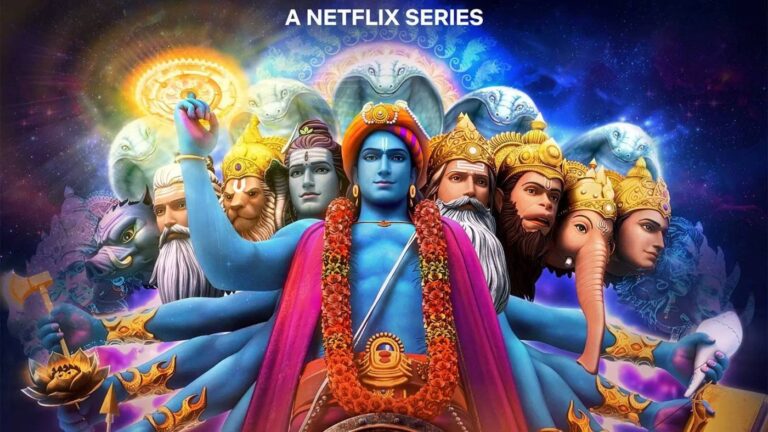

What Is the Story About?
If you have read the Mahabharata or a book on the Mahabharata or even grew up watching BR Chopra or Star Plus’s version, then you don’t need to know what the story of the Mahabharata is. Netflix India takes a different approach and they have released episodes just on the great Kurukshetra war.
Kurukshetra is Netflix’s ambitious animated retelling of the Mahabharata, reimagined through a compact, episodic lens. Set entirely during the eighteen-day war between the Pandavas and the Kauravas, the series strips away the epic’s sprawling prelude and aftermath to focus solely on the battlefield.
Each episode centres on a different warrior, offering a day-by-day chronicle of the Mahayudh through eighteen unique perspectives though the first part, currently streaming, covers only the first nine. The warriors’ stories unfold as deeply human reflections on pride, duty, guilt, and destiny. We see Bhishma’s conflicted loyalty, Arjuna’s hesitation, Abhimanyu’s courage, and Yudhishthir’s burden of righteousness, all narrated through Gulzar’s impeccable voice that ties the chaos together with poetic gravitas.
The structure moves between moments of combat and flashbacks that expose each character’s emotional core. In doing so, Kurukshetra becomes less a tale of gods and more a meditation on flawed men trapped in the inevitability of war. The animation, though not always seamless, brings a certain dignity and texture to the narrative that feels grounded.
This version of Kurukshetra doesn’t aim to retell the Mahabharata in full but to reinterpret it as a series of personal arcs unfolding within one of the greatest wars ever imagined. The show respects its source while daring to present it in a form accessible to younger and global audiences. The result is an animated war epic that feels both intimate and timeless, where every sword strike carries the weight of conscience and consequence.
Performances?
In Kurukshetra, the performances depend completely on the power of voice. This is where the series finds both its strength and its weakness. Gulzar is the clear highlight. His narration gives the show its soul. His calm and dignified tone brings weight to every scene, whether he is describing the silence before battle or the pain of a warrior’s fall. His voice adds poetry to a story filled with blood and loss. We all know how incredible his narration can be and he is the single biggest highlight of the show.
Among the cast, Vinod Sharma, Sahil Vaid, Saumya Daan and others bring life to their parts. Sahil Vaid’s Arjuna carries the confusion of a man torn between duty and emotion. Saumya Daan’s Yudhishthir sounds tired, as if crushed under the weight of his choices. Manoj Pandey as Bhishma and Himanshu Rana as Abhimanyu also leave a mark, especially in their emotional moments. Every actor seems aware of the moral and emotional depth of the story. That awareness helps the voices sound real and grounded.
Analysis
Netflix’s Kurukshetra is a bold attempt to bring India’s greatest epic to life in animated form. Unlike traditional retellings that stretch across decades of events, this series focuses entirely on the eighteen-day war between the Pandavas and the Kauravas. The choice to narrow the story to the battlefield is both its greatest strength and its main limitation. By concentrating on the war itself, the show maintains a sense of urgency and intensity. At the same time, it leaves out the rich political manoeuvring, philosophical discussions, and intricate family dynamics that make the Mahabharata such a layered epic.
Kurukshetra is a highly character-driven series. Each episode centres on a different warrior, offering insight into their motivations, dilemmas, and moral struggles. Part one, currently streaming, covers nine warriors, including Arjuna, Bhishma, Dronacharya, Abhimanyu, and Yudhishthir. This structure allows the series to explore the war from multiple angles and gives lesser-known characters a chance to shine. For example, Abhimanyu’s bravery and tragic death are given emotional weight, while Dronacharya’s tactical decisions reveal the conflicts inherent in duty and loyalty. By telling the story through the eyes of the warriors, the show moves beyond the simple dichotomy of Pandavas as heroes and Kauravas as villains. It highlights how war forces even noble characters to make morally complex decisions.
The animation is visually striking, though it does not always reach the polish of global standards. The battlefield sequences, chariot duels, and army formations are expansive and detailed. The creators have clearly taken inspiration from cinematic spectacles like Baahubali, while also including elements reminiscent of superhero films. These choices give the series a larger-than-life feel, but at times the secondary characters look too similar, which can make it hard to follow smaller skirmishes. Still, the style is grounded, earthy, and serious, which fits the tone of the story. It avoids turning the Mahabharata into a cartoonish spectacle and treats the characters and events with respect.
Voice performances play a crucial role in an animated series, and here the show is a mix of great triumph and even greater weakness. Gulzar’s narration is extraordinary, providing weight, emotion, and a sense of inevitability to the story. His voice gives context and meaning to every battle and moral dilemma. The other voice actors, while sincere, lack the star power or tonal distinction to make all characters stand out equally. Arjuna, Yudhishthir, and Abhimanyu are voiced convincingly, but Krishna, Karna, and Draupadi do not feel as commanding or memorable as they could have. Still, the performances as a whole maintain a human touch, allowing viewers to feel the emotional stakes of the war.
One of the series’ strongest aspects is its willingness to explore the moral ambiguity of war. The Pandavas, though portrayed as righteous, are shown grappling with grief, anger, and the desire for revenge. The Kauravas are not simply evil; their actions stem from fear, pride, and desperation. Even small moments, like the debates over justice, loyalty, and dharma, carry a weight that reminds the audience that there is no simple right or wrong in war. The show also touches on lesser-known strategic and emotional moments, like Abhimanyu’s death and Jayadratha’s role, which are often glossed over in traditional retellings. These touches add depth and make the story feel alive rather than a static legend.
The series does have some shortcomings. The narrative, while structured well, can feel heavy at times. The score occasionally overwhelms the scenes rather than enhancing them, and the first nine episodes leave viewers waiting for the continuation of some storylines. Certain episodes try to cram too much information into a short runtime, which can make the pacing uneven. Still, the creators succeed in making the story accessible to both newcomers and viewers already familiar with the epic.
Ultimately, Kurukshetra is a sincere, ambitious project. It does not aim to reinvent the Mahabharata, but it reinterprets it for a modern audience. By focusing on the warriors’ perspectives, it brings humanity to a story often treated as untouchable or purely mythological. For those interested in Indian mythology, history, or character-driven war stories, Kurukshetra is an animated series worth exploring.
Music and Other Departments?
In Kurukshetra, music plays an important but uneven role. The score is heavy and dramatic, often attempting to heighten tension and give the battles epic weight. At times it works, particularly in sequences like Abhimanyu’s last stand or Bhishma’s moral dilemmas. But there are moments when the music feels overbearing, almost dictating the tone instead of letting the visuals and narration carry the emotion. A lighter, more nuanced approach could have made the emotional beats hit harder.
Visually, the series is okay. Chariot battles, army formations, and divine interventions are detailed and carefully choreographed. Yet, secondary characters sometimes blend together, and a few action sequences feel stiff, reminding viewers that Indian animation is still growing.
Other Artists?
But there is also a clear gap. Apart from Gulzar, most of the voices lack distinction. They often sound similar, and at times it becomes hard to tell one from another. For characters like Krishna, Karna or Draupadi, the voices do not carry the power they deserve. A few well-known or stronger voice actors could have added the missing force.
This is a grossly miscast show where voice acting is not helping the show at all. The makers should have gone for a few more recognisable voices to make them sound distinct but that does not happen to be true. That’s why you would have a hard time recognising every character.
Highlights?
Gulzar
Humane treatment
Drawbacks?
Voice performances
Average Animation
Did I Enjoy It?
Sort of
Will You Recommend It?
Not much, but if you are interested in epics then yes.
Kurukshetra Part 1 Series Review by Binged Bureau
We’re hiring!
We are hiring two full-time junior to mid-level writers with the option to work remotely. You need to work a 5-hour shift and be available to write. Interested candidates should email their sample articles to [email protected]. Applications without a sample article will not be considered.
