
































































What Is the Story About?
Left-Handed Girl follows three generations of Taiwanese women, mother Shu-Fen, her rebellious teenage daughter I-Ann, and five-year-old I-Jing, as they move back to Taipei to rebuild their lives. Shu-Fen opens a noodle stall in a bustling night market, trying to hold the family together while juggling financial strain and old secrets.
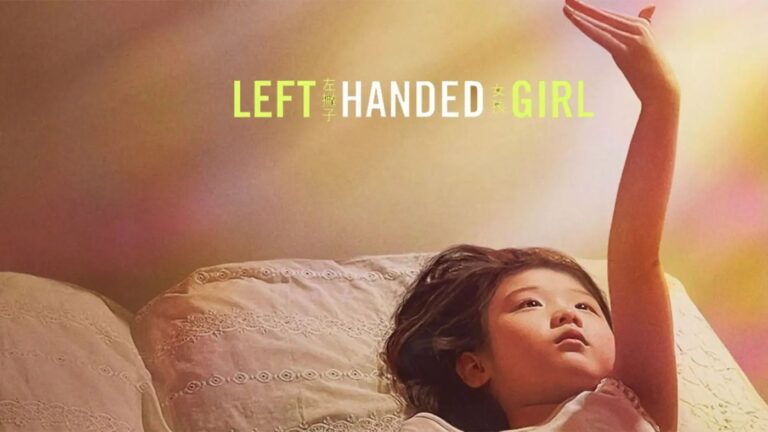
At the story’s core is little I-Jing, who’s told by her conservative grandfather that her natural left-handedness is the “devil’s hand”. This sparks a heartbreaking internal conflict as she begins to feel ashamed of herself and explores her “evil” side through small acts of theft.
The film ties together the struggles of these women against the backdrop of a male-centric society and the chaotic, colourful world of the night market. I-Ann, unable to afford college, becomes a “betel nut beauty” and finds herself in a messy affair, a reflection of her own inner struggle between duty and desire.
As the pressure builds, long-held resentments, suppressed frustrations, and unspoken truths eventually explode in an emotionally loaded family gathering in the climax. The film is a tender yet raw look at shame, survival, and the sacrifices, particularly for women, that echo across generations.
Performances?
Among the talented cast, little Nina Ye completely steals the show. Her cuteness alone could win you over, even if the rest of the film doesn’t. She’s the emotional heartbeat of the story, and much of the night market’s charm comes through her unfiltered perspective.
Ye’s portrayal of a child internalising her grandfather’s superstition, believing her left hand is “the devil’s hand”, is both adorable and heartbreaking. She balances innocence with the first signs of self-doubt, especially as she uses her “evil hand” for petty stealing.
Analysis
Directed by Shih-Ching Tsou, Left-Handed Girl thrives on its layered storytelling. It uses a seemingly simple family drama to dig into wider issues like financial pressure, generational trauma, social expectations and cultural shame. The plot follows Shu-Fen and her two daughters as they attempt to restart their lives at a Taipei night market after years of hardship.
The main conflict stems from a blend of economic struggle, strict traditional mindsets, and buried emotional wounds. Shu-Fen struggles with the financial burden and the legacy of her past mistakes, while I-Ann struggles with her limited future, resorting to working as a “betel nut beauty” and engaging in a destructive affair.
And then there’s I-Jing, whose left-handedness is turned into a moral curse by her grandfather, a belief she sadly absorbs. The story serves as a raw look at female resilience in a patriarchal society, the heavy cost of self-sacrifice, and the cyclical nature of trauma and shame across generations. The night market setting becomes a symbol of constant, exhausting survival.
Structurally, the film is linear but shifts between the three perspectives, giving each woman equal emotional weight. This multi-angle approach keeps the narrative rich and grounded. The pacing can feel slow in places due to long takes meant to capture mood and atmosphere, but these moments add depth, especially as the story builds towards its explosive family dinner scene, where years of tension finally burst open.
The themes of family conflict, intergenerational trauma, and poverty are universal and relatable across cultures. The emotional core of a mother’s sacrifice and a daughter’s desire for independence transcends cultural boundaries. It’s a damn shame that across several cultures and generations, issues like these still plague society.
The naturalistic performances and authentic settings make the characters feel real. However, the slow pacing and extensive focus on atmosphere and character development may be challenging for viewers used to faster-paced, formulaic dramas.
As a feature directorial debut, Shih-Ching Tsou impresses. Her direction remains authentic, and she successfully bestows an empathetic, non-judgmental look on the lives of marginalised women in contemporary Taiwan.
According to some reports, Tsou deliberately didn’t use traditional, formal rehearsals. Instead, she asked the cast to channel their most intense family experiences into their characters, which explains the raw chemistry onscreen.
The narrative is carefully constructed and tightly controlled, a quality often attributed to Tsou’s long-standing collaboration with Sean Baker, who co-wrote the script and served as the editor. Plus, the decision to shoot the entire film on iPhones adds a strong feeling of realism and intimacy, making the film feel less like a movie and more like a detailed observation.
It reportedly allowed the team to shoot discreetly in the busy, real-life night market without attracting unwanted attention or disrupting the natural flow of the crowds. Plus, it provides a raw, unfiltered, handheld vibe that enhances the sense of immediacy and authenticity.
Music and Other Departments?
The sound design beautifully captures the pulse of Taipei’s night markets, immersing you in their noise and energy. The usage of the musical score is limited, but it looks effective during important scenes.
We can hear a soaring musical score, particularly when I-Jing uses her “devil’s hand” to steal things from different shops. This music, which has a mix of excitement, mischievousness, and danger, perfectly conveys the five-year-old’s nervous yet exciting internal state.
The camerawork looks smooth, stylish, and often handheld. The camera often shoots from a low angle or eye-level with little I-Jing. This choice allows the audience to see the world, the tall stalls, the vibrant colours, the chaotic crowds, through her sense of wonder and mischievousness.
For I-Ann’s nighttime scooter rides, the camera pulls back into sweeping shots that capture her loneliness and uncertainty. Close-ups on Shu-Fen reveal her internal turmoil through silence rather than dialogue. The editing remains fluid and dynamic, helping balance the emotional beats with the noisy, vibrant backdrop.
Other Artists?
Shih-Yuan Ma shines as I-Ann, delivering a grounded performance that captures the anger, vulnerability and exhaustion of a young woman forced to grow up too fast. She embodies the conflict between her hardened exterior and her soft, wounded core. In other words, her character seems too young to carry this much weight.
Veteran actress Janel Tsai brings nuance and restraint as Shu-Fen. With minimal dialogue, she conveys guilt, responsibility and emotional burnout through subtle gestures and expressions. She’s constantly torn between holding her family together and losing herself in the process.
The rest of the ensemble fits perfectly. Akio Chen, as the superstitious grandfather, and Xin-Yan Chao, as the grandmother who runs a passport-fraud operation, add layers of pressure, tradition and dark humour. Their dynamic with the central trio, especially during the chaotic banquet showdown, highlights how generational divides still shape modern Taiwanese families.
Highlights?
Exceptional Acting
Authentic Social and Cultural Realism
Immersive Setting
Expertly handles themes of female resilience, intergenerational shame and patriarchal pressure
Effective Climax
Drawbacks?
Slow Pacing
Fragmented Narrative
Emotionally heavy tone, which some viewers may find too challenging or difficult to watch
Did I Enjoy It?
Yes. Left-Handed Girl is a deeply moving, authentic, and emotionally compelling watch. If you value powerful, character-driven drama and social realism, the answer is a resounding yes.
Will You Recommend It?
Highly recommended to viewers who appreciate arthouse cinema, strong female narratives, and unflinching realism. But its slow pacing and emotionally heavy themes make it a film for those seeking a thought-provoking and challenging drama, not light entertainment.
Left-Handed Girl Netflix Movie Review by Binged Bureau
We’re hiring!
We are hiring two full-time junior to mid-level writers with the option to work remotely. You need to work a 5-hour shift and be available to write. Interested candidates should email their sample articles to [email protected]. Applications without a sample article will not be considered.
