
































































What Is the Story About?
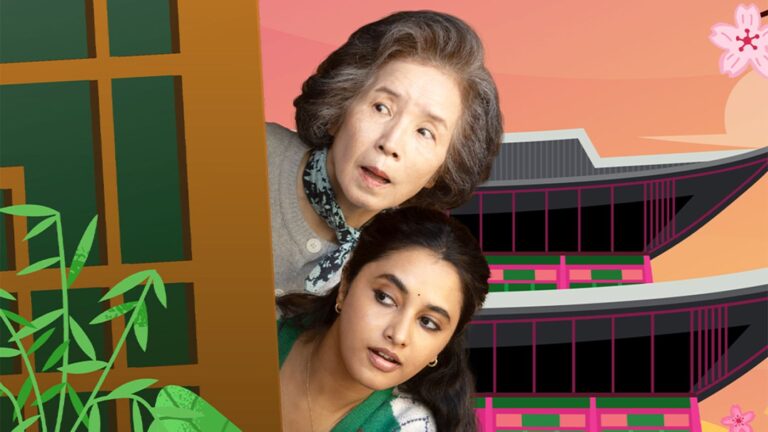
Made in Korea follows the story of Shenba, a young woman from a small hill town in Tamil Nadu. Since childhood, she has been fascinated by Korean culture. She spends hours watching Korean dramas and listening to K-pop, even going to unusual lengths just to get an internet connection. Over time, this interest grows into a dream. Shenba wants to visit South Korea one day and see the country she has admired from afar.
Her life, however, is far from glamorous. She comes from a modest background and lives with her family in a village. When an opportunity arises to travel to Seoul with her boyfriend Mani, she believes her dream is finally about to come true. But things do not go as planned. Soon after reaching Korea, she realizes that the job she was promised does not exist and Mani is no longer around to support her.
Alone in a foreign country where she does not understand the language, Shenba struggles to survive. She feels lost and uncertain about what to do next. Slowly, she begins meeting people who help her adjust to life in Seoul. A young man offers guidance, and later she finds work as a caregiver for an elderly woman.
As Shenba spends more time with the old lady, they form an emotional bond. The two women begin to share their dreams and struggles. With the help of new friends, they decide to start a small café together.
Shenba brings a piece of home into the kitchen by preparing dishes inspired by her father’s cooking. She mixes Tamil flavours with Korean ingredients, creating a fusion dish that becomes popular among customers.
Through these experiences, Shenba slowly learns to stand on her own. What began as a dream of visiting Korea turns into a journey of finding a new sense of belonging.
Performances?
The performances in Made in Korea carry much of the film’s emotional weight, even when the writing struggles to give the actors fully developed characters. At the centre of the film is Priyanka Arul Mohan as Shenba, and she approaches the role with a sincerity that is difficult to ignore. Shenba is written as a wide-eyed dreamer who finds herself stranded in a foreign country, and Priyanka plays her with a lot of innocence. She relies on small expressions and quiet reactions to convey Shenba’s confusion and loneliness in Seoul. In several scenes, particularly when the character begins to realise that her romantic and professional expectations have collapsed, Priyanka brings a softness that makes Shenba believable. At the same time, the performance is occasionally held back by the script’s mediocrity. Shenba is rarely allowed to show emotional complexity, which leaves the actor repeating the same note of vulnerability for long stretches.
The Korean cast adds warmth to the film, though their characters are written more as narrative helpers than as fully realised individuals. Park Hye Jin, playing the elderly woman Shenba cares for, gives the film some of its most heartfelt moments. Her interactions with Priyanka feel natural and carry a quiet emotional sincerity that the rest of the film often lacks. The relationship between the two actors becomes the most convincing part of the story.
No Ho Jin, who plays the young man who helps Shenba navigate Seoul, delivers a relaxed and likeable performance. However, the character itself is written so conveniently that it limits what the actor can do.
Among the Indian supporting actors, Rishikanth has little room to leave an impression as Shenba’s unreliable boyfriend. Overall, the cast performs with commitment, but the film’s thin characterisation prevents many of them from truly standing out.
Analysis
Made in Korea begins with an idea that feels very current. Over the last decade, South Korean popular culture has become extremely influential among youth in India. K dramas, K pop, Korean food and fashion have built a strong emotional connection for many viewers who have never even visited the country. The film takes this cultural curiosity and builds its story around a small town Tamil girl who dreams of visiting Korea. On paper, this premise offers rich possibilities. It could explore identity, migration, cultural fascination and so much more.
For a while, the film manages to capture the innocence of that dream. Shenba’s fascination with Korea feels genuine. She is not chasing fame or career success. She simply wants to see a place that has lived in her imagination for years. The film deserves some appreciation for not mocking or questioning that desire. Dreams in cinema often need justification, but here the character simply likes something and wants to experience it. That simplicity gives the story a certain honesty.
However, the film does not fully explore the emotional depth of that idea. We are told that Shenba loves Korea, but the script rarely shows us why the culture speaks to her in a deeper way. Apart from references to K dramas and K pop, the fascination remains surface level. A stronger script would have explored how global culture travels across borders and shapes people’s imagination. Instead, the film uses Korea mainly as a backdrop for a familiar story about self discovery.
Once Shenba arrives in Seoul, the narrative follows a predictable path. She faces loneliness, confusion and practical struggles. Gradually, strangers help her adjust to life in the new city. Much like what happens to Rani in Kangana Ranaut’s Queen. Although Queen is a far better film. The tone remains warm and optimistic throughout these moments. There is a clear effort to show cultural kindness and human connection across language barriers. Some scenes work very well because of this tone. The bond between Shenba and the elderly woman she cares for is the emotional heart of the film. Their relationship grows slowly and feels sincere. It is one of the few parts of the story where the writing allows the characters to breathe.
Another thoughtful element is the way the film uses food as a symbol of cultural exchange. Shenba takes inspiration from her father’s cooking and experiments with Korean ingredients. The fusion dish she creates represents her journey between two cultures. This idea is simple but effective and adds warmth to the story.
At the same time, the film often becomes too comfortable in its sweetness. Many problems resolve themselves very easily. Shenba finds helpful people almost everywhere she goes. Opportunities appear quickly, and conflicts disappear without much struggle. The film avoids exploring the more difficult realities of migration and life abroad. This makes the narrative feel convenient and slightly unrealistic.
The screenplay also suffers from weak narrative structure. Events often feel disconnected from one another. Shenba meets new people, finds work and moves forward in life with very little resistance. These transitions lack strong dramatic build up, which reduces the emotional impact of her journey.
Another limitation is the film’s portrayal of Korea itself. The city appears almost like a friendly fantasy where most strangers are supportive. While this approach keeps the film light and pleasant, it also removes the complexity that could have made the story more powerful. The reason for this simplicity is simple. The movie is as South Korean as it is Indian, so naturally that element will dominate.
Despite these issues, Made in Korea has a sincerity that is difficult to dismiss completely. The director clearly wants to tell a hopeful story about dreams, belonging and cultural curiosity. The film never becomes cynical or manipulative. Instead, it stays gentle and optimistic from beginning to end.
In the end, Made in Korea feels like a film built on a beautiful idea but executed with too much simplicity. It has moments of warmth and sincerity, especially in its performances and emotional intentions. But the storytelling rarely challenges itself enough to fully explore the rich premise it begins with.
Music and Other Departments?
The technical aspects of Made in Korea support the film’s light and gentle tone, though they rarely stand out on their own. Seoul is not presented as a glossy tourist destination filled with dramatic shots. Instead, the camera often stays close to Shenba and observes her surroundings in a simple, grounded way.
The music follows the same soft approach. The background score is calm and pleasant, designed mainly to support the emotional tone of the story. It appears during moments of reflection, loneliness or small victories in Shenba’s journey. However, the music rarely leaves a lasting impression after the film ends. It does its job without becoming memorable.
The editing keeps the narrative moving at a relaxed pace. The film flows smoothly from one scene to another, but some emotional transitions feel abrupt. Certain developments happen too quickly, which slightly weakens the impact of key moments.
Overall, the technical elements are functional and supportive, even if they do not elevate the film beyond its simple storytelling.
Highlights?
Concept
Experiences in Korea
Drawbacks?
Screenplay
Simplistic writing
Did I Enjoy It?
Only in parts
Will You Recommend It?
Only if you have nothing else to watch
Made in Korea Netflix Movie Review by Binged Bureau
We’re hiring!
We are hiring two full-time junior to mid-level writers with the option to work remotely. You need to work a 5-hour shift and be available to write. Interested candidates should email their sample articles to [email protected]. Applications without a sample article will not be considered.
