
































































What Is the Story About?
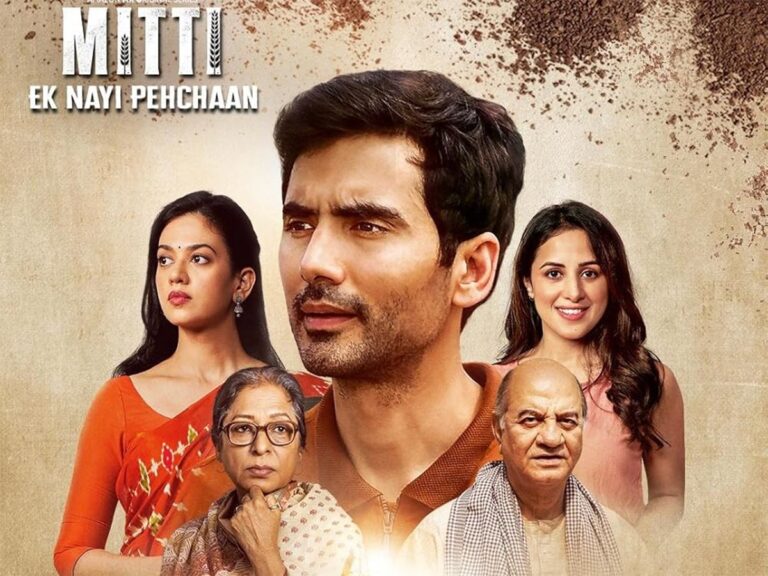
Mourning his grandfather’s death, Raghav returns to his ancestral village, Dol Chhapra, to fulfil a promise and repay a debt. He makes a tough choice about his relationship with Stuti and soon loses his corporate job too. Over time, he embraces modern farming with local help, despite setbacks. How does Raghav overcome challenges, repay his loan, and inspire his village to embrace his vision?
Performances?
Ishwak Singh is quite comfortable and at ease as the softie, a cold corporate guy transforming into an amiable farmer who stands up for his folk. He makes you feel for the emotional beats of Raghav, though the writing is slightly convenient at times. Veterans Alka Amin and Yogendra Tiku, playing the likeable, warm grandparents, deliver the goods minus any uncalled-for sentimentality.
Analysis
Mitti – Ek Nayi Pehchaan tells the story of a corporate professional who risks it all – relationship, job, and a life of luxury – to return to his village and pursue farming, driven by the desire to sustain his grandfather’s ideals. It’s the latter’s death that brings him back to Dol Chhapra. The trip rekindles his formative years in his hometown, pushing him to take drastic decisions.
In its premise, Mitti takes the Swades route, leaning on an oft-seen trope in Telugu and Tamil films: an outsider returns to his roots with a romanticised idea of his village, leading a basic lifestyle, only to be overwhelmed by local realities, but eventually becomes the face of a success story. Films like Srikaaram, Srimanthudu, Maharshi, and Jayam Ravi’s Bhoomi have explored this efficiently.
The show ticks all the boxes of a typical story centred on a protagonist’s homecoming. Urban life is the invisible antagonist; the mundanity of a corporate career that leaves little time for the soul and an insensitive work culture are factors that convince Raghav to leave it all behind and chase a future in agriculture. Back in the village, the situation is far from rosy, but the bargain feels worth it.
Quite early into Mitti, Raghav has an easy choice to make: clear his grandfather’s loans and resume his city routine as quickly as possible. However, going by the popular showbiz quote – drama begins where logic ends – Raghav wants to settle the debt the way his grandpa would’ve wished to (only using the returns from agricultural produce). He finds new allies but earns enemies in the process.
Just like you’d expect the show to proceed, the leading man’s perennial conflict is between the mind and the heart. It takes time for him to make peace with the love-hate relationship with the village. He is tempted many a time to give up…only to go back on his decision. The writing choices are disappointingly safe; the focus is largely on the emotion and determination over the detailing.
The roadblocks that come Raghav’s way – the loan, the unpredictability of nature in farming, lack of local support, and adoption of novel agricultural practices – are derived and formulaic. The struggles feel superficial after a point. The problems don’t truly threaten Raghav; results come easily – a call with an acquaintance, a meeting for a business proposal, and the locals instantly giving a nod to his ideas.
Even with Raghav’s relationships – how he convinces his father about doing the right thing and behaves like a know-it-all, moving on from Stuti almost instantly and finding a companion in Kratika – it’s as if a red carpet is laid out for him on all occasions. Yet, you hang onto Mitti because of its conviction; you sense the desire to tell an alternative story, though the writing doesn’t complement it.
What Mitti gets right is tapping into the raw connection of a man with his soil. Here’s a man who makes the time to live through the turbulence of rural life and gives his allies their due whenever necessary. It’s an easy watch; the emotions are never heightened, the storytelling is light, and the screenplay, breezy. The casting, performances, music, and cinematography make up for some of its missteps.
Mitti is a story of a corporate professional-turned-farmer we all know. Those familiar with South Indian cinema may not find it fully rewarding, yet a viewing wouldn’t hurt. It harps on the romantic fascination one has with the countryside and the urge to give everything up to be one’s boss back home. The four-hour time helps generate a strong emotional connect, which is amiss in most OTT shows/films lately.
Music and Other Departments?
Diptarka Bose’s score remains a worthy companion to the highs and lows in the protagonist’s journey, alternating between sensitive and spirited, as needed. The songs amble along smoothly, with Dhananjay Navagrah’s lively cinematography, fluid editing and neat production design contributing to its technical appeal.
Other Artists?
The Laapata Ladies find Pranjal Pateriya and Piyush Kumar form a cheery duo, bringing lightness to the narrative with their spontaneous performances. The female leads – Diksha Juneja, Shruti Sharma – cast as Raghav’s romantic interests in the city and the village, make their presence felt, despite the limitations in their roles.
Highlights?
Familiar yet likeable tale told with conviction
Good performances, technical appeal
Well-fleshed out characters
Drawbacks?
Lacks novelty
Predictable narration
Convenient writing
Did I Enjoy It?
Mostly, yes
Will You Recommend It?
If you enjoy feel-good ‘return to roots’ tales, go for it
Mitti: Ek Nayi Pehchaan Review by Binged Bureau
We’re hiring!
We are hiring two full-time junior to mid-level writers with the option to work remotely. You need to work a 5-hour shift and be available to write. Interested candidates should email their sample articles to [email protected]. Applications without a sample article will not be considered.
