
































































What Is the Story About?
One Piece Season 2 follows the Straw Hat Pirates as they leave the East Blue and enter the treacherous Grand Line. After a narrow escape from Captain Smoker in Loguetown, the crew traverses Reverse Mountain and befriends the giant whale, Laboon.
The journey quickly turns dangerous as they encounter Baroque Works, a shadowy criminal syndicate led by the mysterious Mr. 0 (Sir Crocodile). Along the way, they allied with Princess Vivi, who seeks to save her kingdom, Alabasta, from a manufactured civil war.
The adventure spans prehistoric jungles in Little Garden, where they meet duelling giants, and the frozen peaks of Drum Island. Facing the tyrant Wapol, the crew recruits their sixth member: the brilliant reindeer doctor, Tony Tony Chopper. The season concludes with the Straw Hats setting sail for Alabasta, ready to face the full might of Baroque Works.
Performances?
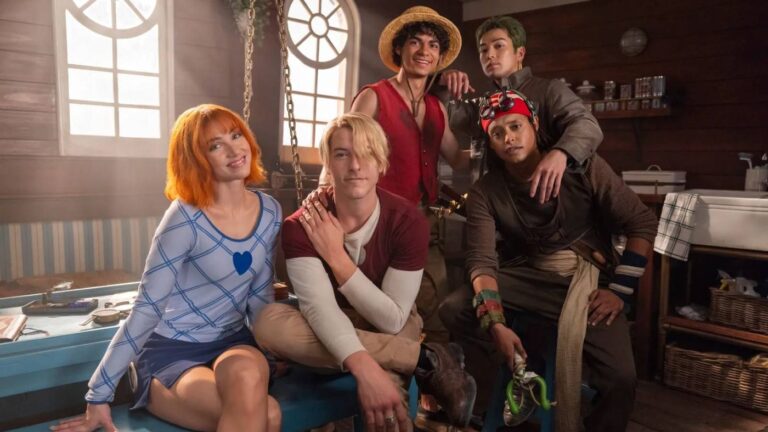
Iñaki Godoy (as Monkey D. Luffy) still remains the beating heart of this Netflix live-action adaptation of Eiichiro Oda’s work. He doesn’t lose his infectious optimism and strong sense of bravery, but we also see him evolve this season. We see more of Luffy’s frustration and emotional vulnerability this time, and Godoy undoubtedly gives his career-best performance in Episode 5.
Many viewers called out Usopp’s limited screen time in the debut season, and the makers have heard their concerns, as Jacob Romero’s Usopp gets plenty of screen time and depth this season. His shift from cowardice and fear to boldness and courage, particularly during the Little Garden arc, is handled well, and it also helps the character grow emotionally.
Another big positive from Season 2 is the competitive camaraderie between Zoro (Mackenyu) and Sanji (Taz Skylar). Mackenyu’s Zoro remains slightly more relaxed this season and drops some hard-hitting burns filled with sarcasm and dry humour, which is cool to see, while Skylar’s Sanji remains a standout for his physical stunt work and charismatic screen presence.
Rudd’s work as Nami remains subtler than in the previous season, especially during the Nami-centric “Drum Island” illness arc, where she displays a grounded, weary strength. However, this arc also kind of puts her in the back seat compared with the rest of the cast in terms of character development and progression.
Analysis
One Piece Season 2 (created by Matt Owens and Steven Maeda) levels up in almost every department from Season 1. The debut season felt like a grand introduction to an exhilarating adventure, while the sophomore chapter takes a more high-stakes, serialised approach (like the anime) as the Straw Hats enter the wicked and unpredictable Grand Line.
The second season touches on early important arcs such as Loguetown, Reverse Mountain, Whisky Peak, Little Garden, and Drum Island. Diehard fans of the anime and manga may feel a bit of compactness in the overall world-building process this season. But we also have to consider the dilemmas that come with filming a live-action adaptation.
Unlike the manga, which can feel episodic early on, the showrunners introduce a persistent Baroque Works subplot. By featuring Smoker and Tashigi as recurring pursuers who eventually uncover the conspiracy alongside the crew, the season creates a cohesive throughline that ties the separate islands together.
Yes, the resolution of some arcs, particularly in the first five episodes, feels a bit rushed, but it’s good that the makers focused only on the more impactful bits of the arcs covered in these episodes and still managed to deliver a good product. Meanwhile, the final three episodes are dedicated entirely to the Drum Island arc, which has been explored beautifully, especially the heartwarming origin story of Tony Tony Chopper.
The narrative breadcrumbs lore much earlier than in the source material, referencing the Will of D. and even hinting at Nika through subtle Easter eggs. This rewards longtime fans while giving new viewers a sense of a much larger, interconnected world.
However, it’s the pacing that will surely get a more divided response from viewers. The transition from Reverse Mountain to Whisky Peak is breathless. The show uses a surgical economy, stripping away the glacial travel time of the anime to focus on character-defining conflicts.
Also, the Little Garden arc, particularly during Episodes 4 and 5, feels a bit slow in terms of pacing. Moreover, the duel with Mr 3, Booger Man, and Miss Valentine feels a bit overextended.
The directors really leaned into the “Seussian” vibe of the original world this time around. The Drum Island visuals were a total standout, where the crew used tons of fake snow in Cape Town to build a haunting, medieval atmosphere that felt both cosy and creepy. Then there was the massive “Chopper” challenge, which was handled quite well.
When it comes to live-action adaptations using VFX to portray non-human characters, there is always going to be a section of the audience who won’t like the result. Yes, the VFX on Chopper could have been a bit better, but the makers still found a sweet spot between a cute cartoon look and realistic textures. In other words, you can take a deep breath, as he doesn’t look bad or weird like many of you were worried about in the beginning.
The action has also grown quite a bit. The choreography feels far more polished, especially Zoro’s massive fight against 100 bounty hunters at Whisky Peak. It has a high-energy, Kill Bill-style flair that shows they clearly put more money into the stunt team this year.
When you look at the highs and lows, the emotional elements are where the season really wins. Chopper’s backstory in Episode 7 is amazing to watch, and the main cast finally feels like a real family instead of just actors in costumes. Adding more of Captain Smoker was a smart move too, as it keeps the tension high even when the crew is just travelling.
Despite all the big positives, there are some noticeable bumps. The CGI looks like a hit-or-miss scenario in some scenes, such as with Wapol’s powers, which look a little janky compared with the rest.
Season 2 also sometimes struggles to balance the darker, grittier moments with the colourful, almost “kid-show” aesthetic of the source material. Plus, since the episodes are an hour long, some of the talking scenes can feel a bit dragged out and slow the momentum.
Music and Other Departments?
The music this season really steps up the game. Composers Sonya Belousova and Giona Ostinelli brought back that “no-rules” style, mixing huge orchestral sounds with unexpected genres like jazz and folk. Each new character, especially Chopper, gets a unique theme that helps tell their story through sound.
Visually, the show sticks with those super-wide camera angles that give it a distinct, manga-like look. While some people find the fish-eye effect a bit much, it definitely makes the show stand out from your average fantasy series.
We also see grand sweeping shots of the camera and good use of handheld cameras, which makes the ocean scenes and fights feel way more intense and realistic. The editing also looks tighter than the previous season.
The costumes and sets deserve a lot of credit. The outfits still look exactly like the manga designs, but they used more rugged, weathered fabrics, so they don’t look like cheap cosplay. The production team deserves special credit for those massive physical sets for places like the snowy peaks of Drum Island, adding more realism, naturalness, and groundedness to the overall second season.
Other Artists?
Another big standout is undoubtedly Mikaela Hoover, who lends her beautiful voice to Tony Tony Chopper. Yes, some fans may point out issues with the character’s overall CGI, but we can’t deny the impact Hoover’s voice has. She gives her all to the character, making his story highly emotional and a real tear-jerker.
David Dastmalchian as Mr. 3 looks fascinatingly eccentric, whereas Lera Abova’s portrayal of Nico Robin is spot on. She remains quiet and mysterious throughout the series, yet manages to showcase her character’s cunning and quiet intelligence.
We see Joe Manganiello as Mr O, aka Sir Crocodile, sparingly, but whatever screen time he gets this season, he eats and leaves no crumbs. He brings a menacing and screen-commanding presence while perfectly capturing the calculating yet ruthless persona of the leader of Baroque Works, especially in the finale. Based on Season 3’s focus on the Alabasta arc, we will see plenty of Crocodile in the next season.
Also, Charithra Chandran does a decent job as Nefertari Vivi, princess of Alabasta, although some fans may find her characterisation here a bit more grounded, emotionally vulnerable, and dependent on others compared with her persona in both the manga and anime, which emphasises qualities like bravery, strong determination, strategic thinking, and compassion for others.
The rest of the cast, including Jazzara Jaslyn (Miss Valentine) and Daniel Lasker (Mr. 9, aka Booger Man), look in fine touch and are satisfyingly over the top and eccentric, matching the vibe of Oda’s One Piece universe.
Highlights?
Performances from the cast (especially Godoy)
Emotional core
Strong new villains (Crocodile and Mr. 3)
Improved action and stunts
Smart narrative changes and physical sets
Drawbacks?
Issues with pacing and CGI
Rushed world-building
Backseating of Nami’s character
Did I Enjoy It?
Yes. Liked how the show stepped up the emotional stakes this year, especially with the heartfelt introduction of Chopper. Watching the cast feel more like a real family while navigating the chaos of the Grand Line made the journey much more satisfying than the first season.
Will You Recommend It?
Definitely recommend it, especially for the Drum Island arc and the improved action scenes like Zoro’s fight in Whiskey Peak. Even with some CGI hiccups and pacing issues in the middle episodes, the way it weaves the Baroque Works mystery together makes it a must-watch for fans and newcomers alike.
One Piece Season 2 Series Review by Binged Bureau
We’re hiring!
We are hiring two full-time junior to mid-level writers with the option to work remotely. You need to work a 5-hour shift and be available to write. Interested candidates should email their sample articles to [email protected]. Applications without a sample article will not be considered.
