
































































What Is the Story About?
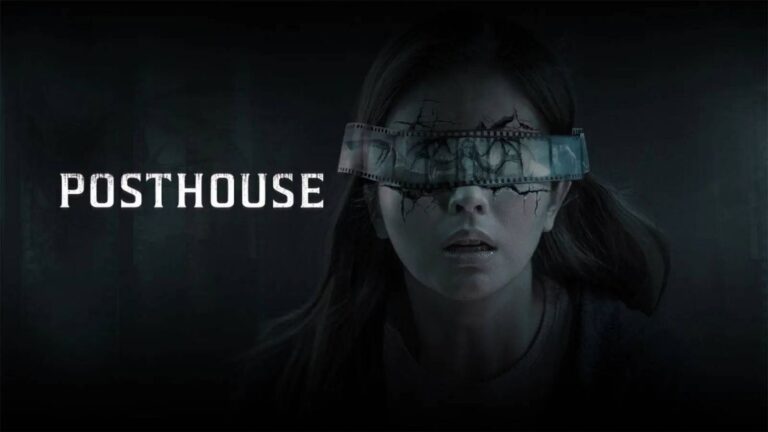
Troubled film editor Cyril inherits his estranged father’s debt-ridden post-production house and the obsessive task of restoring a cursed, long-lost 1920s silent horror film, Ang Manananggal. Aided by his film-student daughter, Rea, Cyril is driven by the belief that the restored footage holds the truth about his family’s generational trauma, linked to the film’s original director, H.N. Anderson.
As they piece together the decaying reels, the atmospheric horror of the mythical Manananggal creature begins to bleed into their reality. Cyril descends into paranoia and obsession, mirroring the fate of those who previously tried to finish the film. The house and the film become one, forcing Cyril into a violent, psychological confrontation with the evil he has resurrected, threatening to consume both him and Rea.
Performances?
Sid Lucero’s performance as the exhausted, frustrated, and brooding film editor Cyril is undoubtedly the movie’s biggest strength. He is the one who quite literally holds the film together and keeps viewers on edge right until the climax with his brilliant performance. The actor excels at portraying the slow, internal torment of a man haunted by his own inner demons (substance abuse history and mental health issues) and generational trauma related to the shocking death of his mother.
Lucero does an amazing job of displaying subtle yet impactful shifts in facial expressions, instead of relying on over-the-top theatrics. This restraint plays a huge role in allowing the horror to manifest.
Bea Binene’s portrayal of Rea, Cyril’s daughter, is a mixed bag. In some scenes, she appears comfortable, confident, mature, and emotionally grounded. But the actress struggles at times to keep pace with Lucero’s intensity. She also appears a bit stiff in certain moments, especially in her shared scenes with Lucero. However, she makes a good comeback in the climax, particularly in the final 20 minutes. Still, it’s clear that her role could have been performed more effectively by a stronger actress.
Analysis
Posthouse marks the feature directorial debut of Nikolas Red, who aims for a sophisticated, atmosphere-driven psychological horror. One of the standout elements is that it doesn’t rely heavily on jump scares. Instead, it uses slow-burning, atmospheric horror to capture the audience’s attention.
Also, the “curse” feels less like a supernatural entity and more like the representation of an inescapable cycle of pain, obsession, and mental illness passed down through the family line.
The director gives just enough screen time to the Manananggal, the entity hell-bent on exacting vengeance on Anderson’s family line, keeping the tone engaging and thrilling. The entity is also used effectively as a symbol of separation and monstrous consumption, a nod to the fragmented nature of Cyril’s mind and his family.
The manner in which Cyril gradually descends into paranoia, obsession, and mental breakdown while working obsessively on the reels in the old studio shares some similarities with Jack Nicholson’s work in Stanley Kubrick’s horror classic The Shining. But he also differentiates himself by preserving the aspects of Cyril that make him a good and caring human, especially his love and concern for his daughter, something Nicholson’s character completely loses by the end of The Shining.
The narrative uses a non-linear, fragmented structure. The film frequently cuts between present-day events in the posthouse, disjointed flashbacks of Cyril’s mother and childhood, and scenes from the vintage silent film being restored. This mixing of time frames and realities is effective in establishing an unreliable sense of reality and confusion for both Cyril and the viewer.
However, this fragmented approach is a double-edged sword, as some viewers may occasionally feel confused because the structure demands close attention to details.
In terms of pacing, Posthouse is a slow-burning horror that focuses more on atmospheric tension, mood, and psychological depth than on fast-paced sequences. The director expertly uses long takes and lingering shots on decaying film-editing equipment, successfully building a claustrophobic tone. This measured pace pays off well during the climax, where Cyril finally loses his mental state and erupts into chaos.
Director Nikolas Red carefully maintains a consistently dark, decaying aesthetic. His direction of Sid Lucero keeps the entire film together. He spends considerable time focusing on the actor’s facial expressions and micro-mannerisms, allowing the character’s internal conflict and torment to steer the horror instead of relying on traditional jump scares.
The addition of black-and-white degraded footage from the fictional Ang Manananggal is directed with visual confidence, seamlessly blending the past film with the present-day narrative. This technical achievement is a major positive, even though the overall narrative occasionally struggles to remain cohesive.
Overall, Posthouse is a sophisticated, slow-burning psychological horror anchored by Sid Lucero’s compelling performance as Cyril, an editor obsessed with restoring a cursed silent film. The film explores generational trauma through a fragmented, non-linear narrative and a technically brilliant, suffocating aesthetic, although the supporting cast remains underutilised.
Music and Other Departments?
Alongside directing, Nikolas Red also edited Posthouse. As a seasoned editor, his expertise is evident. His first feature proves highly technical and aesthetically driven. In this film, editing functions not merely as a pacing tool but as a core narrative device.
The film’s fragmented, non-linear editing, constantly shifting between present events, flashbacks, and Manananggal footage, showcases a clear application of the Kuleshov Effect (even referenced directly in the movie), emphasising how meaning is constructed through juxtaposition. The use of black-and-white silent film aesthetics and low-fidelity VHS textures for certain flashbacks further enriches the visual language.
The blending of degraded archival audio from the silent reels into the modern-day soundscape is a crucial technique that reflects how the “curse” begins infiltrating Cyril’s psyche.
Jem Talaroc’s score prioritises atmospheric tension over traditional melodies. The sound design prominently features mechanical noises from editing machines, such as the clicking of the Moviola, the whirring of reels, and the scratching of film, which grow increasingly menacing as the story progresses.
Cinematography leans heavily into a muted, desaturated palette dominated by greys, browns, and the yellowish tones of Cyril’s unfinished film.
For most of its first hour, the film uses steady, controlled camerawork. But in the final act, it seamlessly transitions into more dynamic visual styles, including Dutch angles, handheld shots, zoom-in shots, and body-mounted perspectives, mirroring Cyril’s psychological collapse.
Posthouse is a technically accomplished, highly stylised piece of filmmaking. Its deliberate editing, immersive sound design, and evolving camera language hold the audience’s attention even when other narrative elements occasionally falter.
Other Artists?
The supporting cast, including Ryza Cenon and Rafa Siguion-Reyna, does a decent job with what they are given, but many viewers may feel they remain underutilised, as the movie focuses primarily on the father–daughter bond between Cyril and Rea. This unevenness in the cast performances prevents the supporting ensemble from consistently elevating the material.
Highlights?
Sid Lucero’s Performance
Sophisticated and Stylish Psychological Horror
Strong Direction
Intriguing Narrative Structure
Thematic Depth and Technical Excellence
Drawbacks?
Uneven Supporting Performances
Pacing Issues
Narrative Cohesion
Did I Enjoy It?
Yes, thanks to Lucero’s powerful and intense performance. Posthouse benefits immensely from its atmospheric horror approach, technical brilliance, and psychological depth.
Will You Recommend It?
Yes, but only to those who are fans of slow-burn, technical, and psychological horror, and the ones who appreciate films that prioritise mood and character study over jump scares. However, the fragmented, deliberate pacing may not appeal to everyone.
Posthouse Netflix Movie Review by Binged Bureau
We’re hiring!
We are hiring two full-time junior to mid-level writers with the option to work remotely. You need to work a 5-hour shift and be available to write. Interested candidates should email their sample articles to [email protected]. Applications without a sample article will not be considered.
