
































































What Is the Story About?
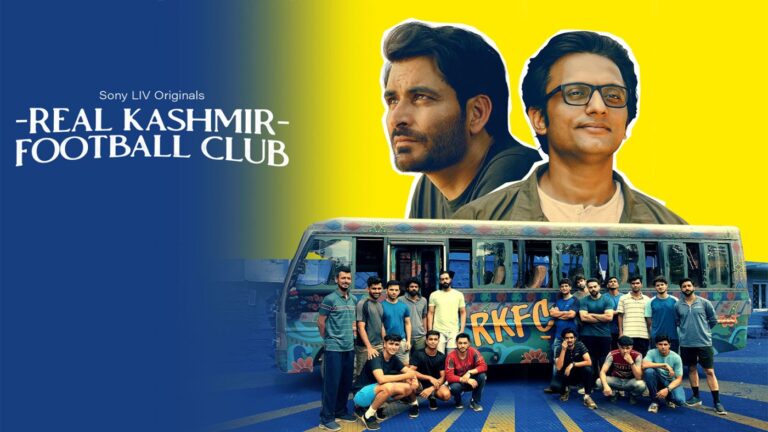
Real Kashmir Football Club follows a simple but heartfelt story about two men trying to build something meaningful in a place where hope is not the strongest thing. The series begins in Srinagar in the mid-2010s, a city still healing from the heavy floods of 2014. In the middle of this atmosphere, Sohail Mir, a frustrated journalist, reaches a breaking point after being pushed to cover stories he no longer believes in. He quits his job without a plan, carrying a sense of restlessness that grows stronger each day.
Around the same time, Shirish Kemmu returns to Kashmir to restart his family’s business and finds himself facing protests from conservative groups because he runs a wine shop. He tries to settle back into the city, but his past and the changed landscape make it hard for him to find peace. A chance meeting between Sohail and Shirish at an investor event brings them together. Sohail shares his idea of starting Kashmir’s first professional football club, believing that sport can give direction to local youth who are lacking it.
Shirish agrees to fund the idea, and the two begin the difficult task of finding young men willing to join the team. Some players come from troubled homes. Some hide their passion from their parents. Some carry anger from personal losses. Together, they form a rough but eager group. The arrival of coach Mustafa gives the team structure, but early failures in a Delhi tournament shake their confidence. Matters worsen when internal clashes grow and egos rise.
Despite setbacks, bureaucratic delays, and social resistance, the club slowly finds its footing. Their biggest test arrives when they must decide whether to play a crucial qualifying match against a security forces team, a choice that weighs heavily on both conscience and ambition. The story follows these steady, human steps as the club fights to become real.
Performances?
The performances in Real Kashmir Football Club give the series much of its emotional truth. Mohammed Zeeshan Ayyub leads the cast with a calm, lived-in portrayal of Sohail Mir. He plays a man who looks tired but never defeated. Ayyub leans into the character’s quiet doubts, his frustration with work, his strained marriage, and his stubborn belief that football can heal something inside him. Nothing in his performance feels exaggerated. Even in scenes where Sohail is challenged or dismissed, Ayyub keeps him steady and human. The only drawback is that a few early moments feel slightly underplayed, as if the character takes time to fully settle, but once the story gains rhythm, he holds it together with ease.
Manav Kaul brings a gentle, understated weight to Shirish. He shows the character’s sadness, hope, and guilt without ever spelling it out. His scenes of returning to familiar streets or thinking about his childhood home are surprisingly affecting because he keeps everything quiet. At times, Shirish’s emotional arc feels too neatly resolved in the writing, but Kaul adds enough nuance to soften those edges. Soon after his exceptional performance in Baramulla, this performance is also very good.
Mu’azzam Bhat is one of the strongest surprises. As Mustafa, the coach with a heavy personal history, he delivers a performance that is both still and expressive. You can sense the burden he carries even when he says very little. Abhishant Rana, as Aman, brings an easy presence and grounds several scenes that could have slipped into cliché. Afnan Fazli and the rest of the young players do honest work. They are not polished, but their rawness suits the tone of the show.
The ensemble feels natural, and that is the strength of the series. Even when some backstories feel thin or predictable, the actors never push too hard. They let the story breathe through small gestures and quiet moments, which makes the world feel real and inhabited.
Analysis
Real Kashmir Football Club works because it understands that a sports story is really a people story. The show opens in a Kashmir that is trying to find its balance after years of disruption. The atmosphere is heavy, but the series treats the place with care. It does not frame Srinagar as a postcard or as a battlefield. It simply shows people trying to live their lives in a place that has seen too much change. This gentle approach shapes the entire narrative.
The heart of the show lies in the partnership between Sohail and Shirish. Both men carry different kinds of restlessness. Sohail feels worn down by journalism that no longer reflects the truth he believes in. He quits in a moment of frustration and finds himself searching for a purpose. Shirish returns to Kashmir with a calm surface, but his past hangs around him quietly. Their meeting feels natural, not forced. The idea of forming a football club grows out of shared disappointment and shared hope. The writing treats this partnership with patience. It allows both men to figure themselves out while figuring the club out.
The show shines when it focuses on the personal costs behind this dream. Sohail’s relationship with his wife is tense. She does not mock his ambition, but she questions the practicality of it. Their conversations feel real. You can sense the weight of unpaid bills, social expectations and everyday fatigue. Shirish carries his own private battles. He deals with protests against his business and confronts memories of a childhood he left behind. These threads are handled quietly. The series never pushes them toward melodrama.
The formation of the team brings together many smaller stories. Each player comes with a different struggle. Some come from homes where money is tight. Some hide their passion from their parents. Some carry anger or confusion that has nothing to do with football. The show gives each of them a little space, not enough to turn them into fully detailed characters, but enough to show how sport becomes a small anchor in a chaotic place. A few arcs feel underdeveloped. The intentions are strong, but some players drift in and out without leaving much impact. Even so, the collective energy of the team feels sincere.
The writing avoids sensationalising the political tension in the valley. It acknowledges the pressures that shape everyday decisions, but it avoids lecturing. The protests Shirish faces, the doubts people have about the club, the fear of taking the wrong step, the pull of local politics, and the mistrust between communities are all shown through small, matter-of-fact scenes. This restraint makes the world feel real. It also allows the show to stay focused on football without pretending that football exists in isolation.
The sports drama structure is familiar. There are setbacks, failed tryouts, early losses and internal conflicts. The ego clashes within the team, especially with the local star player, bring some predictable beats. Still, these moments fit the rhythm of the show. The emphasis is on learning to work together rather than delivering grand victories. The arrival of the Scottish coach adds a new layer of friction and occasional humour, although a few of his scenes drift toward cliché. His presence serves the purpose of giving structure to the team, even if his arc feels a little too tidy.
The strongest quality of Real Kashmir Football Club is its sincerity towards the subject. It does not try to be a grand statement about Kashmir or a flashy sports saga. It simply observes how a group of people try to build something steady in a place that rarely allows steady things to survive. The show may not always reach emotional peaks, but it stays grounded and watchable throughout. Its honesty, its warmth and its human scale make it a thoughtful take on an underdog story.
Real Kashmir Football Club has sincerity, but it also carries some clear shortcomings. The biggest issue is the uneven pacing. The first few episodes move slowly and sometimes feel unsure of their direction. Certain arcs, especially those involving individual players, start with promise but fade before they become emotionally meaningful. The writing introduces many personal struggles, yet several of them remain surface level, without the depth needed to leave an impact.
Some narrative choices feel too convenient. Conflicts that should take time to resolve wrap up quickly, especially in the cases of Sohail and Shirish. The women in the story, though independent, often fall into the role of supportive figures rather than individuals driving change. The Scottish coach’s track also feels predictable, leaning on familiar outsider tropes.
Music and Other Departments?
A very special band has given music to this series and hardcore audiophiles know that band. I am talking about Indian Ocean, which has given us countless great tracks and also composed the music for Masaan.
Indian Ocean’s score uses simple, earthy tones that match the valley’s mood. It supports the emotions rather than trying to heighten them, which keeps the show grounded.
The cinematography is one of the series’ strengths. Saurabh Monga avoids the postcard image of Kashmir and instead focuses on real streets, modest homes and open grounds. This gives the story a sense of place without romanticising it. The football scenes are filmed plainly, showing effort and struggle instead of polished spectacle.
The production design and costumes follow the same honest style. Rooms look lived in, the club office looks makeshift and the players dress in a way that reflects their everyday lives. Nothing feels put on.
Together, these choices create a steady, believable world that quietly supports the story without calling attention to itself.
Highlights?
Concept
Performances
Characterisation
Drawbacks?
Becomes predictable
Convenient conflict resolution
Did I Enjoy It?
Kind of
Will You Recommend It?
Only if you are looking for an easy sports drama.
Real Kashmir Football Club Web Series Review by Binged Bureau
We’re hiring!
We are hiring two full-time junior to mid-level writers with the option to work remotely. You need to work a 5-hour shift and be available to write. Interested candidates should email their sample articles to [email protected]. Applications without a sample article will not be considered.
