
































































What Is the Story About?
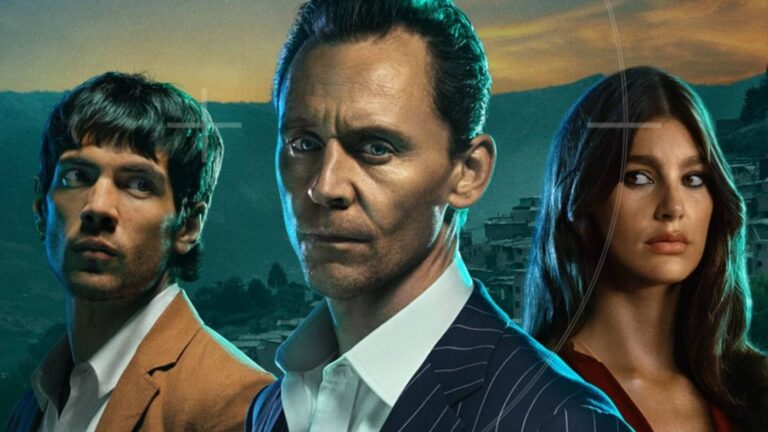
In Season 2 of The Night Manager, Jonathan Pine (Tom Hiddleston) is pulled back into the world of espionage eight years after the events in Cairo. Despite trying to live a quiet life, he once again finds himself chasing the ghosts of his past, with Season 2 sharing a direct connection to the debut season.
The story shifts its focus to a new global threat, as Pine must infiltrate a sophisticated criminal network that has evolved in the vacuum left by Richard Roper.
While the first season dealt with illegal arms dealing, the sequel explores the modern landscape of cyber warfare and private military contractors. Pine is forced to navigate a treacherous web of “new money” and moral ambiguity, facing a formidable new antagonist while grappling with the psychological toll of his undercover identity.
Performances?
The acting performances take a noticeable shift from the high-society, glossy glamour of Season 1 to a more grounded, gritty, and psychological exploration of trauma, past ghosts, and modern power.
Tom Hiddleston takes a near U-turn in Season 2 in terms of his performance compared to Season 1. He is no longer a dashing soldier-spy. Instead, he becomes a man consistently haunted by PTSD, or should we say the ghosts of his past? Richard Roper in particular.
The “Loki” actor looks more cautious, vulnerable, exhausted, and aged, and is always on his toes. His best moments emerge when he tries hard to hide his “just on the brink of exploding” internal turmoil behind a glacial, charming, still façade.
Hiddleston successfully shifts from a hotel manager playing at being a spy to a seasoned operative. His chameleon-like performance, with thicker skin this time, keeps us close to our screens.
This time, we have Diego Calva (Teddy Dos Santos) as the main antagonist, a completely different personality from Hugh Laurie’s chillingly calm, egomaniacal, cunning, and calculating Richard Roper. Calva appears more hot-headed, ruthless, and burdened with deep-seated emotional wounds. There’s a touch of amateurishness to his behaviour, which kind of reminds us of a child trying hard to keep everything under control while maintaining his composure in the big leagues.
However, Calva looks amazing in this role, and his character’s effortless, electric, and erotically charged chemistry with Hiddleston is one of this season’s biggest positives. The balance of power between the two shifts constantly, thanks to Teddy’s unpredictability and impulsiveness.
Camila Morrone as Roxana feels far removed from the usual “damsel” archetype. Instead, she comes across as bold, courageous, smart, and capable, an entrepreneur whose motivations are purely about survival and getting as far away as possible from Teddy’s grasp. Her bickerish, smooth-talking chemistry with Hiddleston works well, though her arc takes a little too long to step out of Elizabeth Debicki’s shadow.
Analysis
The Night Manager Season 2 (written by David Farr and helmed by Georgi Banks-Davies) opens with Jonathan Pine (Tom Hiddleston) living a quiet life as Alex Goodwin, managing a low-profile MI6 surveillance unit known as the “Night Owls”. The status quo is shattered when he identifies a former mercenary from Richard Roper’s network, drawing him into the orbit of Teddy Dos Santos (Diego Calva), a charismatic but volatile and ruthless Colombian businessman.
Season 2 definitely looks bigger and bolder than the first in terms of storyline and ambition. The fact that the plot remains tightly connected to Richard Roper, yet still manages to give strong and compelling material to Calva’s Teddy Dos Santos, is impressive to watch.
The first two episodes, while intriguing, may test some patience, as they are slow-paced and focus heavily on Pine’s struggles to adjust to a new life as a “new person” while working for the Night Owls. These episodes shed plenty of light on atmosphere-building and PTSD-oriented character development. However, the overall tone and pace change sharply in Episode 3 once the mission moves to Medellín and Cartagena.
As mentioned above, the chemistry between Hiddleston and Calva is excellent, with just enough sprinkling of erotic charge. The way power and control shift between them, and how committedly and sometimes desperately, the two attempt to psychologically manipulate each other, strengthens Season 2’s overall impact. Compared to Roper, Teddy is more savage and vulnerable, emerging as a different and more unpredictable foil than his predecessor.
There aren’t many twists in the first three episodes, as they lean more towards character building, setting up high and dangerous stakes, and showcasing compelling performances from the leads. However, the twists we do get are handled well and placed at just the right moments. And prepare yourself for the BIG mid-season twist!
Moreover, it’s refreshing to see that Roxana hasn’t been treated as a conventional “beautiful but helpless” woman who endlessly suffers at the hands of an antagonist until a “knight in shining armour” comes to rescue her. In fact, her characterisation in the first three episodes is thrilling and somewhat unpredictable, with dialogue that often challenges Pine’s own deceptions.
But is Season 2 better than Season 1? So far, that doesn’t seem to be the case. Despite the many positives, viewers who loved the debut season may feel that Season 2’s storyline comes dangerously close to following the first season’s plot beats. Without the direct source material of John le Carré, the “white saviour” narrative feels more exposed and less intellectually layered than the original.
In addition, the issue of slow pacing could have been addressed more effectively by adding two or three warm-hearted or humorous moments. Season 1 benefitted greatly from the cracking relationship between Pine and Angela Burr (played by the wonderful Olivia Colman). Their mentor–mentee dynamic was built on professional alliance, shared moral purpose, and mutual trust.
Despite their differences, both were driven by a strong sense of justice, and audiences loved watching them together. The first three episodes of Season 2 clearly lack the effectiveness of that duo.
Furthermore, not all of the dialogue lands well. Some lines come across as a little flat or hammy, particularly in the exposition-heavy scenes set in the MI6 offices. The absence of Olivia Colman’s witty, grounded presence throughout much of these episodes leaves a noticeable vacuum of charm that the newer, more serious characters haven’t quite filled yet.
Director Georgi Banks-Davies excels at focusing on Jonathan Pine and his psychological struggles. She prioritises close-ups and psychological intimacy over large-scale action set-pieces, which makes the stakes feel more personal as well. The world-building around the Night Owls unit provides a gritty, bureaucratic counterpoint to the cartel glamour.
Compared to Susanne Bier’s direction in Season 1, Banks-Davies’ approach feels more personal to Jonathan Pine and, in scope, bigger than the first season, but it sacrifices some of Bier’s cinematic sparkle and flair. Another noticeable aspect is that this season is largely devoid of humour and takes itself very seriously, resulting in a bleaker tone than the debut chapter.
Music and Other Departments?
We see a significant change in the cinematography in The Night Manager Season 2. Cinematographer Michael Snyman replaces the Mediterranean “silk and gold” feel of Season 1 with a high-contrast, sweaty palette for the Colombia-based episodes. The use of natural light is particularly noticeable during scenes set in Cartagena and Medellín, adding a more realistic and grounded feel to the series, although the frequent close-up shots can feel a little repetitive.
Another major shift comes in the music, as the “Bond-esque” orchestral sweep of the first season is replaced by distorted strings and heavy bagpipes, cultivating a sense of dread and unease. The use of bagpipes, in particular, stands out, helping to signal Jonathan Pine’s internal isolation, PTSD, and psychological homecoming.
The first two episodes, despite keeping tensions high, are slow-paced. The decision to linger on and fully explore Pine’s mundane life in London significantly slows the momentum, lacking the punch one might expect after a nearly decade-long wait.
Other Artists?
Indira Varma’s Mayra Cavendish replaces Angela Burr in Season 2. Rather than possessing Burr’s beloved, warmer moral compass, she comes across as cold-hearted and sharp, lending a more cynical, bureaucratic edge to the MI6 side of the story. However, she is given limited screen time, and her characterisation so far appears somewhat one-dimensional.
The duo of Hayley Squires (Sally Price-Jones) and Paul Chahidi (Basil Karapetian) adds a touch of Slow Horses-esque grit to the show. Chahidi, in particular, stands out as a frumpy, methodical, and dedicated professional, and remains the most “human” presence within the British intelligence machine.
We also see a brief appearance from Noah Jupe as Danny Roper, Richard’s son, who returns as a brittle and resentful adult, having lost all of his childlike innocence. His presence serves as a living reminder of Pine’s past failures, adding a layer of guilt and inherited moral rot to the season’s themes.
Olivia Colman appears briefly as Angela Burr at the very beginning of Season 2, and it’s a pleasure to watch her perform. Her presence provides an essential emotional link to the past. The rest of the cast also delivers solid performances.
Highlights?
Tom Hiddleston’s Evolution
Amazing chemistry between Hiddleston and Diego Calva
Higher stakes feel and bolder ambition
Strong female lead (Camila Morrone)
Good use of technicals (cinematography and music)
Drawbacks?
Slow-pacd first two episodes
Lack of warmth and humour
Dialogue and script issues
Underutilised characters (Indira Varma and Olivia Colman)
Did I Enjoy It?
Yes, Season 2 is a compelling albeit much bleaker evolution of the series. While it lacks the escapist glamour of the first season, the raw psychological intensity and the electric chemistry between Hiddleston and Calva keep us hooked.
Will You Recommend It?
Yes. Fans of the original will love it. But be prepared for a slower, more trauma-oriented tone that trades the cinematic sparkle of Season 1 for a grittier, modern exploration of power.
The Night Manager Season 2 Web Series Review by Binged Bureau
We’re hiring!
We are hiring two full-time junior to mid-level writers with the option to work remotely. You need to work a 5-hour shift and be available to write. Interested candidates should email their sample articles to [email protected]. Applications without a sample article will not be considered.

