
































































What Is the Story About?
To Kill a Tiger follows an Indian farmer Ranjith as he demands justice to his 13 year old rape survivor daughter. The documentary is a retelling of a real-life case of brutal gang rape in Modern India where a father’s undying love, resilience and the strength of the women around him helped his relentless fight for justice, even if that took fighting a parochial and prejudiced village.
Analysis
To Kill a Tiger, directed by Nisha Pahuja, is a Canadian documentary film also written and produced by Nisha Pahuja. Executive produced by Mindy Kaling, Dev Patel, Rupi Kaur and Priyanka Chopra Jonas, the documentary film follows the relentless pursuit of Justice of a father from Jharkhand and his daughter who survived a brutal gang rape.
The title of the award winning and Oscar nominated documentary is directly derived from an anecdote the father shares at the end of the documentary. Kiran’s (the rape survivor’s identity changed) father Ranjith says : ‘I’ll show you how to kill a tiger all by yourself.’ And so, I did.” to someone’s discouraging remark that one cannot kill a tiger all by oneself.
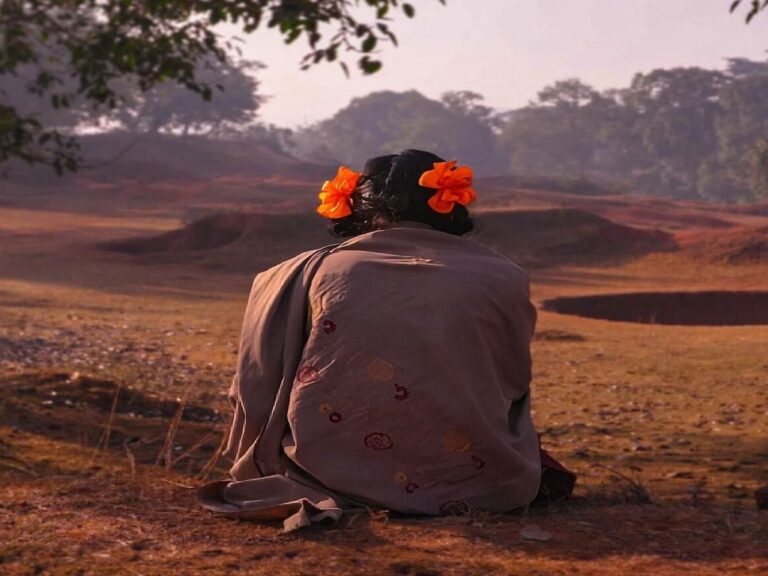
To Kill a Tiger opens to vast green fields of Jharkhand with a voice over that speaks of Kiran’s case. She was gang-raped by three men when she was just 13 years old and the documentary follows her fight for justice…albeit from her loving and resilient father. The mellow green frame shifts to Kiran braiding her hair with colourful ribbons, a heartbreaking scene when you think of its depths.
We can then see Kiran’s father Ranjith and his wife recalling what happened on the dreadful day. He also recalls the kind of discouraging suggestions and compromise talks he had to endure amidst his decision to take Kiran’s perpetrators to court. We see a visibly silent and reclusive Kiran speaking barely a word or two when her parents were talking about the incident.
Multiple characters come in and go, including the folks at Srijan Foundation and Mr.Mahendra Kumar for whom Ranjith is a beacon of hope and inspiration. As gender-justice warriors, their belief that merely empowering women wouldn’t be enough to change the exploitative fabric of India, but it would also require raising boys right asserts a stern point. For how long would women be asked to be strong? For how long would women be tasked with the responsibility of protecting themselves while men around them thrive and exploit women without an ounce of guilt?
The documentary brings forward multiple perspectives from the people within and beyond the village. Be it the legal advisors, lawyer who presents Kiran’s case or even the villagers. The documentary takes a closer look at the regressive mindsets of the villagers while trying to educate and increase awareness amongst them. Kiran’s family is visibly ostracised just because the father was not ready to compromise and wanted to fight for his little baby.
While even the women in the village succumb to the parochial victim blaming mentality, what nuance do we expect from the men? Multiple elderly and young women in the village suggests marriage to the rapist as the only solution to Kiran’s case. The tit-bits from the parents of the accused are infuriating to say the least. This level of heartlessness and lack of empathy reminds one of the dismissive interviews that were shot in the now banned ‘India’s Daughter’ documentary post the Delhi gang-rape and murder case.
To Kill a Tiger also takes the case back to court, with lawyers, legal advisors giving their sermons : some encouraging while some upsettingly victim blaming. But how the father-daughter duo overcomes all the obstacles and finally get their justice after 6 years, is equally heart-wrenching and encouraging to watch. While a Kiran could empower hundreds of young girls to come forward and fight, what is justice if its delayed? And why is a Kiran happening in our country every single day?
Whilst the documentary has tried its best to be sensitive to the victim and her story, the decision to reveal her identity and face (since she’s approaching her 20s) warrants criticism. India’s POSCO rules prohibit revealing the identity of the survivor as Kiran was a minor when the incident happened to her. The creative choice of making Ranjith, the father as the hero of the story when the actual hero is Kiran and her immense mental strength could have its own share of positives and negatives. While Ranjith can be percieved as a strong example of a supportive & loving parent, it could also indirectly mean that a wronged woman needs a man by her side for her to acquire justice.
With disturbing number of rape cases rising in the country today, To Kill a Tiger is more relevant as ever. 9 months before, the state of Jharkhand was again under the radar when a 15 year old girl was raped and brutally murdered. And most recently the case of gang rape of a spanish woman in the same state has shook the nation again. As a woman, one can’t help but wonder when will the country start acting and stop getting shocked? When will the women of the country start feeling safe? Ever?
Music and Other Departments?
The biggest asset of To Kill a Tiger is Nisha Pahuja’s writing. Straight-forward, heart-punching and powerfully emotional, the documentary does hit the right chords multiple times. Mrinal Desai’s cinematography is a character of its own, helpless and observant of the injustice that struck Kiran and her family, and equally triumphant when the father-daughter gets their justice. The court scenes are cut straight out from Chaitanya Tamhane’s Court (2014) whose cinematography was also by Mrinal Desai.
Highlights?
Inspiring real life story
Camera work
anecdotes of the father-daughter
Drawbacks?
Revealing Victim’s face
Did I Enjoy It?
Yes.
Will You Recommend It?
Yes. But the documentary should be watched with trigger warnings.
To Kill A Tiger Documentary Review by Binged Bureau
We’re hiring!
We are hiring two full-time junior to mid-level writers with the option to work remotely. You need to work a 5-hour shift and be available to write. Interested candidates should email their sample articles to [email protected]. Applications without a sample article will not be considered.
