
































































What Is the Story About?
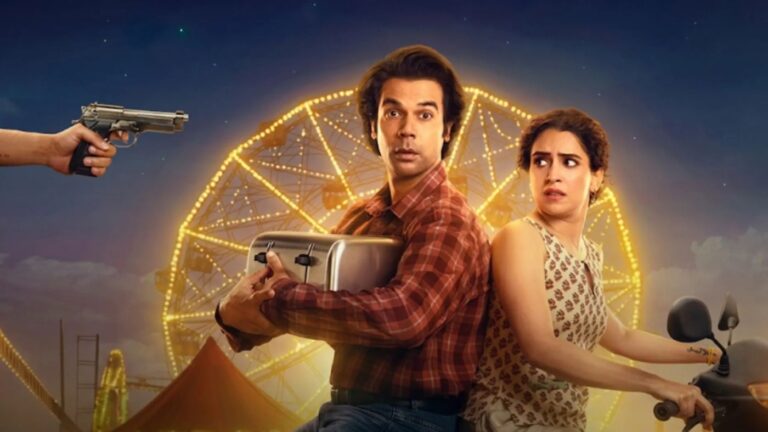
Toaster follows Ramakant, a small-time perfume shop owner in Mumbai who is extremely miser. For him, spending even a few extra rupees feels like a loss. His daily life is built around saving wherever possible, whether it is eating for free, bargaining endlessly, or avoiding unnecessary expenses. He lives with his wife Shilpa, who understands his habits but often feels frustrated by how far he takes them.
The story begins with a simple situation. The couple attends a wedding where Shilpa insists on gifting an expensive toaster. Ramakant is uncomfortable with the purchase, but he goes along with it. When the wedding is suddenly called off, he becomes fixated on getting the toaster back so he can return it and recover the money.
What starts as a small, almost harmless mission quickly turns into something much bigger. Ramakant’s attempt to retrieve the toaster leads him into a chain of strange and increasingly chaotic events. The appliance passes through multiple hands and gets linked to situations involving crime and unexpected danger. Each step he takes to fix the problem only makes things more complicated.
As the story moves forward, Ramakant finds himself caught between his instinct to save money and the consequences of his actions. His decisions begin to affect not just him, but the people around him, including his relationship with Shilpa.
The film uses this simple premise to build a comedy of errors, where a man’s stubborn nature drives the narrative. At its core, the story is about how a small obsession can spiral out of control, especially when a person refuses to step back and see the bigger picture.
Performances?
The performances in Toaster are built around behaviour, and that helps the film stay engaging even when the writing weakens.
Rajkummar Rao plays Ramakant as someone who is constantly “on”. His stinginess is not just in what he says, but in how he moves through the world. In early scenes, you see it in small habits. He lingers a little too long at places where food is free. He speaks politely, but with an agenda. Even in tense moments, his instinct is to calculate loss before reacting emotionally. There is a brief moment where he walks into his house after a disturbing incident and still switches off a mosquito repellent out of habit. That tells you everything about the character.
Sanya Malhotra plays Shilpa as someone caught between irritation and love. In scenes where she suspects Ramakant is hiding something, her reactions are not loud or confrontational. She slowly begins to act on her own. Her track involving crime shows adds a slightly playful layer, but there is also a sense that she is tired of adjusting to his behaviour.
Analysis
Toaster begins with a strong and simple idea. A man who hates spending money gets pulled into chaos because of a single purchase he never wanted to make. It is the kind of premise that naturally lends itself to comedy. A small problem that keeps getting bigger because of one person’s stubbornness. The film understands this at the start, and for a while, it works.
Ramakant is written as someone whose relationship with money defines how he lives. This is not just about being careful. It is about control. He measures everything in terms of gain and loss, even in moments where emotion should take over. This gives the film a clear character base. His decision to retrieve the toaster is not random. It comes from a mindset that cannot let go of even a small financial loss. That part feels well observed.
The first half builds on this nicely. The humour comes from situations that feel slightly exaggerated but still believable. Ramakant lying at a funeral to reduce rent or sneaking around to recover the toaster are the kind of moments that work because they grow out of his nature. The writing here allows scenes to breathe just enough for the awkwardness to land. It does not rush to the next joke.
However, the film starts to lose its grip as it expands the story. What begins as a character-driven comedy slowly turns into a plot-heavy chase involving crime, blackmail, and multiple side characters. The toaster becomes a device to move the story forward rather than something tied to Ramakant’s personality. As a result, the humour shifts from being rooted in behaviour to being dependent on coincidences.
This is where the film becomes uneven. The second half keeps adding events, but the tension does not build in a meaningful way. Instead of feeling sharper, the situations begin to feel repetitive. Ramakant is no longer driving the story as much as reacting to it. The same kind of panic, the same kind of confusion starts to repeat without adding new insight into the character.
Another limitation is that the film does not fully explore what it sets up. There is an opportunity to say something about obsession, about how small habits can take over a person’s life, or even about middle-class anxiety around money. But these ideas remain in the background. The film seems more interested in maintaining momentum than in digging deeper.
At the same time, it would be unfair to dismiss what the film gets right. It maintains a certain lightness that keeps it watchable. Even when the narrative stretches, there are moments of humour that land because of timing and performance. The world of the film, with its slightly odd characters and everyday settings, has a lived-in quality that helps.
The film also avoids forcing a complete transformation on its lead character. Ramakant does not suddenly become a different person.
In the end, Toaster feels like a film that had a clear starting point but did not fully know how to sustain it. It delivers enough humour to keep you engaged, but it does not build it into something sharper or more lasting. It is enjoyable in parts, but not consistently inventive.
Music and Other Departments?
The music supports the film but rarely stands out on its own. It mostly follows the mood of the scenes instead of adding something new. In a few comic moments, the background score feels slightly overused, as if it were pushing the humour instead of letting it emerge naturally.
Other Artists?
Archana Puran Singh brings a tangy flavour. She leans into the eccentricity of the role without holding back, especially in scenes where her character’s intentions become unclear.
Abhishek Banerjee adds a loose, slightly chaotic energy. His scenes work because he does not try to control them. Upendra Limaye plays the cop with a dry, almost casual authority, which makes even simple lines land with humour.
Overall, the actors ground the film’s absurdity in recognisable behaviour.
Highlights?
Characters
Performances
Drawbacks?
Screenplay
Did I Enjoy It?
In parts
Will You Recommend It?
Only if you have nothing better to watch
Toaster Netflix Movie Review by Binged Bureau
We’re hiring!
We are hiring two full-time junior to mid-level writers with the option to work remotely. You need to work a 5-hour shift and be available to write. Interested candidates should email their sample articles to [email protected]. Applications without a sample article will not be considered.
