































































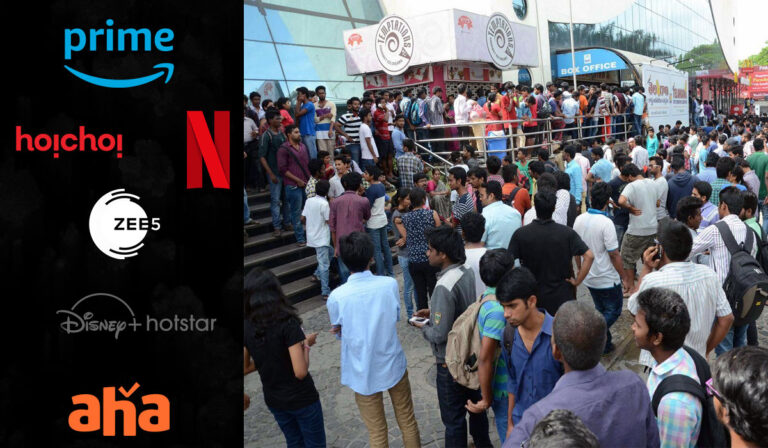
The COVID-19 pandemic brought a sort of paradigm shift in the way we view films now. The indefinite closure of theatres forced the filmmakers to go for a direct-to-OTT release, in order to make up for the financial constraints. But is this shift sustainable?
The OTT platforms were one of the busiest during the lockdown (which they continue to be) with a streaming war going on to grab the biggest of big upcoming titles. But was their structure initially designed for this purpose? Probably, NO. Now you might think why we say so.
If we come to think of it, the streaming services themselves would prefer the cinemas to open and films to go for a theatrical release. But Why? Well because the OTT platforms are based on a structure where they don’t go for the sort of marketing fuss a fresh big-budget movie usually demands. That’s the reason there was a separate category of films that used to release on OTT platforms in the pre-COVID era.
In fact, the OTT platforms used to go for the streaming rights of tentpole films after they had completed their theatrical course, building and gaining on the hype the makers had already created around the project before its release. In other words, they benefit as a consequence of the rollover effect, when movies stream on OTTs after their theatrical run.
In longer-term, that seems to be one of the most plausible scenarios where both OTTs and theatres not only co-exist but also stand to gain. After all, not all films are meant for big-screen release, and streaming services to provide them an excellent platform with a huge audience. On the other hand, theatres could make profits with the release of those big-budget, star-studded films. Thus leading to a win-win scenario.
We’re hiring!
We are hiring two full-time junior to mid-level writers with the option to work remotely. You need to work a 5-hour shift and be available to write. Interested candidates should email their sample articles to [email protected]. Applications without a sample article will not be considered.
